
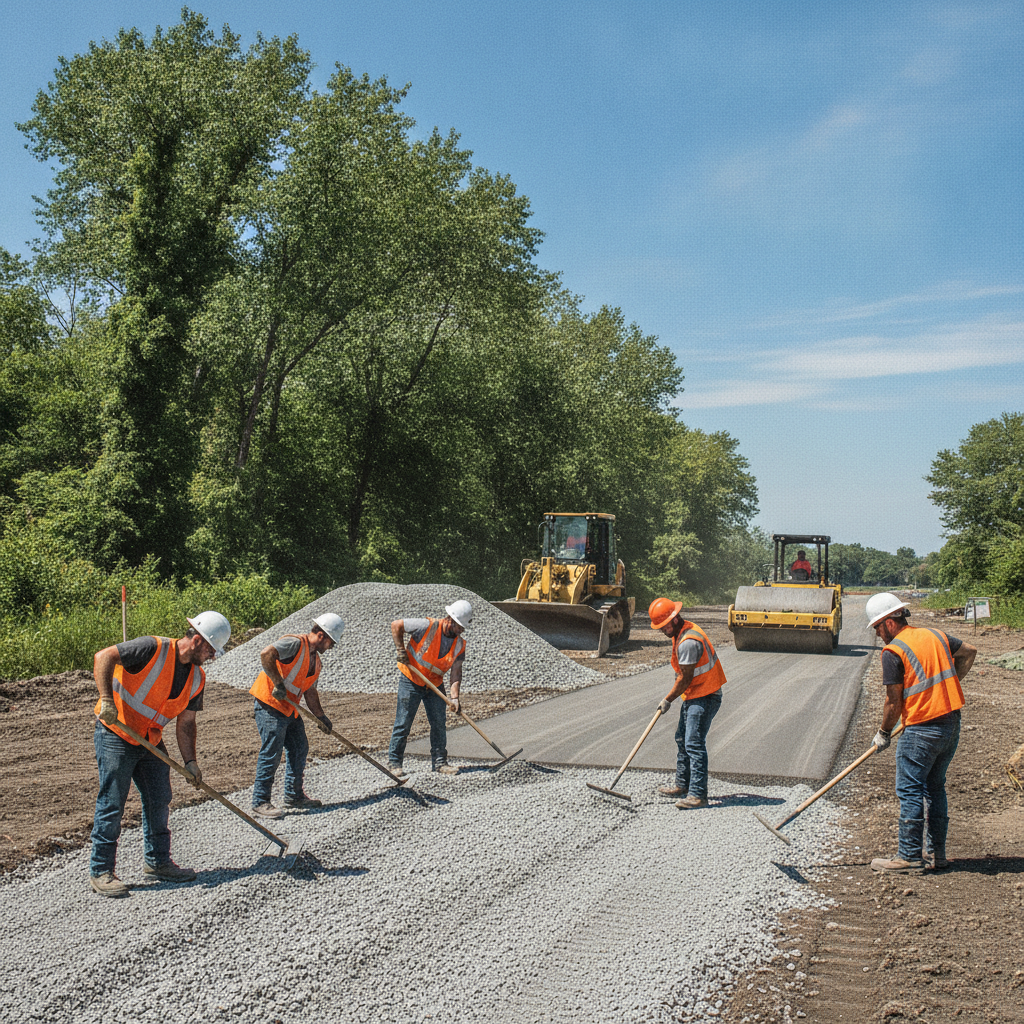
Ask any paving professional what separates a lot that lasts from one that falls apart, and you will hear the same answer over and over: it is what you cannot see. The glossy black surface gets all the attention, but the layers underneath do most of the work. For anyone planning Commercial Asphalt Paving Lodi NJ business owners can count on, understanding base preparation is the single best way to protect your investment before a single truck rolls onto the site.
Think of asphalt like a mattress. A beautiful, brand new mattress placed on a sagging, uneven frame will feel terrible within months, no matter how good the materials are. Pavement behaves the same way. Delivery trucks, customer vehicles, dumpster haulers, and freeze-thaw cycles all push down and pull at the surface every day. If the soil and stone beneath are not stable, level, and well drained, that stress turns into cracks, ruts, and potholes surprisingly fast.
In this guide, we walk through what base preparation actually involves, why shortcuts show up as expensive problems later, and how to ask smart questions when comparing bids. Whether you manage a small strip of storefronts, a warehouse yard, or a new development, you will come away knowing what good preparation looks like, what it costs you to skip it, and how to spot a contractor who takes the hidden work seriously.
Why the Foundation Matters More Than the Surface
Asphalt is a flexible pavement, which means it is designed to spread loads down through several layers rather than carry them on its own. The top layer of asphalt is typically only a few inches thick. Its job is to shed water, provide traction, and take the daily wear from tires. The real load bearing happens below, in the compacted stone and the native soil underneath it.
When that support system is weak, the surface has nothing solid to push against. Wheels flex the pavement, the flexing creates fatigue cracks, and those cracks let in water. From there the damage compounds. This is why a property that invests in Commercial Asphalt Paving Lodi NJ projects should treat the base as the main event, not an afterthought. A thicker layer of asphalt cannot rescue a failing foundation; it can only delay the inevitable for a short time while hiding the real problem.
Evaluating the Existing Soil and Site Conditions
Good base work starts with understanding what is already in the ground. Soil is not uniform from one corner of a property to another. Clay holds water and swells. Sandy soil drains well but can shift. Fill material left from earlier construction may be loosely packed and prone to settling. A knowledgeable crew walks the site, probes problem areas, and notes where the ground feels soft, spongy, or unusually wet.
Experienced teams, such as a Lodi NJ commercial asphalt paving contractor, will often look at more than just the dirt. They consider how water moves across the property, where downspouts discharge, whether nearby tree roots are pushing up the ground, and how existing utilities are located. In a densely developed area like this one, older underground lines and previously patched trenches can create hidden weak spots. Catching these issues during evaluation costs very little compared with discovering them after the new pavement has been installed.
Excavation, Removal, and Grading
Once the conditions are understood, the old surface and any unsuitable material come out. This stage is more than demolition. Crews excavate to a planned depth so the finished pavement will sit at the correct height relative to buildings, doors, curbs, and drains. Digging too shallow leaves you with a thin structure; digging too deep wastes money on extra stone.
Grading follows. The subgrade, which is the native soil surface, must be shaped to a consistent slope so water runs where it should. Even a lot that looks flat needs a deliberate pitch, usually a gentle fall toward drains or the property edge. After shaping, the subgrade is compacted so it will not settle under load. If a section stays soft or pumps under the roller, crews remove and replace it or stabilize it before moving on. When a property already has failures, an Asphalt Repair Company in Lodi, NJ can help determine whether the problem is a surface flaw or a deeper base issue that demands full reconstruction.
Choosing and Placing the Aggregate Base
The aggregate base is a layer of crushed stone, often a mix of different particle sizes, that sits between the subgrade and the asphalt. The varied sizes matter because small particles fill the gaps between larger ones, creating a dense, interlocked layer that resists movement. Round river gravel, by contrast, tends to shift under load and is a poor choice.
Placement is done in lifts, meaning layers spread and compacted one at a time rather than dumped in a single thick pile. Thin lifts allow the roller to reach all the way down and achieve even density. Moisture content also matters. Stone that is too dry will not bind, and stone that is too wet will pump and rut. Crews watch the material closely and adjust. Thickness depends on expected traffic. A small office lot sees very different loads than a loading yard with heavy trucks, so the base design should reflect real use rather than a one-size-fits-all number.
How Poor Bases Lead to Sinkholes and Depressions
Some of the most alarming pavement failures start underground and surface suddenly. When water washes fine soil out from beneath the stone, voids form. Eventually the asphalt above loses support and collapses into a dip or a sinkhole. Weak or poorly compacted bases make this far more likely, because loose material is easier for water to carry away.
If you want to understand the mechanics, this explainer on Asphalt Sinkholes Explained: Causes, Risks, and Fixes in Lodi, NJ breaks down how these failures develop and what a proper fix involves. The key takeaway for new construction is simple: a well compacted, properly graded, well drained base dramatically reduces the odds that you will ever face one. Patching a sinkhole after the fact means cutting out the pavement, rebuilding the support layers, and repaving, all while a portion of your lot is closed to customers.
Compaction: The Step That Cannot Be Rushed
Compaction is where good intentions meet real results. Rollers and plate compactors squeeze air out of the soil and stone, packing the particles tightly so they resist settling. Under-compacted material looks fine on day one. It is only after months of traffic that it slowly consolidates, leaving ruts in the wheel paths and uneven waves across the surface.
Professionals judge compaction by more than eyeballing it. They watch how the material responds under the roller, look for pumping or movement, and in larger projects may use testing to verify density. Equipment size should match the job. A small walk-behind compactor is fine for a narrow patch near a building, but a wide open lot calls for heavy rollers that make multiple passes. Rushing this stage to hit a schedule is one of the most common shortcuts, and it is also one of the costliest because the consequences show up long after the crew has left.
Drainage Planning Beneath the Pavement
Water is the greatest enemy of any paved surface. It softens soil, erodes stone, and freezes into expanding ice that heaves pavement upward. Because winters here swing above and below freezing repeatedly, any water trapped in the base has plenty of opportunities to do damage. Smart base preparation plans for water long before the asphalt arrives.
That planning can include sloping the subgrade so water drains away from the stone layer, installing catch basins or trench drains at low points, directing roof runoff away from the pavement edge, and in some cases adding underdrain piping or geotextile fabric. Fabric separates the soil from the stone so the two do not mix over time, preserving the strength of the base. None of these measures are glamorous, but each one removes a pathway for water to undermine the structure. A lot that drains well tends to need fewer repairs and keeps its appearance far longer.
Matching Base Design to Traffic Loads
Not every parking area needs the same structure. A customer lot where passenger cars park all day is easy on pavement. A delivery lane where loaded box trucks turn tight corners hundreds of times a month is brutal. Dumpster pads, loading docks, and fire lanes concentrate heavy, slow, repetitive loads in small areas, and these zones demand a stronger design.
A thoughtful plan divides the property into zones and assigns each one the structure it needs. The table below shows how typical priorities shift depending on how a space is used.
| Area Type | Typical Load | Base Priority |
|---|---|---|
| Customer parking stalls | Light, passenger vehicles | Even grading and good drainage |
| Main drive aisles | Moderate, mixed traffic | Thicker stone and firm compaction |
| Loading and delivery zones | Heavy, repetitive trucks | Reinforced base and deeper structure |
| Dumpster pads | Heavy, stationary and turning | Strongest section, often concrete |
Why Residential Thinking Does Not Always Transfer
Many people assume that if a contractor does great driveways, the same approach works for a business lot. The fundamentals overlap, but the scale and demands differ. A home driveway sees a couple of cars a day and is judged heavily on looks. A commercial surface carries far more traffic, bigger vehicles, and legal expectations around safe, accessible, well marked pavement.
Residential work is worth understanding for its own reasons, and this guide on Residential Asphalt Paving and Curb Appeal: A Lodi, NJ Homeowner’s Guide shows how appearance and long-term value fit together at the home scale. For commercial owners, the lesson is that base depth, drainage engineering, and load planning carry more weight. A base that is perfectly adequate for a family driveway can fail quickly under a loaded delivery truck.
Warning Signs of Rushed or Skipped Preparation
You can often tell early whether a bid or a crew cuts corners. Be cautious if a proposal does not mention base work at all, if the quoted price is dramatically lower than every other estimate, or if the contractor suggests simply paving over the old surface without evaluating its condition. Overlaying failed pavement without fixing the cause is a bit like painting over rust.
On site, watch for crews who skip grading checks, spread stone in one thick layer, or compact with undersized equipment. After installation, the signs of poor preparation appear in predictable ways:
- Water ponding in areas that should drain
- Ruts forming in wheel paths within the first year or two
- Alligator-style cracking in high traffic lanes
- Dips or soft spots that grow over time
Spotting these patterns early gives you leverage to address problems while warranties and goodwill still apply.
Smart Questions to Ask Before You Sign
The best protection is an informed conversation before work begins. Ask how the crew will evaluate the existing soil, what depth of stone they plan to install and why, and how they will compact each layer. Ask what the drainage plan is and how the finished slopes will move water. A reputable contractor will welcome these questions and answer in plain language rather than deflecting.
It also helps to request that base work be spelled out in the written proposal, including excavation depth, material type, and thickness. Vague scopes make it easy to cut corners later. If you are comparing multiple bids, line them up side by side and look at what each one actually includes below the surface, not just the final price. A slightly higher bid with a clearly defined, robust base often costs far less over the life of the pavement than a cheap bid that needs rebuilding in a few years.
Bringing It Together
Base preparation is the quiet work that decides whether a paving project becomes a lasting asset or a recurring headache. Evaluating the soil, excavating and grading correctly, choosing the right aggregate, compacting every layer thoroughly, and planning for water all combine to create a platform that can handle years of traffic and harsh weather. Skip any one of those steps, and the surface will eventually tell the story, usually at the least convenient moment.
For small business owners and developers, the practical message is straightforward. Treat the foundation as the most important line item on the estimate, not the place to save money. Match the structure to the real loads each zone will carry, insist on clear written scopes, and ask questions until you understand how the crew will build what you will never see once the asphalt is down. A little diligence during planning prevents costly closures, patchwork, and premature replacement later.
When the base is done right, everything above it benefits. The surface stays smoother, cracks stay minor, water stays managed, and the lot keeps projecting the professional image your customers expect. Take the time to get the hidden work right, and your pavement will repay you with years of reliable, low-drama performance.