
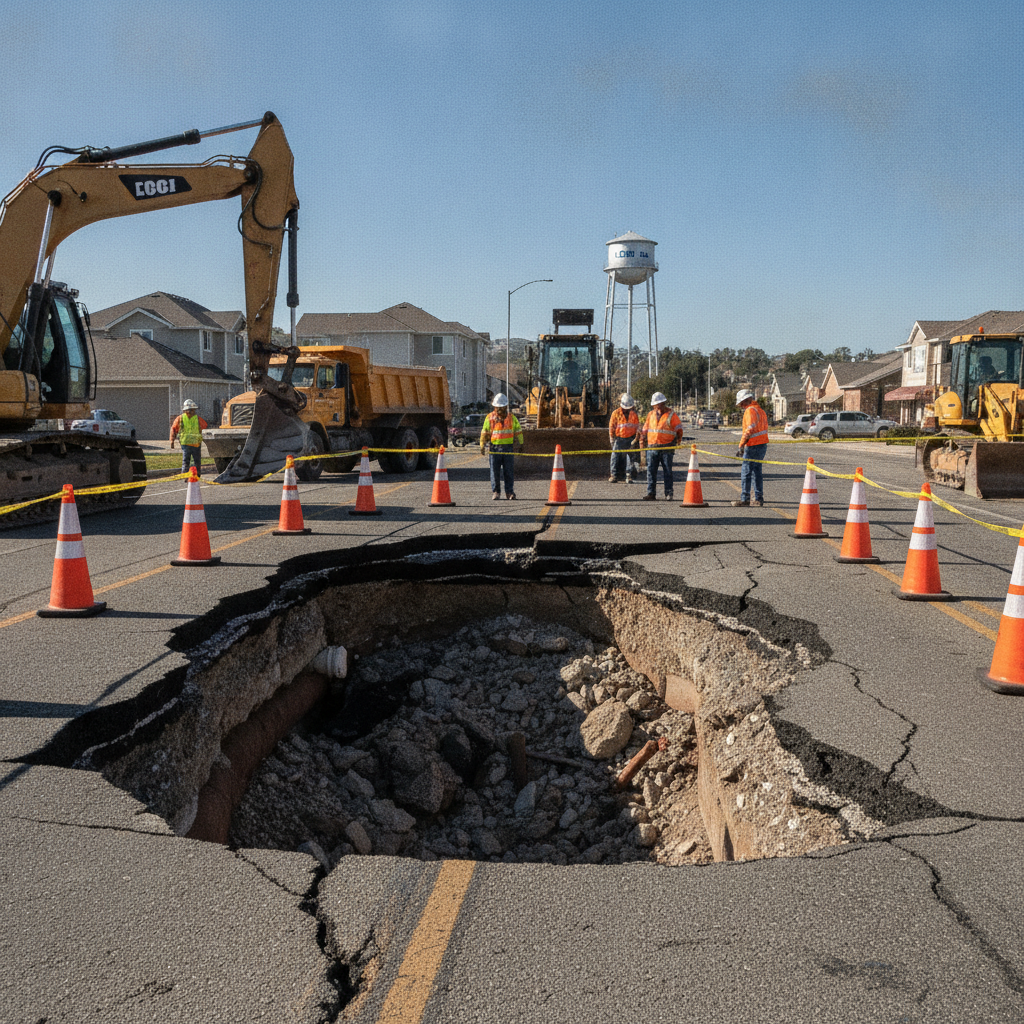
There is a particular kind of dread that comes from walking out to your driveway or parking lot and noticing a shallow dip that was not there last month. It looks harmless at first, maybe a small bowl-shaped depression where water pools after rain. Then a few weeks later the dip is deeper, the surface cracks, and a chunk of pavement drops away. If that sounds familiar, you are dealing with a sinkhole beneath your pavement, and the sooner you understand what is happening, the cheaper and safer the fix will be. For anyone searching for asphalt repair in Lodi NJ, this guide walks through what sinkholes actually are, why they form, how to spot them early, and what a proper repair involves.
The important thing to know is that an asphalt sinkhole is rarely an asphalt problem at its core. The surface layer is only the visible symptom. The real trouble is almost always below, in the stone base, the soil, or a buried pipe that has quietly failed. Small business owners worry about liability and customer safety. Developers worry about schedules and budgets. Homeowners worry about their cars and their curb appeal. All of them benefit from the same knowledge: how to read the warning signs, how to respond without making things worse, and how to choose a repair method that actually addresses the cause instead of just covering it up. We will keep this practical, casual, and free of jargon wherever possible.
What an Asphalt Sinkhole Really Is
A sinkhole in pavement is a localized collapse that happens when the material supporting the asphalt disappears or compresses. Asphalt itself is a flexible surface, a blend of aggregate and binder that spreads loads across the layers underneath. It is not designed to bridge an empty space. Once soil washes away or a void forms in the base, the surface can sag, crack, and eventually fall into that cavity.
People often confuse sinkholes with ordinary potholes, but they are different problems. A pothole starts at the surface when water enters a crack, freezes, expands, and traffic knocks loose the weakened pieces. A sinkhole starts below. The surface may look fairly intact until the support underneath finally gives out. Understanding that distinction matters because many asphalt sinkholes are treated like simple patch jobs, and a patch laid over an empty void will simply sink again within months.
The Underground Causes Behind Pavement Collapse
Most sinkholes trace back to water moving where it should not. When rain or melting snow finds a path beneath the pavement, it carries fine soil particles with it, a process often called erosion or piping. Over time the base loses its volume, and a void grows silently while the surface above still looks solid.
Other common culprits include:
- Leaking or broken underground pipes, such as storm drains, water lines, or sewer connections
- Poorly compacted utility trench backfill that settles after a dig is closed
- Organic material like roots, buried debris, or old fill that decays and shrinks
- Clogged or missing drainage that forces runoff to soak into the subgrade
In northern New Jersey, the combination of heavy rain events, freeze and thaw cycles, and aging infrastructure under older properties makes these causes especially common. A single failed joint in a buried pipe can undermine a whole section of lot over a few seasons.
Early Warning Signs You Should Never Ignore
Sinkholes rarely appear overnight. In most cases the pavement gives you hints well before a collapse, and catching them early can turn a major excavation into a modest repair. The trick is knowing what to look for during a normal walk around your property.
Watch for shallow depressions that hold water after rain, because standing water on a spot that used to drain is a classic clue. Look for spiderweb or circular cracking, where fractures radiate outward in a pattern rather than running in a straight line. Notice any area that sounds hollow when you tap it or drive across it, or a surface that flexes slightly underfoot. Pay attention to new gaps along curbs, catch basins, or building foundations.
Simple pavement cracks and holes are a separate matter, and prompt pavement crack and pothole repair keeps surface water out of the base in the first place. When the damage pattern looks circular or sunken rather than linear, treat it as a possible subsurface issue and have it evaluated before traffic makes it worse.
Risks to Safety, Property, and Your Wallet
A sinkhole is more than a cosmetic flaw. For a business, the first concern is injury. A customer who steps into a hidden depression or a delivery driver whose wheel drops into a void can lead to claims, repairs, and lost goodwill. Insurance carriers tend to take a dim view of known hazards that were left unaddressed.
The second concern is vehicle damage. Even a small collapse can bend rims, damage suspension components, or puncture tires. Heavier vehicles like box trucks and delivery vans can punch through weakened pavement and make a modest problem dramatically larger.
The third concern is cost escalation. Voids grow as more water and traffic pass over them. A fix that might require limited excavation and fresh stone today can become a wide, deep rebuild later. Underground utility leaks also keep washing out soil around the clock, so waiting rarely saves money. Acting early protects people, protects equipment, and keeps the budget under control.
What to Do the Moment You Spot One
If you find a suspicious dip or an open hole, your first job is safety, not repair. Keep people and vehicles away from the area right away. Cones, caution tape, or even sturdy barricades from a hardware store are better than nothing. Avoid parking or driving over the spot, and never assume the surrounding pavement is stable just because it looks solid.
Next, document the problem. Take photos from several angles, note the size, and record when you first noticed it and what the weather has been like. This helps a contractor diagnose the cause and is useful if insurance or a property manager gets involved.
Do not pour loose gravel or dump cold patch into the hole and call it done, since that often hides a growing void. Instead, contact a qualified Asphalt Repair Company in Lodi, NJ to inspect the area, probe for hollow space, and decide whether utilities or drainage may be involved. If you suspect a broken water or sewer line, notify the utility or a plumber as well, because the leak must be stopped for any repair to last.
How Professionals Diagnose the Real Problem
A good repair begins with good detective work. Before any asphalt is cut, an experienced crew will try to answer one question: why did the support disappear? That answer determines everything that follows, from the size of the excavation to whether a utility contractor needs to be called in.
Diagnosis usually starts with a visual inspection and sounding of the surrounding pavement to map the true extent of the weak zone. Crews may probe the base with a steel rod, check nearby catch basins and downspout outlets, and look for signs of water entry such as staining or sediment fans. In more complex cases, a camera inspection of storm or sewer lines can confirm whether a pipe has separated or cracked.
It also helps to look at the property’s history. Was a trench dug here years ago? Does runoff from a roof or a neighboring slope concentrate on this spot? Sometimes the sinkhole is simply the visible end of a bigger drainage story, and treating only the hole would be like mopping the floor while the faucet keeps running.
Patch, Dig-Out, or Full Rebuild: Choosing the Fix
Not every sinkhole demands the same response. The right repair depends on the size of the void, the underlying cause, and how much surrounding pavement has been weakened. The table below compares the three most common approaches in plain terms.
| Repair Approach | Best For | What It Involves | Typical Limitation |
|---|---|---|---|
| Surface patch | Shallow settling with a stable base | Clean, fill, and compact new asphalt | Fails if a void exists below |
| Dig-out and base repair | Localized voids and washed-out stone | Cut, excavate, replace and compact base, repave | Needs the cause to be fixed first |
| Full section rebuild | Widespread weakness or repeat failures | Remove, regrade, rebuild base, new asphalt | Higher cost and longer downtime |
Matching the method to the problem is what separates a repair that lasts a decade from one that returns in a season.
Why a Solid Base Decides Everything
Whatever repair method is chosen, success depends on what happens beneath the new asphalt. A properly built base distributes weight, drains water, and resists settling. If crews skip steps there, the new surface becomes a thin cover over the same weakness that caused the original failure.
Good base work means removing soft or contaminated soil, replacing it with clean, well graded stone, and compacting it in lifts rather than dumping it all at once. Each layer needs enough moisture and mechanical effort to lock together. Edges must be squared and tied into the surrounding pavement so the patch does not pull away.
If you want to see why this foundation work gets so much emphasis in the trade, read about Why Base Preparation Matters for Asphalt Driveways in Lodi, NJ. The same principles apply to lots, access roads, and loading areas. A well compacted base is invisible once the job is finished, but it is the part you will be thankful for every rainy season afterward.
Fixing Drainage So Sinkholes Do Not Return
Because water is the main driver of subsurface collapse, drainage is the long-term cure. Rebuilding a section of pavement without correcting where the water goes is like replacing a roof shingle without fixing the gutter that rotted it.
Start by looking at how runoff travels across your property. Downspouts that discharge onto pavement, low spots that trap water, and slopes that funnel flow toward a single seam all deserve attention. Sometimes the answer is as simple as extending a downspout, regrading a small area, or clearing a clogged inlet. In other cases it may involve repairing a pipe joint, adding a catch basin, or installing a trench drain along a loading dock.
Ask your contractor to explain where the water will go once the repair is complete. A confident answer, backed by a clear plan, is a good sign. Also keep joints and cracks sealed so rain cannot slip into the base through the surface. Healthy drainage plus sealed pavement gives your new repair the best possible chance of lasting.
Planning Repairs Around Your Business Schedule
Small business owners and property developers often hesitate to schedule pavement work because they fear disruption. The good news is that a well planned repair can be surprisingly quick. A localized dig-out might be completed in a day or two, while larger rebuilds can be phased so part of the lot stays open.
Talk with your contractor about staging, signage, and temporary parking or loading plans. Early morning starts, weekend work, or sectioned closures can protect your customer flow. For developers managing multiple tenants, coordinating notices and detours in advance prevents complaints and keeps relationships smooth.
Weather matters too. Asphalt needs to be placed and compacted within a workable temperature window, and wet conditions complicate base work. Building flexibility into your schedule avoids rushed decisions. When a sinkhole is a safety hazard, though, temporary barricades and a prompt interim plan are far better than waiting for a perfect weather window while customers walk past an open hazard.
Resurfacing and Long-Term Pavement Planning
Sinkholes are often a signal that a pavement is entering the later stage of its life. After the immediate repair, it makes sense to step back and look at the whole surface. If you are already patching multiple spots, the better investment may be a broader plan that addresses the lot as a system rather than a collection of emergencies.
Resurfacing can restore a uniform, smooth driving surface once underlying problems are fixed, and it can extend service life significantly when done at the right time. You can explore how this works in Maximizing Lifespan with Commercial Asphalt Resurfacing in Lodi, NJ, which covers timing and expectations for larger properties.
Keep a simple maintenance log. Note when repairs were made, what was found underneath, and which areas are being watched. Over a few years, patterns emerge that help you budget sensibly and spot recurring weak zones before they fail again.
Your Next Steps
Asphalt sinkholes can feel alarming, but they are manageable when you understand what is going on. The core idea is simple: the dip you see on the surface is almost always the result of something lost underneath, usually soil washed away by water or support removed by a failing pipe. Treating only the surface leads to repeat failures, while addressing the cause leads to repairs that hold up.
Here is the short version to keep in mind. Watch for depressions, circular cracking, and hollow sounds. Block off any suspicious area right away and photograph it. Avoid quick cover-ups with loose stone or cold patch. Have a qualified crew find the cause, whether that is drainage, a leaking line, or a poorly compacted trench. Insist on proper base replacement and compaction before any new asphalt goes down. Then fix the water path so the problem does not come back.
For business owners, acting quickly protects customers and limits liability. For developers, it protects schedules and long-term asset value. For homeowners, it protects vehicles and curb appeal. If you are weighing options for asphalt repair in Lodi NJ, start with an honest inspection, ask clear questions about the cause and the plan, and choose a contractor who explains the work below the surface as confidently as the work you can see. A little attention now can save a great deal of trouble, money, and stress down the road.
One Response