
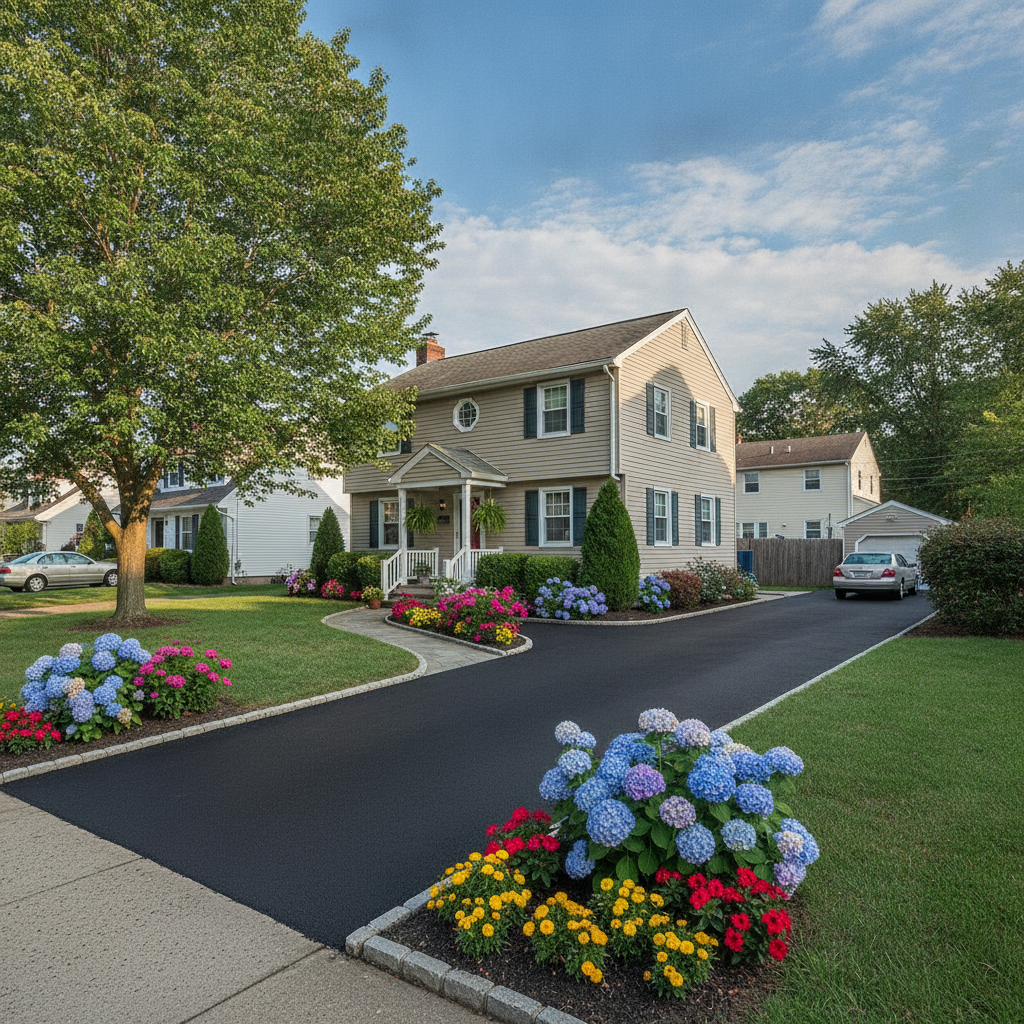
Before a visitor notices your landscaping, your front door, or the color of your shutters, they notice the surface that leads up to them. A smooth, dark, cleanly edged driveway tells people the property is cared for. A cracked, faded, patchy one says the opposite, even if everything else is spotless. That is why residential asphalt paving Lodi NJ homeowners invest in often pays back far beyond the day the crew packs up. It affects first impressions, daily convenience, safety, and the way a home is perceived by neighbors, guests, and future buyers.
This guide approaches the subject from the curb. Instead of walking through the paving process step by step, we look at how a driveway fits into the overall look of a home: how its shape, color, edges, and surroundings work together, how to plan a design that suits your lot, and how to keep that polished appearance season after season. Whether you are replacing a tired driveway, widening a narrow one, or simply wondering what your options are, you will find practical, plain-spoken advice here. We will also cover the small details that separate an average job from one that quietly lifts the whole property, and the planning choices that help you avoid regrets later.
Why Your Driveway Sets the Tone for the Whole Property
A driveway is often the largest single hard surface on a residential lot, which means it dominates the view from the street. Because it is so visible, its condition shapes how every other feature is read. Fresh landscaping looks neglected next to crumbling pavement, while a modest yard looks intentional when framed by clean, uniform asphalt.
Professional Residential asphalt paving Lodi NJ homeowners rely on gives that surface a consistent dark tone that makes greens, bricks, and siding stand out. Think of it as the frame around a picture. When the frame is straight, clean, and well proportioned, the picture looks better. When it is warped or stained, the eye goes to the flaws.
Curb appeal also has a practical side. Neighbors, delivery drivers, and guests judge a property in seconds, and buyers form opinions before they park. A driveway that looks sound and tidy signals a well-maintained home overall, which can make everything else about the property feel more trustworthy.
Designing the Shape and Width of Your Driveway
Many homeowners focus on surface condition and forget that shape matters just as much. A driveway that is too narrow forces awkward maneuvering and scuffs the lawn edges, while one that is oversized can swallow the front yard and overwhelm a small house. The goal is proportion.
Start by measuring how you actually use the space. Count the vehicles that park there regularly, note where guests tend to stop, and think about turning room. A gentle curve can soften a long straight run and add visual interest, while a straight drive often suits a narrow lot and keeps costs sensible.
Consider flare-outs near the street, which make entering and exiting easier, and a slightly wider parking pad beside the garage for extra cars. Good asphalt paving contractors will walk the lot with you and sketch options before any material is ordered, so you can see how the final footprint will sit against the house, walkways, and landscaping.
Clean Edges and Borders That Make the Difference
Sharp, well-defined edges are one of the quickest ways to make a driveway look professionally finished. Ragged borders where asphalt meets grass or mulch make even new pavement look sloppy. Because edges also carry less support than the center, they are the first place wear appears, which makes them worth planning carefully.
Options for defining the border include stone or paver edging, concrete curbing, steel or composite landscape edging, and a simple clean trench between lawn and pavement. Each has a different cost and look. Hard borders also help hold the shoulder of the driveway in place and keep turf from creeping onto the surface.
Keep soil and mulch from piling against the pavement, since heaped material traps moisture and encourages crumbling. When edges do begin to fray, an experienced Asphalt Repair Company in Lodi, NJ can rebuild the margin before the damage spreads inward, preserving both the look and the strength of the surface.
Water, Slope, and the Look of a Healthy Surface
Nothing ruins curb appeal faster than puddles, stains, and algae streaks, and most of them trace back to drainage. A driveway should shed water quickly and send it somewhere harmless, not toward the garage door, the foundation, or a neighbor’s yard. Standing water leaves dark rings, softens the base, and speeds up cracking.
During planning, ask how the surface will be graded. Even a modest, consistent slope away from the house makes a visible difference over the years. Downspouts, gutters, and nearby low spots all play a role, so look at the whole lot rather than just the pavement.
It helps to understand how runoff behaves once it reaches the surface. Reading about The Impact of Poor Stormwater Runoff on Asphalt Surfaces in Lodi, NJ shows why a few inches of grading correction can be the difference between a driveway that looks fresh for years and one that stains and breaks apart early.
Spotting Problems Before They Show on the Surface
A driveway can look acceptable from the street while trouble builds underneath. Subtle dips, spiderweb cracking, and soft spots after rain are early signs that the base is losing strength. Catching them early protects both appearance and budget, because small corrections cost far less than full rebuilds.
Walk the driveway every season with a critical eye. Look for areas where water lingers, edges that have shifted, and patches that feel spongy underfoot. Take photos so you can compare conditions over time and notice slow changes you might otherwise miss.
If you want to understand what is happening beneath the surface, this guide on How to Spot Subsurface Failure Before It Ruins Your Asphalt in Lodi, NJ explains the warning signs in plain language. Acting on them promptly keeps the surface looking uniform and avoids the patchwork appearance that drags down an otherwise attractive property.
Choosing a Finish That Suits Your Home
Fresh asphalt is a deep, rich black that pairs well with nearly every exterior palette. Red brick, gray siding, white trim, and natural stone all look sharper against it. Over time, sun exposure fades the surface to a softer gray, which many homeowners find attractive in its own right, while others prefer to restore the darker tone with a protective sealcoat.
Think about the overall color story of your property. A traditional colonial often looks best with a classic black drive and crisp borders. A modern home may call for clean geometry, minimal edging, and a simple apron of contrasting material where the driveway meets the street or garage.
Texture matters too. A smooth, tightly compacted surface looks refined and is easy to sweep, while a rougher mix hides small stains and offers extra grip. Talk through the look you want, then ask to see completed projects so you can judge how different finishes age in real conditions.
Pairing Pavement With Landscaping and Hardscape
The best-looking driveways are designed alongside the landscape, not after it. Planting beds, walkways, steps, and lighting all interact with the pavement, and coordinating them creates a cohesive entrance. Because asphalt is a strong visual anchor, the surrounding elements should complement it rather than compete.
Low shrubs and ornamental grasses along the border soften hard lines, while taller plantings can frame the entry. Keep tree roots in mind. Large roots lift pavement, and overhanging branches drop sap, leaves, and debris that stain the surface. Choose species and planting distances that will still make sense in ten years.
Solar path lights or low-voltage fixtures along the edge add safety and nighttime appeal. A neatly connected walkway from driveway to front door also guides guests naturally and prevents trampled grass. Treat the whole approach as one composition, and the finished result feels intentional.
Curb Appeal Upgrades at a Glance
Not every improvement needs a full replacement. The table below compares common ways homeowners refresh the look of their driveway and what each tends to deliver. Costs and timelines vary by property, so use it as a general planning aid.
| Upgrade | Visual Impact | Best For | Effort Level |
|---|---|---|---|
| Full repaving | Dramatic, uniform new surface | Aged or heavily cracked drives | High |
| Edge reinforcement | Sharper, cleaner borders | Frayed or crumbling margins | Moderate |
| Sealcoating | Restores deep black tone | Sound but faded surfaces | Low |
| Widening or reshaping | Better proportion and function | Tight or awkward layouts | High |
| Landscape borders | Soft, finished frame | Plain or bare entrances | Low to moderate |
Seasonal Habits That Keep the Surface Looking Sharp
Appearance is largely a matter of consistent, simple habits. Sweep leaves, seed pods, and debris regularly, since organic matter holds moisture and stains the surface. Rinse away road salt in late winter, and use plastic shovels or blades with protective edges to avoid gouging the pavement.
Clean oil and fuel drips quickly with absorbent material and a mild degreaser, because petroleum products soften asphalt and leave lasting dark patches. Avoid parking heavy trailers or equipment on the same spot for long periods, and place wide boards under jack stands or kickstands on hot days.
Trim back overhanging branches and keep sprinklers aimed at the lawn, not the pavement. In spring, do a quick walk-through to note fresh cracks or low areas after the winter freeze and thaw cycle. These small, regular touches cost almost nothing and stretch the time between major projects.
Common Design Mistakes Worth Avoiding
Several missteps show up again and again on residential projects. The first is choosing a layout purely on cost, which can lead to a driveway that is hard to use or that looks out of scale with the house. Another is skipping a plan for drainage, then living with puddles and stains for years.
Homeowners also tend to overlook transitions. Where the driveway meets the street, the garage slab, or a walkway, abrupt height changes and rough seams look unfinished and can create trip hazards. Smooth, tapered transitions look better and feel safer.
Finally, many people ignore the long view. Planting trees too close, stacking mulch against the edge, or putting off small repairs all shorten the life of a good surface. Ask a contractor to review your plan for these common pitfalls before work begins, and request written details so everyone agrees on the finished look.
Questions to Settle Before You Break Ground
Good outcomes start with good conversations. Before work begins, make sure you and your contractor agree on the finished footprint, edge treatment, slope, and how the new surface will meet existing walkways and the street. Ask for a simple sketch or marked layout on the ground so there are no surprises.
Clarify how long the surface should stay clear of vehicles after installation, how cleanup will be handled, and what the plan is for protecting lawns and landscaping during the work. Confirm whether any local permits or homeowner association approvals are needed, since requirements differ from one community to the next.
It also helps to ask what maintenance routine the contractor recommends and what a realistic appearance should be after the first year. Setting expectations early keeps everyone aligned, and it gives you a clear standard to measure the finished work against when the crew drives away.
Bringing It All Together
A driveway is more than a place to park. It is the opening scene of your home, the surface everyone sees first and remembers longest. When its shape fits the lot, its edges are crisp, its water drains cleanly, and its surroundings are planned with care, the entire property looks more valuable and more welcoming. That is the real payoff of thoughtful residential paving in Lodi.
The most effective approach combines good design with steady habits. Plan the footprint around how you actually live, define the borders so they stay sharp, grade the surface so water leaves quickly, and coordinate landscaping so everything works as one composition. Then protect your investment with simple seasonal routines and prompt attention to small problems before they spread.
If your current driveway is dragging down the look of your home, you do not have to guess at the solution. Walk the property, note what bothers you most, and sit down with an experienced local contractor who can translate your goals into a clear plan. Ask questions, review examples, and insist on details in writing. With a little planning up front, you can turn the most overlooked part of your property into one of its strongest features, and enjoy the difference every time you pull into the driveway.