
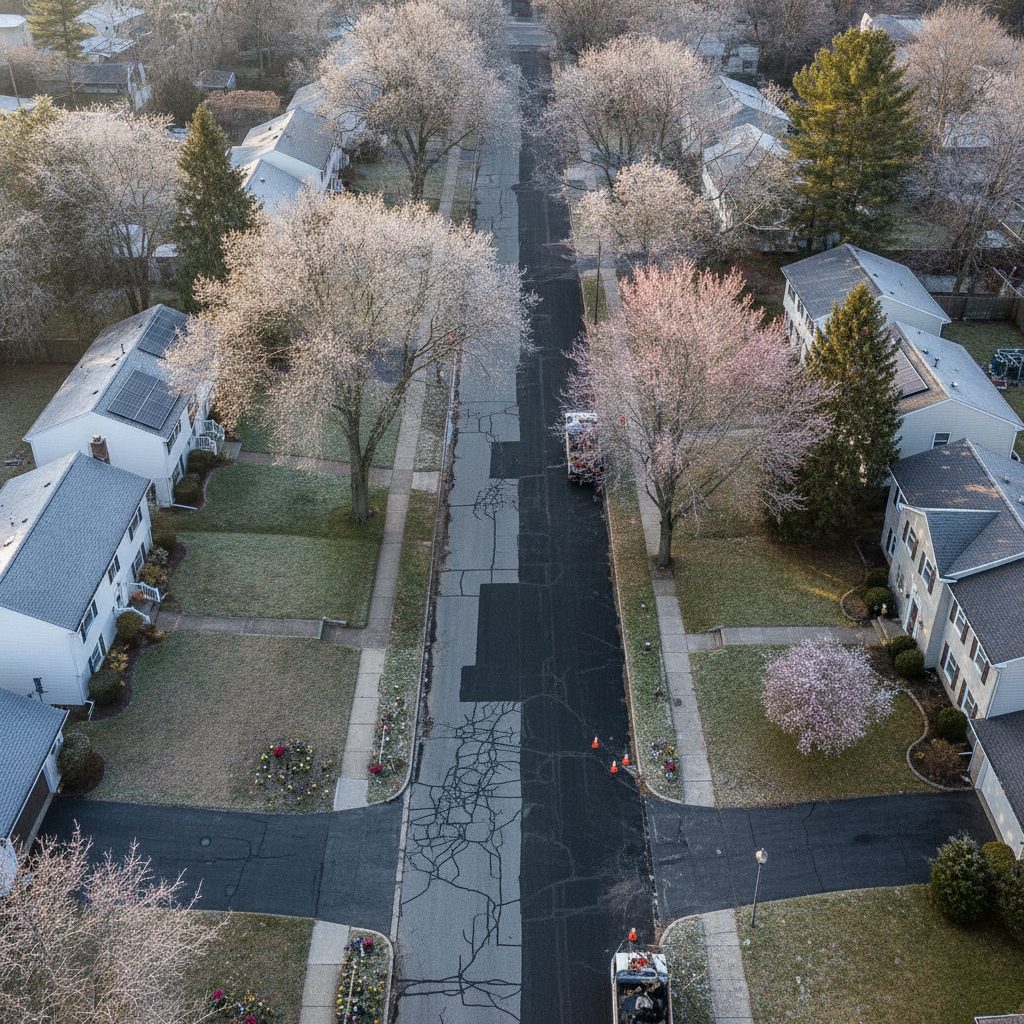
Every winter in northern New Jersey, pavement goes through a quiet kind of punishment. Water seeps into tiny openings, the temperature drops overnight, and that water turns to ice and expands. By afternoon it melts, drains deeper, and the process repeats. After enough of these cycles, a hairline crack becomes a pothole, and a smooth lot turns into an obstacle course. If you are planning asphalt repair in Lodi NJ, the timing of that work matters almost as much as the quality of the materials. Repair too early in the season and the fix may not bond. Repair too late and the damage compounds while you wait.
This guide walks through the calendar of a typical freeze-thaw year and explains which repairs belong in which window. You will learn why temperature and moisture dictate what a crew can actually accomplish, how to spot the early warning signs after a cold snap, and how to plan around your own business or household schedule. Whether you manage a storefront, oversee a small development, or simply want to protect your driveway, understanding the rhythm of the seasons will help you spend money once instead of twice. Think of it as a practical timing playbook rather than a sales pitch, built so you can make confident decisions before the next hard freeze arrives.
How Freeze-Thaw Cycles Break Down Pavement
Asphalt looks solid, but it is a porous, flexible material that constantly interacts with moisture. When rain or melting snow finds a crack, it travels down into the base layer. Water expands roughly nine percent when it freezes, and that pressure pushes the surrounding pavement upward and outward. When the ice melts, the pavement does not fully settle back, leaving a slightly larger void than before. Over many repetitions, those voids connect and weaken the surface from below.
This is why pavement problems often seem to appear overnight in late winter. The damage was building for weeks beneath the surface, and then the first heavy truck or snowplow pass finished the job. Understanding this mechanism is the foundation for timing repairs well. Professional Asphalt Repair Lodi NJ work aims to interrupt this cycle by sealing out water before it can do its slow work, and by rebuilding any section where the base has already been compromised.
Why Temperature Dictates What Crews Can Actually Do
Hot mix asphalt needs to stay workable long enough to be placed and compacted. In cold air and cold ground, the mix loses heat quickly, and a patch can stiffen before the roller ever touches it. A poorly compacted patch leaves gaps that trap water, which defeats the purpose of the repair. That is why many contractors rely on warm weather for permanent work and treat winter fixes as temporary measures.
Surface and air temperature both matter, along with whether the ground is frozen or wet. Sealers and crack fillers are even pickier, because they need dry surfaces and mild conditions to cure properly. If you want a clear explanation of how an established local team approaches these constraints, you can click here to see how commercial paving work is scoped. The lesson is simple: the calendar is not a suggestion. It reflects real chemistry and physics that determine whether a repair lasts one season or ten.
Late Winter: Triage, Not Perfection
February and early March are when the damage becomes obvious, and the temptation to fix everything immediately is strong. In most cases, the smarter move is triage. Potholes that create safety hazards or threaten vehicles deserve a cold patch, which is a pre-mixed material designed to be placed in low temperatures. It is not a permanent solution, but it keeps the opening from growing while you wait for better weather.
Use this window to document problems instead. Walk the property after a thaw, take photos, note where water pools, and mark areas that sink or alligator crack. Having that inventory lets you request accurate estimates and prioritize the worst sections first. If you are weighing who should handle the work, reviewing an Asphalt Repair Company in Lodi, NJ before the busy season starts gives you time to compare scopes and schedule a slot before the spring rush fills calendars.
Spring: The Prime Window for Permanent Repairs
Once nighttime temperatures stay consistently above freezing and the ground has dried out, spring becomes the best period for lasting repairs. Plants open for the season, crews are fresh, and the damage from winter is still easy to see. Full-depth patching, where failed sections are cut out and replaced down to the base, can be done properly because the mix stays workable and the base is no longer saturated with frozen water.
Spring is also when drainage problems reveal themselves, since you can watch where meltwater and rain collect. Fixing grading issues now prevents the same low spots from becoming next year’s potholes. A well-prepared subsurface is critical for anything that will carry traffic, which is why resources like The Role of Base Preparation in Commercial Asphalt Projects in Lodi, NJ are worth reading before you approve any scope. The surface is only as durable as the foundation beneath it.
Summer Is Great for Sealing, With a Caveat
Warm, dry months are ideal for crack filling and sealcoating, because the materials cure fully and bond to clean, dry pavement. Crack filling in particular delivers excellent value. Sealing an open crack costs a small fraction of rebuilding a failed section, and it stops water from reaching the base before the next freeze arrives.
The caveat is that extreme midsummer heat can soften asphalt, making it vulnerable to tire marks, scuffing, and rutting under heavy loads. Scheduling larger projects for early morning or avoiding the hottest weeks reduces that risk. Homeowners thinking about the visual side of a driveway should also consider how fresh repairs affect overall appearance, and Residential Asphalt Paving and Curb Appeal: A Lodi, NJ Homeowner’s Guide offers a helpful look at how repairs and presentation work together over the long term.
Early Fall: Your Last Great Chance Before the Freeze
September and much of October give you one more strong window. Temperatures are moderate, the ground is dry, and there is still enough warmth for hot mix to compact well. Repairs completed now have time to cure and settle before the first hard freeze tests them. This is the season to seal cracks you noticed in spring, patch any new failures from summer traffic, and correct drainage issues.
Treat early fall as winter preparation. The goal is to leave the pavement as watertight as possible before cold weather arrives, because every sealed crack is one less entry point for ice. Property managers who wait until November often find that crews are booked solid or that overnight temperatures have already dropped below workable ranges. Planning for September keeps you ahead of both problems and gives the surface time to fully harden.
A Seasonal Repair Calendar at a Glance
The table below summarizes which kinds of work fit each part of the year. Use it as a starting point, and remember that actual conditions vary from week to week, so a reputable contractor will always check forecasts and ground conditions before committing to a date.
| Season | Best Repair Types | Main Limitation |
|---|---|---|
| Late Winter | Cold patching, damage documentation | Cold, wet ground limits bonding |
| Spring | Full-depth patching, drainage fixes | High demand, crews book quickly |
| Summer | Crack filling, sealcoating | Extreme heat softens fresh work |
| Early Fall | Sealing, patching, winter prep | Shrinking window before frost |
Warning Signs to Watch After Every Cold Snap
You do not need professional training to catch early trouble. After any stretch of freezing nights followed by a thaw, walk your pavement and look closely. Fresh cracks that were not there last month are the clearest signal, especially if they appear in a branching, web-like pattern. That pattern, often called alligator cracking, usually points to base problems rather than a surface flaw.
- Widening cracks with crumbling edges
- Puddles that linger long after rain has stopped
- Sunken or raised patches that catch a shoe or wheel
- Loose gravel or a rough, sandy texture on the surface
- Potholes forming near drains, curbs, or building entrances
Catching these signs early changes the entire cost picture. A narrow crack can be sealed quickly and cheaply, while the same crack left alone through another winter may need a full section replaced. Make the walk-through a habit each spring and fall.
Scheduling Repairs Around Your Business Calendar
The best technical window is not always the best practical one. A restaurant, clinic, or retail space cannot easily close its parking lot during peak hours, and a homeowner may need the driveway for work vehicles. Good planning means matching the repair season to your slow periods, whether that is a quiet week in spring or a low-traffic stretch in early fall.
Ask contractors about phasing, where a lot is repaired in sections so that part of it stays usable. Early morning starts and weekend work can also reduce disruption. Communicate with tenants, employees, and neighbors well in advance, and arrange temporary parking if needed. A few days of coordination upfront prevents frustration and keeps the project on schedule. Flexibility on your side also gives the crew room to shift dates when weather refuses to cooperate, which is common in this region.
Budgeting Smartly Across the Seasons
Timing affects cost in several ways. Repairs made during the busiest weeks of spring may come with longer waits, while booking in the shoulder periods can sometimes open up more flexible scheduling. More importantly, spreading maintenance across the year keeps expenses predictable. Sealing cracks in summer and fall costs far less than emergency patching in a crisis.
Costs vary widely depending on the size of the area, the depth of damage, and site access, so request written estimates that describe exactly what is included. Be wary of anyone who promises a permanent fix in freezing weather, since materials simply do not behave properly in those conditions. Building a small annual maintenance line into your budget is almost always cheaper than absorbing a large replacement bill every decade. Consistency beats heroics when it comes to pavement.
Final Thoughts
Freeze-thaw cycles are a fact of life in this part of New Jersey, but the damage they cause is far from inevitable. The key is working with the calendar instead of against it. Late winter is for triage and documentation, spring is the prime window for permanent patching and drainage corrections, summer suits crack filling and sealing, and early fall is your final chance to make the surface watertight before the freeze returns. Each season has a job, and matching the right repair to the right moment is what separates a fix that lasts from one that fails by the following February.
Start with a simple habit: walk your property after every major cold snap and again in early spring and early fall. Note new cracks, standing water, and soft spots, and act on small problems before they grow. Then plan your larger projects around your own schedule, booking early so you are not competing with everyone else for the same few weeks. Ask contractors detailed questions about materials, base work, and weather limits, and insist on clear written scopes. When you treat pavement as an asset that needs steady attention rather than an afterthought, it rewards you with years of safe, attractive service and far fewer surprises each time the temperature swings.
One Response