
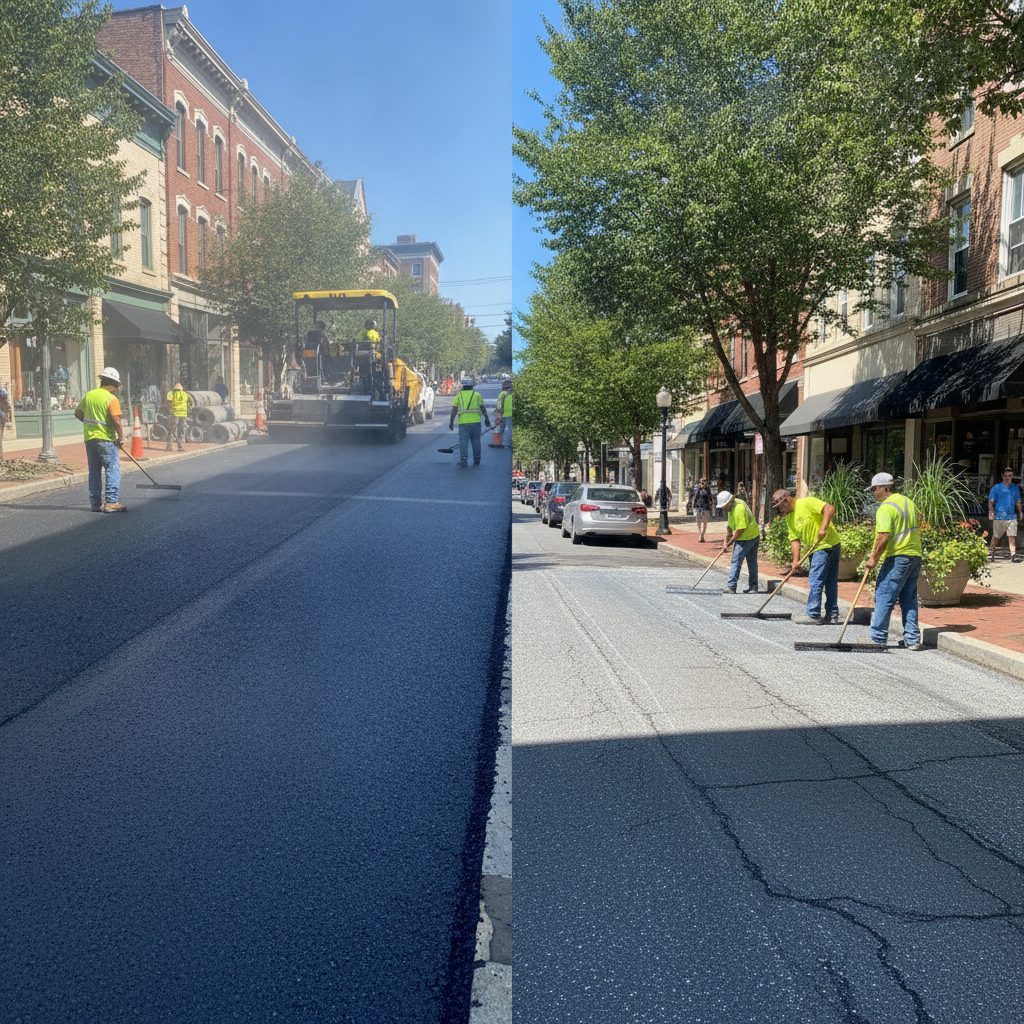
Every commercial lot reaches a point where patching stops making sense and someone has to decide how to fix the surface for real. The two big options are a fresh layer of asphalt over what is already there, or tearing everything out and rebuilding from the ground up. Both can be the right call, and both can be an expensive mistake when chosen for the wrong reasons. If you are planning Commercial Asphalt Paving Lodi NJ property owners can count on for years, understanding the difference before you collect bids will save you money, downtime, and frustration.
This guide walks through how each approach works, what conditions favor one over the other, and what questions to ask a contractor before signing anything. We will cover base health, drainage, traffic loads, cost behavior over time, and how disruption to your customers or tenants plays into the decision. You do not need to be a pavement engineer to make a smart choice. You just need to know what to look for, what to ask, and which warning signs point toward a deeper fix. By the end, you should feel confident walking your own lot and understanding what the surface is really telling you.
What an Overlay Actually Is
An overlay, sometimes called a resurface, is a new layer of hot mix asphalt placed directly on top of the existing pavement after the old surface has been cleaned and repaired. Think of it as a fresh skin over a body that is still structurally sound. The contractor fixes the worst cracks and failed spots, applies a tack coat so the new layer bonds, and then paves a layer that is commonly between one and a half and two inches thick, depending on the project.
The appeal is obvious: it is faster, usually cheaper, and keeps most of your lot usable during the work. But the key phrase is structurally sound. An overlay improves the surface, not the foundation. When you compare asphalt overlay vs new construction, the real question is whether the layers beneath the surface can still carry traffic. If they can, an overlay is a smart, economical choice. If they cannot, the new layer will simply inherit and display every weakness below it within a season or two.
What New Construction Really Involves
New construction, also called full-depth reconstruction, means removing the old asphalt entirely and often reworking the stone base underneath it. Crews excavate or mill the surface, inspect the subgrade, replace soft or contaminated areas, regrade for proper slope, compact a fresh aggregate base, and then place new asphalt in one or more lifts. It is the closest thing to starting over.
That process costs more and takes longer, but it solves problems an overlay cannot touch. Poor drainage, a failed base, repeated pothole formation, and areas that sink under heavy trucks are all signs that the issue lives below the surface. Rebuilding lets you correct grades, add proper drainage falls, and size the pavement section for the loads it will actually see. For many commercial properties, commercial parking lot paving services that include a full rebuild are an investment that resets the clock on maintenance for years rather than months.
Reading the Surface for Clues
Your pavement usually tells you which option fits before any contractor does. Walk the lot after a rain and again on a dry day, and look carefully at the patterns of damage rather than just the amount. Scattered, hairline cracks and general oxidation point toward a surface problem that an overlay can handle. Interconnected cracking that resembles an alligator’s skin, ruts in wheel paths, and depressions that hold water point toward a base that has given up.
Pay attention to where failures cluster. Damage near a dumpster pad, a delivery dock, or a drive lane that sees heavy trucks often means the section was never thick enough for the load. Damage near low corners and catch basins often means water has been softening the base. Take photos, mark the problem areas on a simple sketch, and note how long each issue has existed. This record helps a contractor diagnose accurately and helps you compare bids on equal terms, because everyone is responding to the same observations.
Why Base Condition Decides Everything
The base is the hidden half of every pavement. Asphalt is flexible, and it relies on compacted stone and stable soil beneath it to spread loads out. When that support erodes, cracks, or becomes saturated, the surface above it flexes more than it was designed to, and fatigue cracking follows. No amount of new surface can fix a weak foundation.
That is why a reputable contractor will want to probe the pavement before recommending a fix. Core samples or test cuts reveal how thick the existing asphalt is, whether layers are separating, and what the stone and soil underneath look like. If the old pavement is already thick from several past overlays, adding another may create a stack that is prone to slipping or reflecting cracks. When problems are isolated, a trusted Asphalt Repair Company in Lodi, NJ can often fix localized base failures with deep patches, then overlay the rest, giving you a hybrid solution that spends money only where it is needed.
Timing, Downtime, and Your Customers
For a business, the schedule often matters as much as the price. An overlay can frequently be completed in a day or two for a modest lot, and crews can phase the work so part of the property stays open. Full reconstruction takes more steps, more equipment, and more cure and compaction time, which means longer closures and more careful planning around deliveries, employees, and customers.
If you operate a restaurant, clinic, or retail space, lost visits can add up quickly, so ask contractors how they would sequence the job and whether they can work early mornings, evenings, or weekends. Reviewing Commercial Asphalt Paving Timelines for Busy Lodi, NJ Businesses can help you set realistic expectations before you commit. Also build in weather buffers, since asphalt needs suitable temperatures and dry conditions to be placed and compacted properly. A slightly longer plan that avoids rushed work usually produces a better pavement than a tight schedule that cuts corners.
The Middle Path: Mill and Fill
Between a straight overlay and a complete rebuild sits a very practical option: milling the top layer off and paving back to grade. Milling grinds away the worn surface, usually a couple of inches, and removes the damaged material before new asphalt goes down. This keeps curb lines, drain elevations, and door thresholds from rising, which is a common headache with plain overlays.
It is especially useful where the lower layers are healthy but the top is cracked, rutted, or oxidized. Milled material can often be recycled back into new asphalt, which is better for your project and for the environment. Property owners weighing this route can learn more from How Asphalt Milling Can Extend the Life of Damaged Surfaces in Lodi, NJ, which explains how removing the failed layer lets new pavement bond to sound material. Milling does add cost compared with a simple overlay, but it often costs far less than full reconstruction.
Side-by-Side Comparison
Seeing the options together makes the tradeoffs clearer. The table below summarizes how each approach typically behaves. These are general patterns, not guarantees, and every site is different, so treat this as a starting point for conversations with your contractor rather than a final verdict.
| Factor | Overlay | Mill and Fill | New Construction |
|---|---|---|---|
| Best for | Sound base, surface wear | Healthy base, damaged top layer | Failed base, drainage problems |
| Upfront cost | Lowest | Moderate | Highest |
| Disruption | Short | Moderate | Longest |
| Grade changes | Raises surface | Keeps grade | Can be reset |
| Expected lifespan | Shorter | Medium to long | Longest |
Traffic Loads and Pavement Thickness
A lot designed for employee cars is not the same as one handling box trucks, garbage haulers, or fire apparatus. Thickness and base strength should match the heaviest regular loads, not just the typical vehicle. Trouble spots such as turning lanes, loading areas, and entrances take the most punishment because slow, twisting, heavy wheels shear the surface.
If your property has changed use since it was first built, the original pavement may be undersized for today’s traffic. A former office park that now hosts a distribution tenant is a classic example. In those cases an overlay can look fine for a short while and then rut quickly. Discuss your real traffic patterns with the contractor, including delivery frequency and truck types, so the recommended section thickness reflects reality. Sometimes a strengthened rebuild only in the heavy-use lanes, paired with an overlay elsewhere, delivers the best balance of cost and durability.
Drainage Is the Silent Deciding Factor
Standing water is pavement’s worst enemy. It seeps into cracks, softens the base, and accelerates freeze-thaw damage during New Jersey winters. If your lot has birdbaths, low corners, or runoff pointing toward building entrances, layering new asphalt on top will not cure the cause. An overlay generally follows the existing contours, so it can preserve the very flaws that trap water.
Reconstruction or targeted regrading lets crews rebuild slopes so water moves toward inlets and away from the structure. Even a modest slope improvement can extend the life of the pavement noticeably. Before any paving decision, observe where water goes during a heavy rain and look at the condition of catch basins and swales. If drainage is the root issue, budget for correcting it as part of the project. Skipping that step often means paying for the same repair twice.
Thinking in Lifecycle Cost, Not Sticker Price
The cheapest bid today is not always the cheapest option over ten or fifteen years. An overlay costs less now, but if it lasts only a few seasons because the base was failing, you will pay again soon, and you will have added thickness without fixing the cause. A rebuild costs more up front but may spread that expense over a much longer service life with fewer emergency repairs.
To compare fairly, ask each contractor for expected performance, what maintenance the pavement will need, and what is and is not covered by their warranty. Factor in the value of avoided liability, since trip hazards and deep potholes can lead to injury claims. Also consider how routine care, such as crack sealing and sealcoating on a sensible schedule, stretches either option. Overlays and rebuilds both last longer when owners treat small defects early rather than waiting for them to grow into big, costly failures.
Questions to Ask Before You Decide
A good bid conversation is really a diagnostic conversation. Before approving work, put a few pointed questions to every contractor so you can compare answers side by side:
- What did you find when you inspected the base and existing thickness?
- Why do you recommend this approach over the alternatives?
- How will you handle drainage and grade changes at doors and curbs?
- What is the planned sequence, and how will access be maintained?
- What warranty covers the work, and what does it exclude?
- What maintenance should we do after the paving is finished?
Be cautious about any bid that arrives without a site visit or that recommends the same solution for every property. A contractor who explains tradeoffs honestly, including when a cheaper overlay would be a poor choice, is usually the one worth trusting.
Bringing the Decision Together
Choosing between an overlay and new construction comes down to one honest question: is the problem on the surface or underneath it? If the base is sturdy, drainage works, and the damage is mostly wear, an overlay or a mill and fill can deliver excellent value and minimal disruption. If you see deep rutting, widespread alligator cracking, recurring potholes, or water that never leaves, rebuilding is usually the smarter long-term investment, even though it stings the budget today.
Your best next steps are simple. Walk the property and document what you see, note traffic and drainage patterns, and invite at least two or three qualified contractors to inspect and explain their reasoning. Ask for options in writing, compare lifecycle cost instead of just the lowest number, and weigh how much downtime your business can realistically absorb. Done well, this process gives you a pavement that looks professional, keeps customers and tenants safe, and avoids paying twice for the same problem. Whether you land on an overlay, a partial rebuild, or full reconstruction, a thoughtful, well-informed decision is what turns your lot into an asset instead of a recurring expense. The right choice is the one that fits your pavement’s real condition, not just your budget this quarter.