
Every property owner eventually faces the same frustrating moment: the pavement is cracked, rutted, and patched so many times that it looks like a quilt, yet tearing out everything feels like overkill. That is exactly where asphalt milling earns its reputation. Instead of burying problems under another layer or paying for a complete rebuild, milling removes the damaged top portion of the pavement and gives a fresh start to the surface that matters most. For anyone searching for asphalt repair Lodi NJ, understanding this process can save thousands of dollars and years of headaches.
Milling is not a new or experimental technique. Highway departments and commercial contractors have relied on it for decades because it solves problems that simple patching cannot touch. Worn surfaces, raised edges, standing water, and failing top layers can all be corrected while the sound base underneath stays right where it is. The result is a smoother, safer, and longer-lasting pavement without the cost and disruption of full reconstruction.
In this guide, we walk through what milling actually is, when it makes sense, how the work unfolds, and what to expect afterward. Whether you manage a small retail lot, own a multi-unit property, or simply want a driveway that stops embarrassing you, you will find practical, plain-language answers here. We will also compare milling with other repair options so you can make a confident decision that fits your budget and timeline.
What Asphalt Milling Actually Is
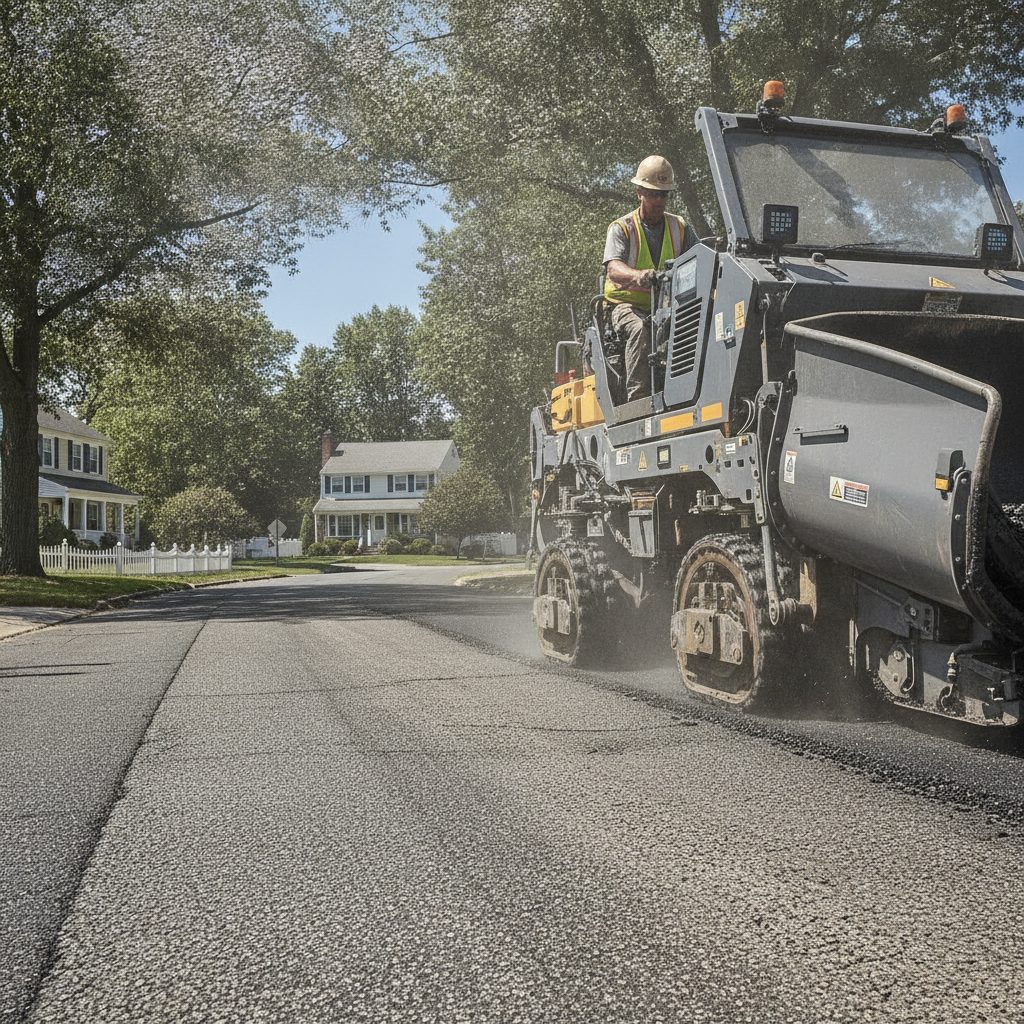
Asphalt milling, sometimes called cold planing or grinding, is the controlled removal of the top layer of an existing asphalt surface. A large machine fitted with a rotating drum covered in carbide teeth shaves the pavement down to a specified depth, usually somewhere between one and four inches depending on the damage. The drum grinds the old material into small chunks that are loaded onto a conveyor and carried straight into a waiting truck.
What makes the process valuable is its precision. Operators can set the cutting depth and slope so the finished surface lines up with drains, curbs, doorways, and neighboring pavement. That level of control is difficult to achieve with hand tools or patching alone. Experienced crews such as Parkway Paving LLC use milling when the top layer has failed but the structure beneath still has life left in it, which is the situation many aging driveways and lots find themselves in.
Think of it as exfoliation for pavement. The tired, damaged skin comes off, and what remains is a clean, textured foundation ready to bond with new material.
Signs Your Pavement Is a Good Candidate
Not every worn surface needs milling, but certain warning signs point strongly in that direction. Widespread alligator cracking in the top layer, shallow ruts where tires travel, and surfaces that have been overlaid more than once are all classic indicators. If the pavement feels bumpy underfoot or water sits in the same low spots after every rain, the surface geometry has probably drifted far enough that milling is the cleanest correction.
Another common clue is height. After several overlays, an asphalt surface can creep upward until it sits awkwardly against garage thresholds, storm drains, or sidewalks. Milling brings the grade back down so the new surface does not make the problem worse. Many owners looking into Lodi NJ asphalt repair services discover that milling solves several of these issues at once.
- Extensive surface cracking that keeps returning after sealing
- Rutting, shoving, or washboard patterns in high-traffic zones
- Raveling, where small stones are loosening and scattering
- Pavement that sits too high against structures or drains
How the Milling Process Unfolds
A well-run milling job follows a clear sequence. First, the crew walks the site and marks areas to be ground, noting manholes, valve covers, and any spots where deeper damage may lurk. Utility covers are protected or flagged so the drum does not strike them. Next, the milling machine makes its passes, working in lanes much like mowing a lawn, while a dump truck rides alongside to catch the material.
After grinding, sweepers and blowers clear the loose debris so the exposed surface is clean. Crews then inspect the freshly milled pavement. Because the old top layer is gone, hidden trouble spots such as soft subgrade or failed patches become visible, and these can be repaired before anything new goes down.
Finally, a tack coat is sprayed to help the new asphalt bond, and fresh hot mix is placed and compacted to the desired thickness. On smaller properties, this entire sequence can often be finished in a day or two, which keeps disruption low and gets vehicles back on the surface quickly.
Milling Versus Patching, Overlay, and Full Replacement
Choosing among repair methods is easier when you see them side by side. Patching fixes small, isolated failures but cannot address a surface that is deteriorating everywhere. A plain overlay adds new asphalt on top of the old, which is faster and cheaper upfront, yet it often reflects existing cracks through the new layer and raises the pavement height. Full replacement removes everything down to the base, offering the longest life but also the highest cost and the most downtime.
Milling sits in the sweet spot between these extremes. It removes the failing layer, keeps the grade under control, and reuses the stable structure below. The table below summarizes how the options compare in general terms.
| Repair Method | Best For | Relative Cost | Downtime |
|---|---|---|---|
| Patching | Small, isolated damage | Low | Hours |
| Simple Overlay | Sound surfaces with light wear | Low to moderate | 1 to 2 days |
| Mill and Overlay | Failing top layer, solid base | Moderate | 1 to 3 days |
| Full Replacement | Failed base or widespread structural damage | High | Several days |
Why the Base Matters Before Any Milling Starts
Milling only makes sense when the layers beneath are healthy. If the base is soft, saturated, or crumbling, grinding the surface and laying new asphalt is like repainting a wall with a leaking pipe behind it. The damage will return, and sooner than anyone would like. That is why a careful assessment of what lies below the surface is the first real step of any milling plan.
Contractors typically probe suspicious areas, look for pumping or spongy spots under traffic, and examine the cut face of the pavement for thickness and condition. Reading about The Role of Base Preparation in Commercial Asphalt Projects in Lodi, NJ shows how much long-term performance depends on what gets installed and corrected underneath the visible layer.
When milling exposes weak spots, those sections can be dug out, rebuilt with proper stone, compacted, and brought back to grade. This targeted approach means you only pay for deep repairs where they are truly needed rather than across the entire property.
Fixing Drainage Problems Through Grade Correction
One underappreciated benefit of milling is its ability to reshape how water moves across a surface. Standing water is more than an annoyance. It seeps into hairline cracks, freezes, expands, and accelerates the very deterioration you are trying to fix. Because milling lets crews cut to precise depths, they can recreate gentle slopes that carry runoff toward drains, gutters, or open areas.
Low spots that formed from years of compaction under heavy vehicles can be leveled out, and high spots that block flow can be trimmed. The new asphalt is then placed to maintain that corrected profile. Even a slight improvement in pitch can mean the difference between a surface that dries within an hour of a storm and one that stays wet for days.
Good drainage also protects the base. Water that cannot escape tends to soak downward, softening the stone and subgrade over time. Correcting the grade through milling is therefore both a surface repair and a quiet investment in the structural health of the whole pavement system.
Protecting Edges, Transitions, and Surrounding Features
A smooth milled surface still needs thoughtful finishing at its borders. Where asphalt meets concrete aprons, garage doors, curbs, or neighboring pavement, a clean transition prevents trip hazards and stops water from sneaking underneath. Crews often mill a tapered joint so the new layer feathers into the existing surface instead of ending in an abrupt lip.
Edges deserve special attention because they carry less support than the center of a driveway or lot. Without proper reinforcement, they crumble first. Understanding How Asphalt Driveway Edging Improves Durability in Lodi, NJ helps explain why compacted shoulders and clean edge lines are worth the extra effort during a milling project.
Protecting surrounding features also means safeguarding landscaping, drain inlets, and utility covers during the work. A tidy crew will shield these elements, adjust castings to match the new height, and leave the property looking intentional rather than patched together.
The Environmental Upside of Recycling Milled Material
Asphalt is one of the most recycled construction materials around, and milling is a big reason why. The ground-up pavement, often called reclaimed asphalt pavement, is not waste. It can be hauled to a plant, blended into new mixes, or used as a stable base material for driveways, parking areas, and roads. That cycle reduces the need for virgin aggregate and fresh asphalt binder.
For property owners who care about sustainability, this matters. Choosing milling over full removal and landfill disposal keeps usable material in circulation and cuts down on truck trips and dumping. Fewer raw materials need to be mined, processed, and transported, which lowers the overall footprint of the project.
There is a practical side too. Because reclaimed material has real value, it can help offset part of the project cost. Many contractors factor that into their pricing, which is one more reason milling often comes out ahead of tear-out and replacement when the base is still in good shape.
Timing, Traffic, and Minimizing Disruption
Because milling is fast, it suits businesses that cannot afford long closures. A crew can often mill a mid-sized lot in a single morning and place new asphalt the same day or the next. Planning the work in phases lets stores, offices, and apartment communities keep part of the property open while another section is being completed.
Weather plays a role as well. Hot mix asphalt needs reasonably mild temperatures and dry conditions to compact and bond properly, so scheduling around forecasts is part of good project management. Early communication with tenants, customers, and neighbors prevents surprises and keeps frustrations low.
New asphalt also needs a brief curing period before it can handle heavy loads. Cones, signage, and clear instructions help drivers stay off the fresh surface. A short pause in traffic is a small price for pavement that performs for many years, and good contractors will explain exactly when each area can reopen.
Estimating Cost and Getting the Most Value
Costs for milling and overlay vary widely depending on the size of the area, the depth of removal, access for equipment, and the thickness of the new layer. Without inspecting your property, any single number would be a guess, so treat online price claims with caution. What can be said generally is that milling usually costs less than complete reconstruction while delivering a noticeably longer-lasting result than a plain overlay.
To get the most value, request written quotes that spell out milling depth, asphalt thickness, base repairs, drainage corrections, and cleanup. Comparing line items rather than just totals reveals who is cutting corners. It is also smart to ask about warranties and how the contractor handles unexpected soft spots.
Finally, consider the cost of waiting. Small surface problems become larger structural ones when water and freeze-thaw cycles get involved. Acting while the base is still sound is usually the most economical moment to invest.
Choosing a Contractor and Keeping the Results
Equipment matters, but experience matters more. Look for a contractor who inspects before quoting, explains why milling is or is not the right answer, and has a track record of finished local projects. Working with an established Asphalt Repair Company in Lodi, NJ gives you a partner who understands regional soils, weather swings, and typical traffic patterns, which all influence how a milled surface should be built.
Once the work is done, simple habits protect your investment. Keep the surface clean, fill small cracks promptly, avoid parking heavy equipment in the same spot for long periods, and schedule periodic sealing according to your contractor’s advice. Good maintenance multiplies the life of a milled and resurfaced pavement.
Ask for guidance on a realistic maintenance calendar before the crew leaves. A short checklist at the start can prevent expensive surprises years down the road.
Bringing It All Together
Asphalt milling is one of the smartest tools available when a pavement surface has worn out but its foundation still has plenty of strength. By grinding away the damaged top layer, correcting grade and drainage, and installing a fresh wearing course, owners get a smooth, safe, good-looking surface without paying for a full rebuild. The process is fast, the material is recycled, and the results can last for many years when paired with sound base work and sensible upkeep.
The key is matching the repair to the real condition of the pavement. Patching suits small problems, overlays suit healthy surfaces, and full replacement suits failed structures. Milling fills the middle ground for properties with failing surfaces and a stable base, which describes a surprising number of driveways and commercial lots. A careful inspection will tell you which category yours falls into.
If your pavement is showing ruts, widespread cracking, standing water, or a patchwork of old repairs, now is a good time to ask a qualified contractor to evaluate it. Catching problems early keeps options open and costs under control. A well-planned milling project can turn a tired, embarrassing surface into an asset you are proud of, and it does so while respecting your budget, your schedule, and the environment.