
Walk up to almost any aging driveway and look at the outermost foot of pavement. That is where the first cracks, crumbles, and drop-offs usually show up. The center of a driveway gets compressed evenly by tires, but the edge has nothing holding it in place on one side. It is the weakest part of the whole surface, and it is also the part most homeowners never think about until it starts falling apart. Proper edging is the quiet detail that separates a driveway that holds together for decades from one that looks tired in a few seasons.
If you are planning residential asphalt paving in Lodi NJ, understanding how edging works will help you ask better questions and make smarter decisions. Edging is not just a cosmetic border. It involves compaction, base preparation, support materials, drainage, and the way the pavement meets grass, soil, or a walkway. In a region that swings from humid summers to freezing winters, those details are tested every year.
This guide walks through what edging actually is, why edges fail, which materials and methods keep them strong, and what you can do after installation to protect them. Whether you are replacing an old surface or building new, you will come away knowing exactly what a well-finished edge looks like and why it deserves attention.
What Driveway Edging Really Means
When contractors talk about edging, they are describing how the outer perimeter of the pavement is built, supported, and finished. A driveway is a layered system: compacted soil at the bottom, a crushed stone base above it, and one or more asphalt layers on top. The edge is where all those layers end abruptly. Without support, the hot mix near the border tends to spread outward under load, leaving a thin, brittle lip.
A properly edged driveway extends the base slightly beyond the visible asphalt, then tapers or compacts the perimeter so the surface is confined. Many installers also create a slightly beveled or rounded shoulder so tires that wander off the line do not catch a sharp vertical drop. Choosing a residential asphalt paving contractor Lodi NJ who treats edge construction as a core step, rather than an afterthought, is one of the simplest ways to protect your investment from day one.
Why Edges Break Down First
Edges fail earlier than the middle of a driveway for several overlapping reasons. First, they lack lateral confinement. When a vehicle drives near the border, the weight pushes sideways as well as down, and with nothing to resist that movement the asphalt slowly shears and crumbles. Second, edges are exposed to more moisture. Water running off the pavement soaks the soil beside it, softens the base, and weakens support right where it is needed most.
Third, edges dry out faster. Sun and air hit the exposed side of the asphalt, and oxidation makes the binder stiff and brittle. Fourth, roots, grass, and debris press against the border and gradually pry it apart. Finally, many drivers park or turn on the outer strip, concentrating stress there. Each of these factors is manageable, but only if the design anticipates them. Understanding the causes helps you see why a few extra inches of base and careful compaction make such a difference over time.
The Role of Base Width and Compaction
The single most important edging decision happens before any asphalt arrives: how wide the compacted base extends. A common best practice is to carry the stone base beyond the planned pavement line so the finished edge sits on solid, supported material rather than perched over loose soil. This extra shoulder gives the outer asphalt something firm to bear against, reducing the chance of the border sagging or breaking away.
Compaction matters just as much. Each layer of base should be rolled until it is dense and stable, and the asphalt itself must be compacted while it is still hot enough to bond. The outermost few inches are the hardest to roll because equipment cannot always sit directly on the edge, so crews often use smaller plate compactors or hand tools to finish the perimeter. When this step is rushed, you may see a soft strip along the border that looks fine at first but ravels within a couple of winters.
Materials That Support and Confine the Edge
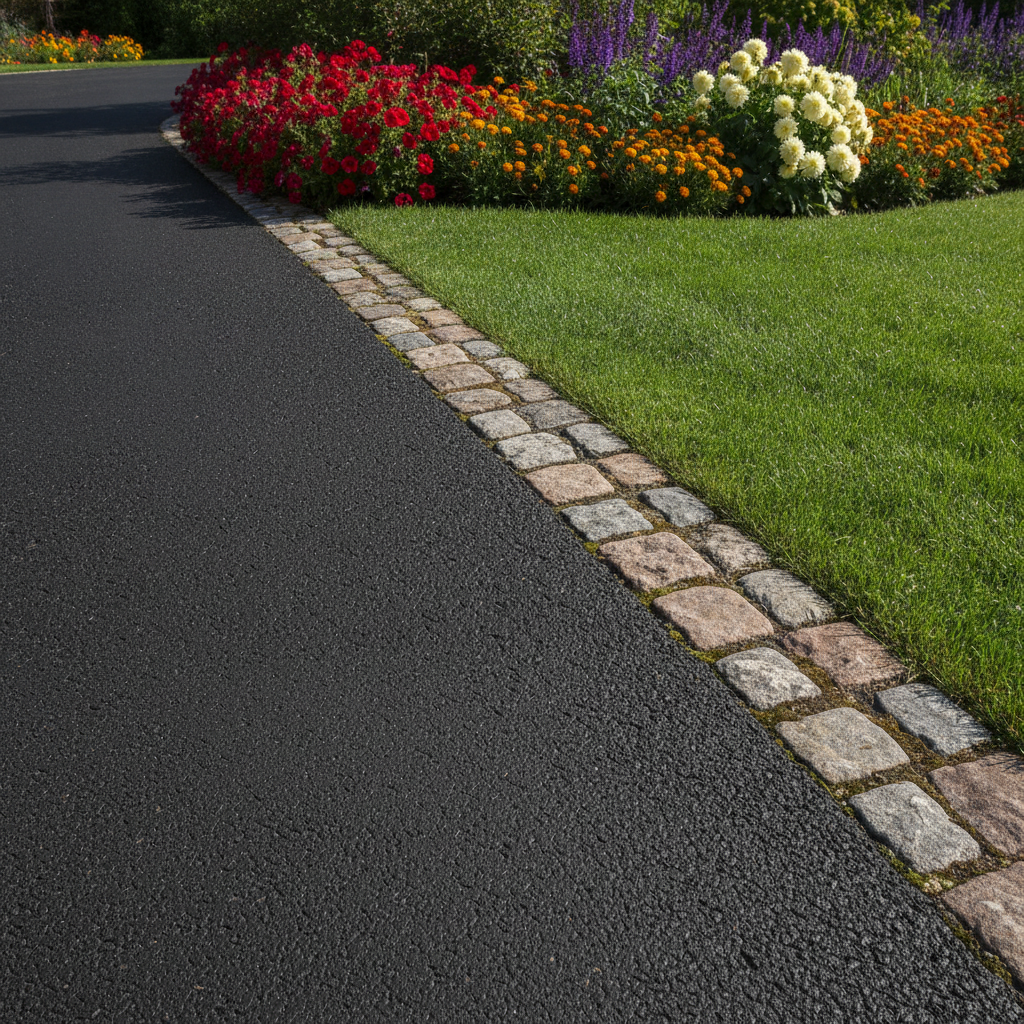
Beyond base preparation, some properties add a physical restraint along the border. Common options include compacted soil or gravel shoulders, concrete curbing, steel or composite edging strips, and stone or paver borders. Each has strengths. Shoulders are economical and blend with lawns. Curbs are the most rigid and also channel water. Metal or composite restraints are slim and nearly invisible, while pavers add a decorative touch.
The right choice depends on how the driveway is used and what surrounds it. A long rural-style drive with open lawn may do well with a well-compacted shoulder, while a tight urban lot with a walkway or planting bed next to the pavement may benefit from a hard border. Teams like Parkway Paving LLC can evaluate the site and recommend a restraint that fits both the budget and the way the space is actually used, which is more reliable than choosing a style from a catalog.
Edging and Drainage Working Together
Water is the enemy of any pavement edge, so edging and drainage should be planned as one system. The driveway surface should be graded so water sheds away from the structure and off the pavement without pooling along the border. Where the border meets soil, that soil should slope gently away or be dressed so that runoff does not wash out the shoulder or undermine the base.
If water lingers beside the asphalt, it saturates the stone below and weakens its load-bearing ability. During freezing weather, that trapped moisture expands and pushes upward, cracking the edge from underneath. When breakdown has already begun, an Asphalt Repair Company in Lodi, NJ can often rebuild the damaged strip, regrade the adjacent soil, and restore a clean transition so water leaves the area instead of attacking the pavement again.
How Freeze and Thaw Cycles Stress Borders
The Northeast climate is demanding on asphalt. Water seeps into tiny gaps at the edge, freezes overnight, expands, and then melts again by afternoon. Repeating this process throughout winter widens hairline cracks into visible breaks. Because the border is exposed to air and soil from two directions, it experiences more of these cycles than the protected interior.
Good edging reduces the number of entry points for water and gives expanding ice somewhere to go without lifting the pavement. A solid base shoulder, tight compaction, and a smooth, sealed transition all limit infiltration. Properties that skip these steps often see the border crumble back a few inches each spring, shrinking the usable width of the driveway. The lesson is simple: the cost of a strong edge is small compared with repeated patching and the gradual loss of the pavement itself.
Edging Methods Compared
Different edge treatments suit different situations. The table below summarizes how common approaches compare so you can weigh the tradeoffs before deciding. Costs and lifespans vary by site conditions and workmanship, so treat these as general guidance rather than fixed figures.
| Edge Method | Best For | Main Advantage | Main Limitation |
|---|---|---|---|
| Compacted stone shoulder | Open lawns, longer drives | Economical and blends in | Needs occasional regrading |
| Concrete curb | High traffic, tight lots | Very rigid and controls runoff | Higher upfront cost |
| Steel or composite strip | Curved or decorative layouts | Slim, clean appearance | Less rigid than concrete |
| Paver or stone border | Curb appeal focus | Attractive and sturdy | Needs a solid, level base |
Planning Edges Into the Driveway Layout
Edges are easiest to get right when they are considered during layout rather than bolted on later. The width of the driveway, the turning radius at the street, and the location of the garage all influence where vehicles will concentrate their weight. Tight curves and parking pads place extra lateral load on the outer strip, so those spots deserve a wider shoulder or a firmer restraint.
It also helps to think about how the pavement will meet landscaping, walkways, and utilities. Leaving a small buffer between the asphalt and plantings keeps roots and mulch from pushing against the border. If you are still sketching your design, reading How to Plan a New Asphalt Driveway Layout for Your Lodi, NJ Home can help you account for turning space, drainage direction, and edge support before any ground is broken, which saves costly changes down the road.
Common Edging Mistakes to Avoid
Several repeat offenders cause most premature edge failures. The first is a narrow base that stops right at the asphalt line, leaving no support beyond the pavement. The second is poor compaction along the perimeter, where hand tools are skipped to save time. The third is paving too thin near the border, which leaves a feathered strip that cannot bear weight. The fourth is ignoring drainage so runoff pools beside the pavement.
Another frequent problem is backfilling soil against the edge before the asphalt has cured and cooled, which can deform the border. Homeowners sometimes also allow heavy equipment, such as delivery trucks, to drive on the outer strip within the first days. Asking your installer how they handle each of these points is a quick way to gauge their attention to detail. A confident answer usually reflects a crew that treats the perimeter as seriously as the center.
Everyday Habits That Protect the Border
Once the driveway is built, small habits make a real difference. Try to keep tires toward the center of the pavement, especially when pulling in and out. Avoid parking heavy vehicles, trailers, or equipment on the outer edge, and never let vehicles drive across the shoulder where the base is exposed. During the first few months, the surface is still hardening, so be extra gentle with the borders.
Keep the soil beside the driveway filled and gently sloped so runoff drains away rather than washing the support out from under the asphalt. Trim grass and roots back from the edge, and clear leaves and debris that hold moisture against it. Sweep or rinse the border periodically so you can spot early crumbling. Catching a small chip and addressing it promptly is far easier than rebuilding a long failed section later.
Maintenance and Repair Options for Worn Edges
Even well-built edges eventually show wear, and early maintenance keeps problems small. Sealing hairline cracks near the border prevents water from entering the base. Filling shallow chips with a suitable patch material stops them from spreading, and adding compacted stone to a low shoulder restores support. When the border has crumbled more significantly, a contractor may cut back the damaged strip, rebuild the base, and lay fresh asphalt that bonds to the sound pavement.
If the surface overall is aging, resurfacing can be paired with edge rebuilding so the whole driveway ends up uniform. The same principles apply on larger properties, as discussed in Maximizing Lifespan with Commercial Asphalt Resurfacing in Lodi, NJ, where edge integrity and surface renewal work together to extend service life. Timing matters: repairs made before winter prevent freeze damage from compounding.
Questions to Ask Before You Sign
A short conversation with your installer can reveal how seriously they take edging. Ask how far the base will extend beyond the visible pavement, how the perimeter will be compacted, and what kind of restraint or shoulder treatment they recommend for your site. Ask how drainage along the border will be handled and whether the asphalt thickness is consistent all the way to the edge rather than tapering to nothing.
It is also fair to ask what they do to protect the border during curing and how long you should keep heavy vehicles off the outer strip. Request that these details appear in the written estimate so there is no confusion later. A contractor who answers clearly, offers examples from past work, and explains the reasoning behind each choice is usually one who builds driveways meant to last rather than just look good on installation day.
The Takeaway on Strong Driveway Edges
A driveway is only as durable as its weakest point, and for most properties that point is the border. Edging is not a decorative extra. It is a structural feature that confines the pavement, keeps water from undermining the base, and slows the cracking and crumbling that shorten a driveway’s life. A wide, well-compacted base, a sensible restraint or shoulder, thoughtful drainage, and careful grading all work together to hold the surface in place through hot summers and freezing winters.
If you are about to invest in residential asphalt paving in Lodi NJ, make edging part of the conversation from the first estimate. Ask how the perimeter will be supported, request those details in writing, and choose a crew that explains its methods clearly. After installation, a few simple habits will protect that work: keep heavy loads off the outer strip, maintain the soil beside the pavement, seal small cracks early, and address chips before they spread.
The payoff is a driveway that keeps its shape, preserves its full usable width, and looks sharp for many years. Strong edges quietly protect everything inside them, which makes them one of the smartest places to focus your attention and your budget when building or renewing a driveway.