
Asphalt sealcoating is an engineered mix of binders, emulsifiers, aggregates, polymers, and targeted additives. Binders form a protective film; emulsifiers keep it sprayable. Aggregates add skid resistance and wear. Polymers boost toughness and flexibility, while additives fight UV, oxidation, and oil. Coal tar offers fuel resistance but higher PAHs; asphalt emulsion trades fuel resistance for lower VOCs; refined tar–free blends balance both. Correct dilution, film thickness, and curing time drive performance, as do climate and traffic—there’s more that optimizes outcomes.
Key Takeaways
- Sealers combine binders, emulsifiers, mineral aggregates, polymers, and additives to form a durable, flexible, and adhesive protective film on asphalt.
- Coal tar, asphalt emulsion, and tar‑free blends differ in chemical makeup, balancing fuel resistance, flexibility, wear rate, VOCs, and environmental impact.
- Performance and lifespan hinge on aggregate loading, film thickness, polymer type, and additives that resist oxidation, UV, and oil softening.
- Proper application—correct dilution, calibrated spray rate, wet‑mil control, and curing based on temperature and airflow—determines uniform coverage and durability.
- Climate and traffic dictate formulation: colder regions need plasticized flexibility; hot, high‑UV areas need higher‑softening‑point binders and tougher polymers.
What Modern Sealers Are Made Of: Binders, Emulsifiers, Aggregates, Polymers, Additives
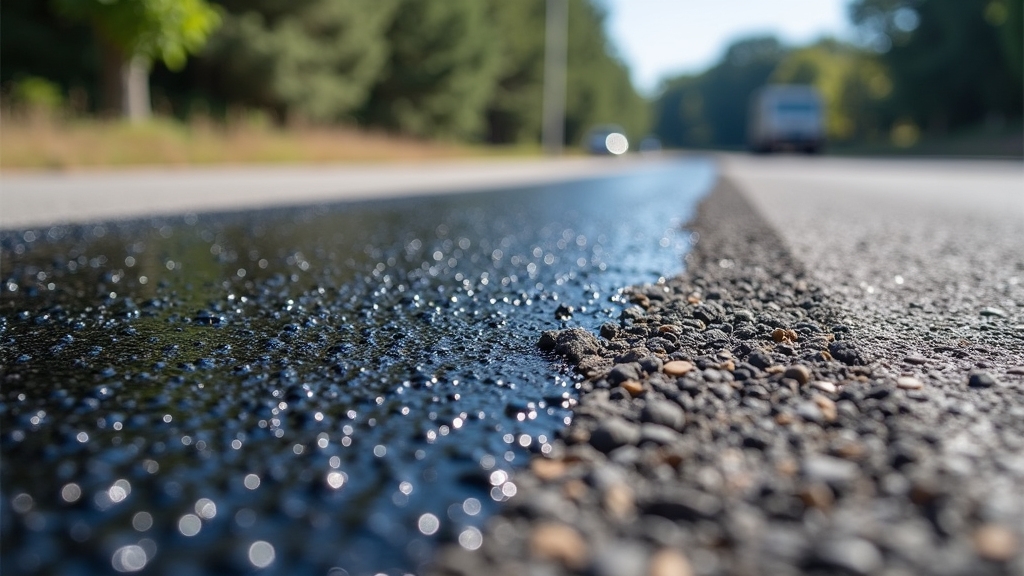
A modern asphalt sealer is a carefully engineered suspension designed to protect and renew pavements under real-world traffic and weather. Its backbone is the binder, selected from binder types optimized for film strength, flexibility, and adhesion.
A modern asphalt sealer is engineered to protect pavements, with binders for strength, flexibility, and adhesion.
Emulsifier functions keep microscopic binder droplets dispersed in water, enabling pumpability, storage stability, and controlled break when the water evaporates. Mineral aggregates—typically angular sand or specialty fillers—add skid resistance, wear life, and thickness control.
Polymers modify rheology and cohesion, boosting toughness, elasticity, and tracking resistance while enhancing cure windows. Additives fine-tune performance: anti-strips improve bonding to existing asphalt, defoamers control entrained air, and coalescents promote film formation in cool or humid conditions.
Pigments, stabilizers, and pH buffers round out a balanced, field-ready formulation.
Coal Tar vs. Asphalt Emulsion vs. Refined Tar–Free Blends
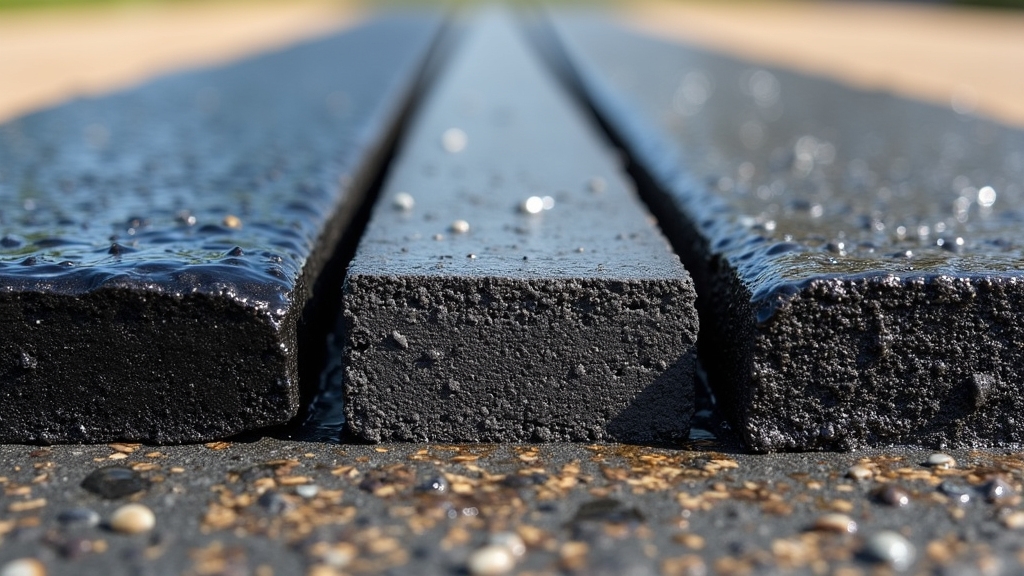
Coal tar, asphalt emulsion, and refined tar–free blends differ fundamentally in binder chemistry—PAH-rich coal tar distillates, bituminous waterborne emulsions, and engineered hydrocarbon or bio-based systems—shaping curing behavior and compatibility with aggregates.
These chemistries translate to distinct field performance: coal tar excels in chemical resistance and abrasion, asphalt emulsion favors flexibility and crack accommodation, and tar‑free blends aim to balance wear, fuel resistance, and color retention with polymer reinforcement.
Environmental and safety profiles vary widely, with coal tar facing PAH and odor concerns, asphalt emulsion offering lower VOCs, and tar‑free options targeting regulatory compliance and reduced worker exposure.
Composition and Chemistry
Composition sets performance. Coal tar, asphalt emulsion, and refined tar–free blends differ at the molecular level, and those differences drive sealant properties and field behavior.
Coal tar is a complex mixture rich in aromatic hydrocarbons and heterocyclics; its particles coalesce as water evaporates, with limited oxidation, yielding a dense film via physical packing more than chemical reactions.
Asphalt emulsion uses bitumen droplets stabilized by surfactants; breaking occurs when water leaves and emulsifiers destabilize, allowing asphaltenes and maltenes to form a cohesive matrix.
Refined tar–free blends replace coal tar aromatics with engineered polymers, bio-based oils, and mineral fillers; polymer crosslinks arise through ambient curing or additives, tuning hardness and flexibility.
In all systems, clay, latex, and silica modify viscosity, film formation, and pigment dispersion.
Performance and Durability
Set expectations by linking chemistry to service life. Coal tar’s aromatic structure resists fuel and solvents, preserving film integrity under drips and frequent turn lanes. Asphalt emulsion relies on maltenes/asphaltenes; it weathers faster under fuel but remains flexible, aiding crack resistance. Refined tar–free blends use engineered polymers and specialty resins to close the gap, trading extreme chemical resistance for balanced flexibility and color hold. Aggregate loading, film thickness, and cure temperature further govern sealant lifespan and real-world sealcoating benefits.
| Factor | Practical takeaway |
| Fuel resistance | Coal tar high; blends moderate; asphalt emulsion low. |
| Flexibility | Emulsion highest; blends high; coal tar moderate. |
| Wear under traffic | Coal tar slow; blends moderate; emulsion faster. |
| Maintenance cycle | Coal tar 3–5 yrs; blends 2–4; emulsion 1–3. |
Environmental and Safety Impacts
While performance often drives product choice, environmental and safety profiles increasingly set the guardrails for sealcoat selection.
Coal tar sealers contain high PAH content linked to aquatic toxicity and air emissions; many municipalities restrict or ban them under evolving environmental regulations.
Asphalt emulsion sealers carry lower VOCs and PAHs, easing permitting, but still require runoff control and proper curing to meet safety standards.
Refined tar–free blends—often polymer-modified asphalt or bio-based formulations—target reduced hazard classifications while maintaining workable film strength.
Across all chemistries, contractors must manage worker exposure (respirable mist, skin contact), combustion risk, and stormwater compliance.
Specifiers should verify SDS data, VOC content, and PAH thresholds, align with local ordinances, and enforce PPE, ventilation, and containment practices.
Environmental performance now influences lifecycle cost and public acceptance.
How Chemistry Battles Oxidation, UV Degradation, and Water Intrusion
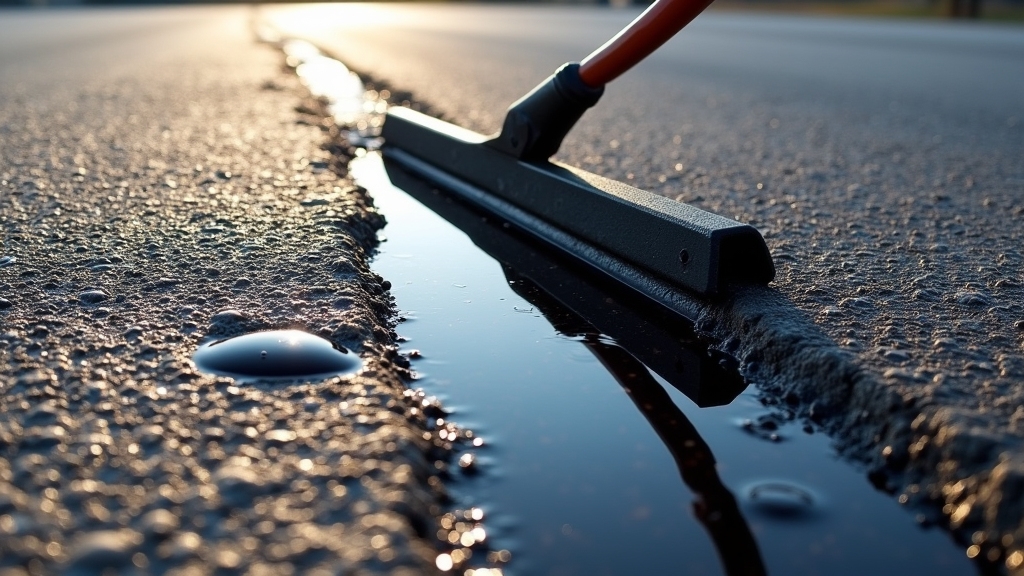
Modern sealcoats pair antioxidants with polymers to slow binder oxidation and keep flexibility under UV exposure.
This synergy stabilizes asphaltenes, reduces brittleness, and maintains a tighter film that resists raveling.
Formulated hydrophobic barriers further block capillary water intrusion, limiting freeze–thaw damage and subbase softening.
Antioxidants and Polymer Synergy
Although asphalt seems inert once cured, its binder is constantly under attack from oxygen, sunlight, and water; the most durable sealcoats counter these forces with a coordinated mix of antioxidants and polymers.
In practice, formulators pair specific antioxidant types with engineered polymer blends to slow oxidation, resist UV scission, and maintain cohesive strength under traffic and temperature swings. The chemistry must balance mobility for crack-bridging with film integrity for long service intervals.
- Primary antioxidant types (radical scavengers) intercept free radicals before chain reactions propagate.
- Secondary antioxidants (peroxide decomposers) convert hydroperoxides into stable species, extending the protection window.
- UV-absorbing polymers and HALS stabilize the binder by dissipating or quenching photochemical energy.
- Polymer blends (e.g., styrenics with elastomers) create interpenetrating networks that toughen the film, improve elasticity, and retain adhesion despite aging.
Hydrophobic Barriers Against Infiltration
Pairing antioxidants with polymers sets the stage, but keeping oxygen and water out of the binder is equally decisive. Hydrophobic properties come from silane-treated fillers, wax-modified lattices, and fluorinated surfactants that lower surface energy, repel droplets, and slow oxygen diffusion. UV stabilizers protect these films from embrittlement, maintaining infiltration resistance over seasonal cycles. Practical performance hinges on film continuity, pore blocking, and adhesion to aged asphalt.
| Component | Function | Field Note |
| Silane additives | Water repellency | Boosts aggregate-binder wetting and cohesion |
| Microcrystalline wax | Pore sealing | Reduces capillary transport without brittleness |
| UV absorbers | Photoprotection | Preserves polymer network integrity |
Application matters: correct solids, low entrained air, and prompt cure prevent pinholes. Well-designed barriers cut freeze–thaw damage, reduce raveling, and extend service intervals.
The Role of Polymers and Additives in Flexibility and Longevity
Durability meets chemistry when polymers and targeted additives are blended into asphalt sealcoats to control flexibility, adhesion, and wear.
Polymer flexibility allows the cured film to move with thermal cycles and minor substrate movement instead of cracking. Meanwhile, additive longevity focuses on resisting oxidation, UV attack, and oil softening so the film stays intact longer between maintenance cycles.
Formulators balance polymer type, crosslink density, and plasticizer load to hit workable viscosity, fast dry, and durable elasticity without brittleness.
- Elastomeric polymers: Improve elongation, crack-bridging, and cold-weather resilience.
- Reactive modifiers: Crosslink for scuff resistance, cohesive strength, and fuel tolerance.
- Plasticizers and coalescents: Tune low-temperature flexibility and film formation.
- Antioxidants, UV absorbers, and surfactants: Stabilize against aging, enhance wetting, and maintain uniform film integrity.
Aggregates for Texture, Skid Resistance, and Wear
In most sealcoat systems, mineral aggregates are the workhorses that create surface texture, skid resistance, and abrasion durability. Their size, hardness, and shape govern how a cured film resists polishing and wear.
Well-graded, angular sands or manufactured fines interlock in the binder, building micro-roughness that enhances skid resistance without excessive noise or drag. Cleanliness matters; dust-coated or friable particles weaken the mastic and shed early. Hard minerals like granite or slag outperform soft limestone in high-traffic lanes.
Particle size distribution controls texture variety: coarser blends raise macrotexture for water drainage, while finer fractions add uniform feel and cosmetic coverage. Proper compatibility with the sealer chemistry limits float or sink tendencies.
Consistent aggregate quality translates into predictable traction, color hold, and service life.
Application Variables: Dilution, Film Thickness, Curing, and Coverage Rates
Aggregate choice sets the potential for traction and wear, but application variables determine how that potential shows up on pavement. Sealers perform best when crews manage dilution ratios, target film thickness, allow adequate curing time, and plan for coverage efficiency.
These variables interact: thinner mixes spread farther but may underbuild; thicker coats protect but risk slow dry and scuffing. Calibrated equipment, wet-mil gauges, and disciplined staging keep results predictable.
- Dilution ratios: Match manufacturer specs; over-dilution reduces binder volume and ravel resistance, under-dilution impedes flow and uniformity.
- Film thickness: Control by pass count and spray rate; verify with mil gauges to avoid pinholes or soft skins.
- Curing time: Base on substrate temperature, shade, and airflow; prevent premature traffic.
- Coverage efficiency: Track square footage per batch; adjust tip size, pressure, and pace to maintain consistent yield.
Climate and Traffic: Matching Sealer Formulation to Real-World Conditions
Although a lab blend can look identical on paper, the right sealer for Maine is rarely the right sealer for Phoenix—or for a hospital loop versus a truck court.
Climate effects dictate binder hardness, polymer loading, and cure chemistry. Cold regions need flexible films with plasticizers and robust emulsifiers to resist thermal cracking and salt-laden meltwater.
Climate drives binder hardness, polymer load, and cure. Cold zones need flexible, plasticized films with strong emulsifiers.
Hot, high-UV markets favor higher-softening-point binders, more fines, and UV stabilizers to reduce scuffing and oxidation.
Traffic patterns guide aggregate size, solids content, and recoat strategy. Heavy turning, forklifts, and truck axles demand higher sand loadings, tougher polymers, and longer cure windows. Light commuter lanes tolerate leaner builds.
Matching sealer formulation to measured temperature profiles and wheel loads extends service life, reduces tracking, and stabilizes friction.
Frequently Asked Questions
How Do Sealcoating Choices Affect Future Pavement Recycling or Reclamation?
Sealcoating choices influence future pavement recycling by affecting binder compatibility, milling behavior, and emissions. Sealcoat composition with polymer-modified asphalt eases blending; coal tar or heavy additives increase recycling impact, requiring higher temps, more rejuvenators, and screening to manage adhesion, fumes, and RAP performance.
Are There Environmental Certifications or Labels for Asphalt Sealers?
Yes. He notes products may carry GreenSeal, UL GREENGUARD, or regional low‑VOC compliance marks. These certification standards assess environmental impact, VOC content, PAH levels, and worker exposure, guiding selection of asphalt sealers with verifiable, practical sustainability credentials.
Can Sealcoats Interfere With Pavement Markings or Striping Adhesion?
Yes. Improper sealcoat composition or cure can inhibit striping adhesion, reducing marking longevity. Contractors test patches, guarantee full cure, and use compatible traffic paints or primers. Surface cleanliness, texture, and application temperature greatly influence bond strength and performance.
What Are the Signs a Sealer Was Improperly Stored Before Application?
Signs include separated phases that won’t remix, thickened gel-like consistency, clumps or skinning, sour or rancid odor, sediment grit, container rust or residue, and poor flow—often tied to temperature fluctuations, freeze-thaw damage, compromised lids, and contamination risks.
How Do HOA or Municipal Regulations Restrict Sealer Types and Scheduling?
HOA and municipal rules limit coal tar or high-VOC sealers, mandate low-VOC or asphalt-emulsion products, and enforce regulatory compliance, noise curfews, and scheduling restrictions. They often require permits, traffic control plans, resident notifications, temperature windows, and runoff containment practices.
Final Thoughts
Sealcoating isn’t just a maintenance step—it’s materials science in motion. Each component in the mix—binders, polymers, aggregates, and additives—works together to protect asphalt from UV rays, oxidation, water intrusion, and traffic abrasion. The right formulation and film thickness, matched to New Jersey’s climate and usage, determine whether your pavement lasts three years or ten. Coal tar, asphalt emulsion, and refined tar–free blends each bring trade-offs in flexibility, chemical resistance, and environmental compliance, but performance always depends on correct application and curing.
That’s where professional expertise matters. At Parkway Paving LLC, our asphalt sealcoating services use advanced, environmentally responsible formulations designed for local conditions. We pair technical precision with proper dilution, film control, and curing methods to maximize protection and extend pavement life. Whether part of a residential driveway project or commercial parking lot maintenance, our process ensures long-term performance and fewer maintenance cycles.
Protect your pavement with science-backed results—contact Parkway Paving LLC today or call (862) 596-0642 to schedule expert sealcoating services that last.