
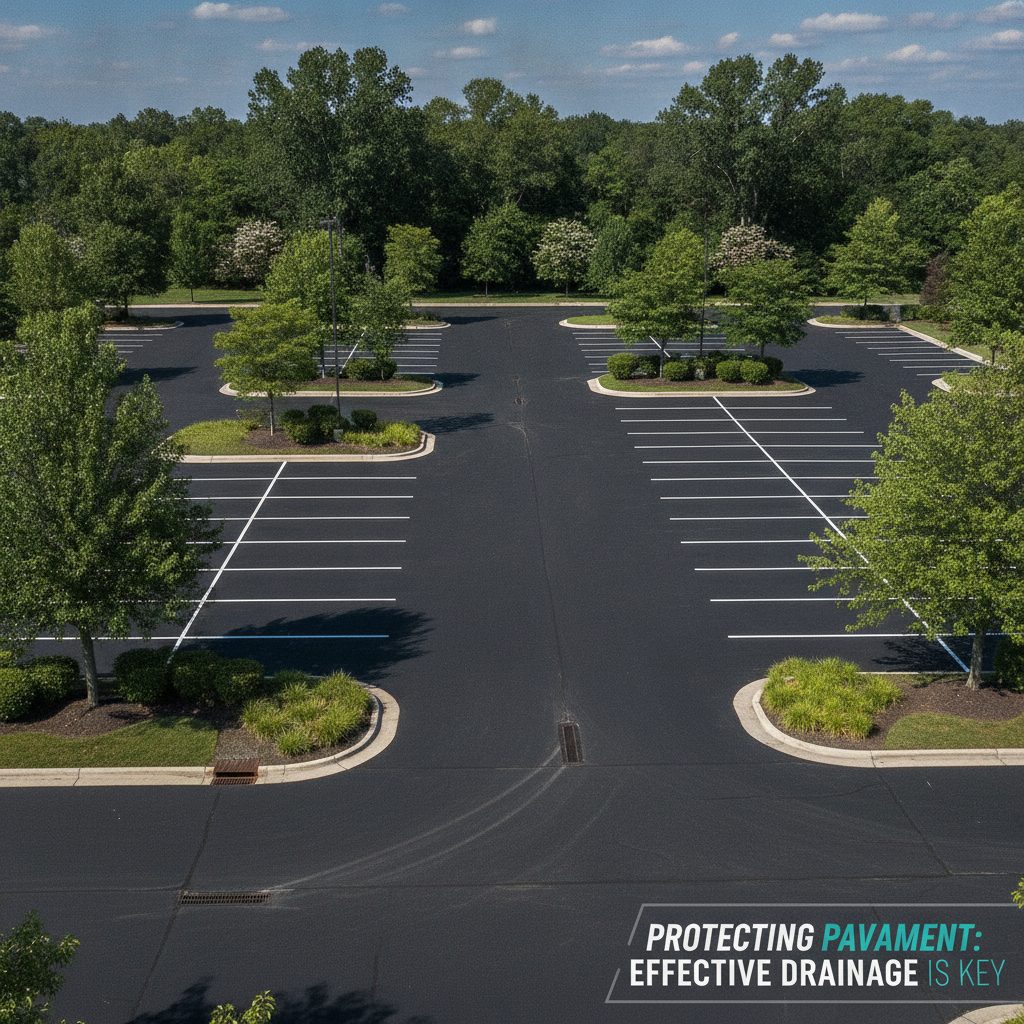
Walk across a commercial parking lot right after a heavy storm and you can learn a lot about the pavement without ever kneeling down. Where the water runs off quickly, the surface looks dark, clean, and healthy. Where it sits in shallow pools, the asphalt is quietly being punished, and the damage tends to show up months later as cracks, potholes, and crumbling edges. For business owners and developers weighing Commercial Asphalt Paving Lodi NJ projects, drainage is not a side detail. It is one of the main reasons a lot lasts or fails.
Asphalt is a tough material, but it has a weakness: it does not like standing water. Moisture works its way into small openings, softens the base beneath the surface, and then freezes and expands when winter temperatures drop. In a region with real freeze-thaw cycles, that process repeats many times each year. A lot that sheds water effectively can avoid much of that stress, while a lot that traps water ages quickly no matter how thick the asphalt layer is.
Good drainage design is mostly about planning before a single truck arrives. It involves slope, grading, inlet placement, base preparation, and ongoing upkeep. This guide walks through how those pieces fit together, what to ask about during planning, and how to spot early warning signs on an existing lot. The goal is simple: help you protect the money you put into your pavement and avoid expensive surprises down the road.
Why Water Is the Real Enemy of Pavement
Most people assume traffic is what wears out a parking lot, and heavy vehicles certainly play a role. In practice, though, water is the multiplier that turns ordinary wear into serious failure. A dry, well-supported asphalt surface can handle a surprising amount of traffic for many years. Add moisture to the equation and the same surface begins to deteriorate much faster.
Here is the basic chain of events. Water finds its way into hairline cracks or porous spots. It soaks into the aggregate base below, reducing that layer’s ability to carry weight. Vehicles then flex the weakened surface, which widens the cracks and lets in even more water. In cold weather, trapped moisture freezes and pushes the pavement upward, then leaves voids behind when it thaws. Over time, those voids collapse under tires and become potholes.
Because the damage starts below the surface, it often goes unnoticed until it is advanced. That is why the experienced team at Parkway Paving LLC and other professional contractors treat drainage as a core part of any paving plan rather than an afterthought.
How Slope and Grading Move Water Off the Surface
The simplest drainage tool is also the most important: a carefully engineered slope. Asphalt lots are not truly flat. They are shaped with gentle grades that direct rainwater toward a designated exit point, whether that is a catch basin, a swale, or the street. A common rule of thumb is that pavement needs enough pitch for water to travel without lingering, but not so much that it feels steep to walk or drive on.
Getting this right takes precision. A tiny error during grading can create a low spot, often called a birdbath, where water collects after every rain. These areas are easy to overlook on a sunny day, yet they become the first places to crack, ravel, and eventually fail. Skilled crews use laser levels and string lines to confirm the grade before and during paving.
Grading also has to work with the surrounding site. Water should be guided away from building foundations, loading docks, and entrances rather than toward them. For a project involving Commercial asphalt paving Lodi NJ, the contractor should review how the finished surface will interact with neighboring properties and public right-of-way, since runoff can create liability issues if it spills where it should not.
The Role of Catch Basins, Inlets, and Pipes
Slope gets water moving, but something has to receive it. That is where catch basins, trench drains, and underground piping come in. These components collect runoff from the pavement surface and carry it to an approved discharge point. Their placement matters as much as their size, since a perfectly graded lot can still flood if the inlets are in the wrong locations.
Designers typically position inlets at natural low points and along the edges of large paved areas. In bigger lots, several smaller collection points work better than one large one, because they reduce how far water has to travel across the surface. Shorter travel distances mean less opportunity for ponding and less erosion at the pavement edges.
Maintenance is the part owners often forget. Basins clog with leaves, trash, and sediment, and a blocked inlet performs no better than having none at all. A simple routine of clearing debris before the rainy seasons, and checking grates for damage, keeps the system doing its job. When a lot suddenly begins holding water that used to drain, a clogged or collapsed pipe is one of the first things worth investigating.
Why the Base Layer Deserves Equal Attention
It is tempting to judge a paving job by the smooth black surface on top, but the layers underneath do most of the heavy lifting. The stone base provides structural support and, when properly designed, allows moisture to move away rather than accumulate. A base that is too thin, poorly compacted, or made from the wrong material can hold water and fail even when the asphalt above it looks perfect.
Compaction is a key factor. A well-compacted base resists settling and keeps the surface stable, while a loose one allows tiny movements that open cracks. Contractors should also evaluate the native soil. Clay-heavy ground drains slowly and may need extra stone depth or stabilization, while sandier soil drains more freely but can shift if not handled correctly.
When a property already shows signs of base failure, such as alligator-style cracking or sunken patches, a surface-only fix rarely holds. An experienced Asphalt Repair Company in Lodi, NJ will usually recommend addressing the underlying cause, which may mean removing and rebuilding the affected section rather than simply laying fresh asphalt over wet or unstable material.
Common Drainage Mistakes That Shorten Lot Life
Many drainage problems trace back to a handful of avoidable errors. Recognizing them can save you from repeating the same costly cycle of patching and repaving. Some mistakes happen during construction, while others creep in gradually as a property changes over time.
- Paving over existing low spots without regrading them first, which simply hides the problem under new asphalt.
- Skimping on base depth or compaction to reduce upfront cost.
- Adding landscaping, planters, or curbs later that block the natural path of runoff.
- Ignoring clogged inlets until a storm exposes the problem.
- Letting small cracks stay open so water can enter the base.
The same patterns appear on smaller properties too, which is why guidance such as Common Mistakes That Shorten the Life of Asphalt Driveways in Lodi, NJ is relevant even for business owners. The physics of water and pavement do not change with property size, only the scale of the consequences and the repair bill.
Understanding Stormwater Runoff and Its Consequences
Pavement is an impervious surface, meaning rain cannot soak into the ground the way it would on grass or soil. All that water has to go somewhere, and a large commercial lot can generate a significant volume during a single storm. Without a plan, that runoff rushes toward the lowest point, carrying sediment, oil residue, and debris with it.
The effects extend beyond the pavement itself. Fast-moving water can erode the edges of the asphalt, undercutting the support that keeps the lot stable. Over time, edges crumble and the damage spreads inward. Runoff can also overwhelm municipal drains or flood neighboring properties, which may create friction with adjacent owners.
To understand how these dynamics play out in practice, it helps to read about The Impact of Poor Stormwater Runoff on Asphalt Surfaces in Lodi, NJ, which explains how unmanaged water gradually breaks down pavement. The takeaway is that managing runoff is not just about keeping puddles away from customers. It protects the structural integrity of everything beneath their feet.
Comparing Drainage Features at a Glance
Different sites call for different solutions, and most well-designed lots combine several features. The table below summarizes common options, what each one does, and where it tends to work best. Use it as a conversation starter when you meet with a contractor or engineer, since the right mix depends on your soil, layout, and local requirements.
| Drainage Feature | Main Purpose | Best Suited For |
|---|---|---|
| Sloped grading | Directs surface water toward exit points | Nearly every paved lot |
| Catch basins | Collects runoff at low points | Medium to large parking areas |
| Trench drains | Intercepts water across a wide path | Entrances and loading zones |
| Swales and berms | Guides and slows runoff off pavement | Perimeters and open sites |
| Stone base with underdrains | Moves moisture away from the subgrade | Slow-draining or clay soils |
Seasonal Stress: Freeze-Thaw and Heavy Rain
The northeast climate puts pavement through a demanding annual routine. Spring thaws, summer thunderstorms, fall leaf drops, and winter freezes each stress drainage systems in a different way. Understanding the seasonal pattern helps you schedule inspections and maintenance at the right moments.
Freeze-thaw cycles are especially hard on lots with poor drainage. Water that has soaked into small cracks freezes overnight, expands, and widens the gap. When temperatures rise, the ice melts and leaves extra room for the next round of water. A lot that sheds water before it can freeze avoids much of this cycle, which is a big reason proper grading pays off so reliably.
Heavy summer downpours test a different capacity: volume. Inlets and pipes that handle ordinary rain can be overwhelmed by a sudden cloudburst, especially if they are partly blocked. Checking drains before storm season, and again after leaf fall, is a low-cost habit that tends to prevent the most dramatic flooding events.
Spotting Early Warning Signs on Your Lot
You do not need special equipment to catch drainage trouble early. A walk around the property after a rainstorm, ideally within an hour or two, shows you exactly where water lingers. Take notes or photos so you can compare conditions over time and share them with a contractor.
- Standing puddles that remain long after the rain has stopped.
- Dark, stained, or algae-covered patches that suggest chronic moisture.
- Cracking that forms a pattern similar to a web or alligator skin.
- Loose stone or crumbling along the pavement edges.
- Sunken areas near catch basins or utility covers.
Catching these signs early usually means the fix is smaller and cheaper. A minor regrade or a sealed crack costs far less than rebuilding a failed section of pavement, so regular observation is one of the best investments an owner can make.
Planning Drainage Into a New or Replacement Project
If you are building a new lot or replacing an old one, the planning stage is your best opportunity to get drainage right. Changes made on paper cost almost nothing, while changes made after paving can be disruptive and expensive. Start by gathering information about the site, including soil conditions, existing grades, and how water currently moves across the property.
Next, involve the right people early. Depending on the scope, that might include a civil engineer, a landscape designer, and your paving contractor working together rather than separately. Municipal requirements often affect how much runoff you can send off-site, so confirming local expectations before design is final avoids costly redesigns later.
Finally, think about the full lifespan of the lot. A slightly higher upfront investment in base preparation and drainage structures typically returns itself through fewer repairs and a longer service life. Owners who plan for water from the beginning tend to spend less over the long haul than those who try to fix problems as they appear.
Questions to Ask Your Paving Contractor
A good contractor welcomes questions about drainage, and the quality of the answers tells you a lot. You are not looking for jargon. You are looking for clear, specific explanations of how your lot will handle water and why the proposed approach makes sense for your site.
- How will the finished grade direct water, and where will it exit the property?
- What base depth and compaction method do you recommend for my soil?
- Will existing low spots be corrected before new asphalt is placed?
- What maintenance do the drains and inlets need after installation?
- How do you verify the slope during and after paving?
Contractors who can describe their process confidently, and who are willing to put key details in writing, are generally a safer bet. Vague answers about drainage are a signal to keep looking.
Keeping Your Investment Dry and Durable
Drainage design is the quiet foundation of a long-lasting commercial parking lot. Slope and grading move water off the surface, inlets and pipes carry it away, and a well-built base keeps moisture from weakening the layers underneath. When these pieces work together, asphalt can stay smooth, safe, and attractive for many years, even through harsh winters and heavy storms.
The practical steps are straightforward. Plan drainage before paving rather than after, and insist on proper base preparation instead of cutting corners to save a little upfront. Keep inlets and basins clear, and seal small cracks before they invite water into the structure. Walk your lot after rain so you can catch low spots and staining while they are still minor, and keep a few photos on file for comparison.
For owners in this region, where freeze-thaw cycles and seasonal storms are part of life, these habits matter even more. A lot that sheds water well simply costs less to maintain, presents a better image to customers, and reduces the risk of slip hazards and vehicle damage. If you are planning a new surface or wondering whether your current one has a hidden water problem, talk with a qualified contractor about drainage first. A short conversation now can prevent years of repairs, and it ensures the money you invest in pavement keeps working for your business long after the crew has driven away.
One Response