
When your driveway or parking lot gets damaged, you have three main ways to fix it. Crack sealing works for small cracks (1/8-1 inch wide) and costs about $0.50-$2.00 per foot. Patching is for bigger damaged areas and costs $3-$7 per square foot, lasting 3-5 years. Milling (grinding down the surface) is for really bad damage when your pavement is 12-15 years old. The best time to do any of these repairs is when it’s above 50°F and not raining. Fixing problems early can make your pavement last 4 times longer!
Key Things to Remember
- Crack sealing works best for small cracks (1/8″-1″ wide) in spring or fall when it’s not too hot or cold
- Patching is good for medium damage where parts of the pavement are bad but the base underneath is still good
- Milling is needed when there’s lots of damage or when the height of the pavement needs to be fixed
- Timing matters: crack sealing is for prevention (years 3-5), patching is for medium problems (years 5-7), and milling is for big problems (years 7+)
- Costs go up a lot from crack sealing ($0.50-$2.00 per foot) to patching ($3-$7 per square foot) to replacing everything ($7-$13 per square foot)
Understanding How Asphalt Ages
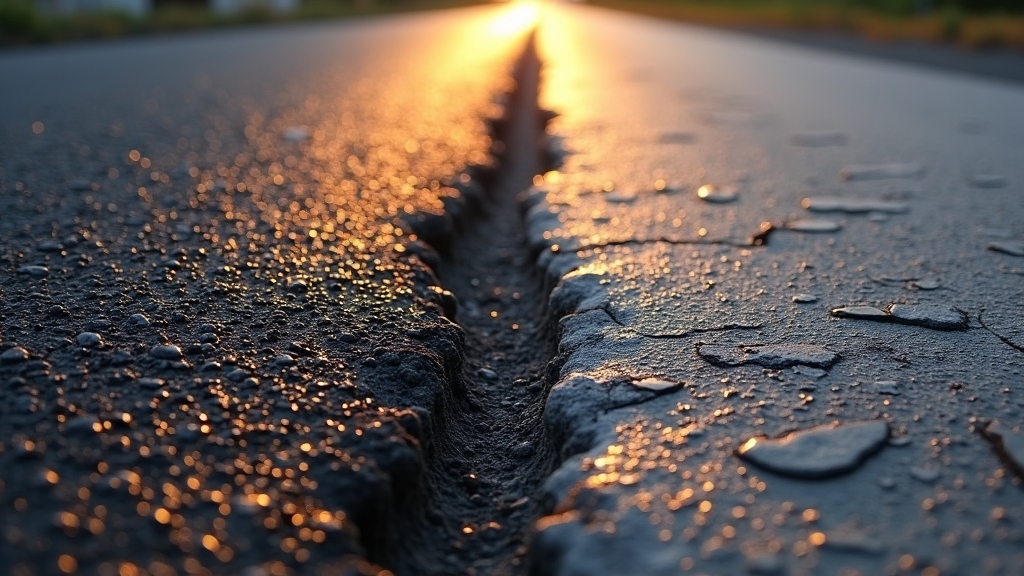
Asphalt doesn’t last forever. Even though it looks strong, it changes over time. New asphalt usually looks great for 2-3 years before it starts to get worse. The black color fades to gray as the sticky stuff that holds it together breaks down.
By years 3-5, you’ll start to see small cracks and loose bits of stone. This is when you should start taking care of it! If you don’t fix these small problems, they’ll turn into big problems by years 7-10, and your asphalt won’t last as long.
Most business parking lots need big repairs between years 12-15, while home driveways might last 15-20 years if you take good care of them.
The last stage of damage looks like lots of connected cracks (called “alligator cracking”), holes, and problems with the ground underneath.
If you understand how asphalt ages, you can fix problems at the right time. This could double how long your asphalt lasts and save you money!
| Asphalt Age | What It Looks Like | What You Should Do |
| Years 0-3 | Deep black, smooth surface | Regular cleaning |
| Years 3-5 | Fading to gray, small cracks | Crack sealing, sealcoating |
| Years 5-7 | More cracks, some roughness | Patching, more crack sealing |
| Years 7-12 | Bigger cracks, small holes | Larger patches, consider milling |
| Years 12-15+ | Many cracks, holes, uneven | Milling or full replacement |
Why Asphalt Gets Damaged
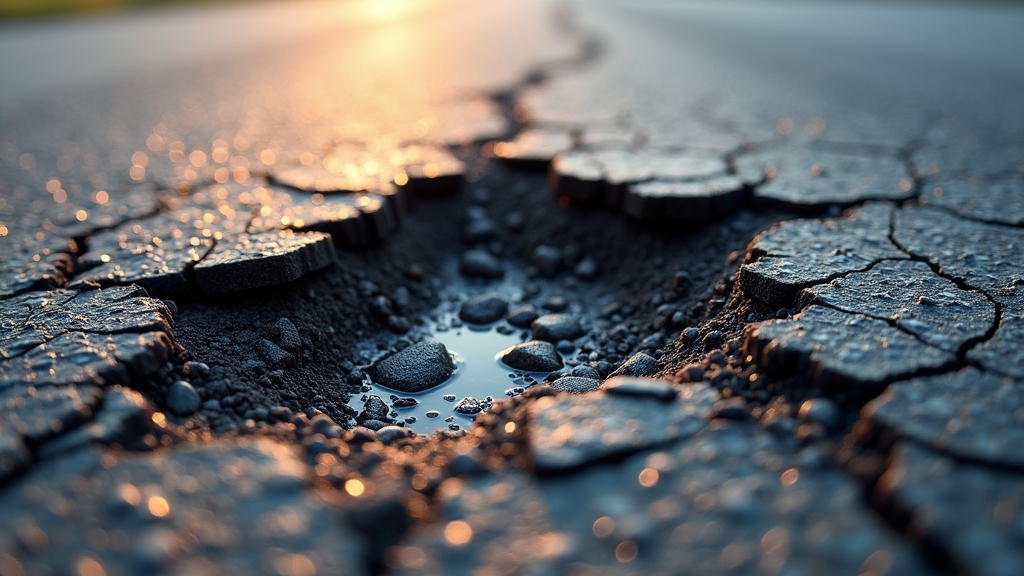
Asphalt doesn’t just suddenly fail. It breaks down slowly over time, starting right after it’s installed. Asphalt is made of stones, sand, and gravel held together by a sticky oil-based material.
Asphalt doesn’t suddenly fail – it slowly breaks down from the day it’s installed.
Four main things damage asphalt:
- Sunlight breaks down the sticky stuff that holds it together, making it brittle
- Water gets underneath and weakens the base
- Freezing and thawing push the asphalt up and down
- Cars and trucks put weight on it that eventually causes cracks
Chemicals like gas and oil also dissolve the sticky stuff that holds asphalt together.
What looks like “sudden” damage is actually the final stage of problems that have been developing for months or years under the surface.
When Crack Sealing Works Best
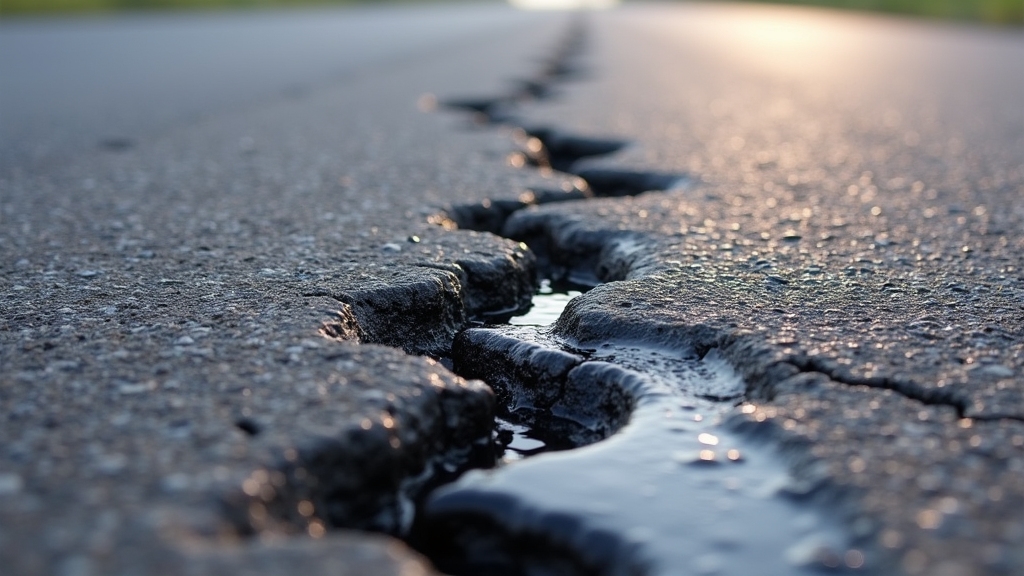
Crack sealing is the best way to prevent damage once you start to see early signs of problems. It works best on cracks between 1/8 and 1 inch wide, before water can cause big damage to the base underneath. When done right, crack sealing can make your pavement last 3-5 years longer.
For the best results, do crack sealing in fall or spring when temperatures are medium and cracks are at their medium width. You must clean the crack completely using air blowing or heat before putting in the sealer so it sticks properly.
You should choose the right materials – rubber-based asphalt sealer for most jobs, or silicon-based sealers for places with big temperature changes.
Put the sealer a little below the pavement surface so car tires don’t pick it up. Remember that crack sealing is most cost-effective when fixing isolated damage, not when there’s damage all over.
| Crack Size | Best Repair Method | When to Do It |
| Hairline (less than 1/8″) | Sealcoating | Summer |
| Small (1/8″ to 1/2″) | Crack sealing | Spring or fall |
| Medium (1/2″ to 1″) | Crack sealing or patching | Spring or fall |
| Large (over 1″) | Patching | Summer |
Patching for Medium Damage
When damage gets worse than what crack sealing can fix, patching is your next repair option for medium asphalt damage. Unlike crack sealing, patching takes out the bad sections of pavement and replaces them with fresh asphalt.
For medium damage, you can choose between two main ways to patch:
- Throw-and-roll patching for temporary fixes
- Semi-permanent patching for longer-lasting repairs
Throw-and-roll means putting hot or cold asphalt mix into the cleaned hole and packing it down with your vehicle tires. This is a quick fix during bad weather.
Semi-permanent patching takes more work: cutting a square around the damaged area, removing all the debris, putting down a sticky coat, and installing hot asphalt mix with proper compaction. This usually makes the pavement last 3-5 years longer when done right.
Choose your patching method based on how bad the damage is, your budget, and how long you want the repair to last.
When You Need Milling
Even with the best patching and crack repairs, asphalt surfaces eventually reach a point where surface-level fixes don’t work anymore.
You should think about milling when:
- Multiple layers of asphalt create height problems
- Ruts are deeper than 1 inch
- More than 25% of the surface has alligator cracking (connected cracks that look like alligator skin)
Modern milling uses special equipment that precisely removes bad asphalt layers without damaging what’s underneath.
You should also consider milling when water collects in certain areas or when the pavement shape needs fixing to improve drainage.
If your asphalt has had many patch repairs that make it look uneven, or if the damage goes deeper than just the surface, it’s time for milling.
This process not only prepares the surface for new asphalt but also maintains the right height next to curbs and other surfaces.
Cost Comparison: Prevention vs. Replacement
Understanding the costs of asphalt maintenance shows that preventing problems is much cheaper than replacing everything.
Looking at the numbers, crack sealing typically costs $0.50-$2.00 per linear foot, while patching costs $3-$7 per square foot. Compare these to complete replacement at $7-$13 per square foot, and you can see which is cheaper.
A thorough cost analysis shows prevention extends pavement life by 5-8 years when done early, giving you a 400% return on your investment.
Every $1 spent on preventive maintenance saves $6-$10 in future reconstruction costs.
The math is simple: fixing small problems before they get big saves you money in the long run.
Regular inspections and quick repairs create a maintenance cycle that gets the most out of your investment while avoiding unexpected costs.
| Repair Method | Cost | Lifespan | Cost per Year |
| Crack Sealing | $0.50-$2.00 per linear foot | 3-5 years | $0.10-$0.67 per foot yearly |
| Patching | $3-$7 per square foot | 3-5 years | $0.60-$2.33 per sq ft yearly |
| Sealcoating | $0.15-$0.25 per square foot | 2-3 years | $0.05-$0.13 per sq ft yearly |
| Milling & Overlay | $2-$5 per square foot | 7-10 years | $0.20-$0.71 per sq ft yearly |
| Full Replacement | $7-$13 per square foot | 15-20 years | $0.35-$0.87 per sq ft yearly |
Weather Considerations for Repairs
Weather directly affects how successful your asphalt repair will be. Temperature is the most important factor affecting how materials perform.
The time of year greatly affects how quickly repairs dry and harden, with repairs in extreme heat or cold usually giving worse results than in moderate weather.
Moisture during installation makes it harder for new materials to stick to existing ones, which is why you should schedule repairs during dry periods and specially prepare wet surfaces when you can’t avoid them.
How Temperature Affects Repairs
When choosing an asphalt repair method, temperature conditions greatly affect both immediate success and long-term durability. Temperature changes affect repair effectiveness, so you need careful timing and method selection.
| Repair Method | Ideal Temperature | Temperature Limitations |
| Crack Sealing | 40-70°F (4-21°C) | Fails below 40°F; material won’t flow properly above 80°F |
| Patching | 50-90°F (10-32°C) | Cold mix works at 40°F; hot mix requires minimum 50°F |
| Milling | Above 50°F (10°C) | Equipment performance gets worse below 40°F |
For best results, schedule crack sealing in moderate temperatures when cracks are at medium width. Patching works best during warmer months when asphalt stays flexible. Milling operations should avoid extreme cold, as frozen ground makes it harder to control depth and remove material.
When to Schedule Repairs
The strategic scheduling of asphalt repairs during specific seasons directly impacts both installation success and long-term performance outcomes.
When planning your maintenance schedule, you need to match repair methods with seasonal patterns for best results.
Crack sealing works best during spring and fall when pavement temperatures are moderate and cracks are at medium width. You should avoid patching during rainy seasons, as moisture makes it harder for materials to stick together and dry properly.
Summer provides ideal conditions for milling and resurfacing, with warm temperatures ensuring proper compaction and drying of new asphalt.
Winter repairs typically require special cold-mix materials, though these should be considered temporary fixes.
Rain and Moisture Effects
Because moisture hurts asphalt repair in many ways, you need to carefully check precipitation conditions before starting any maintenance work.
Crack sealing requires completely dry surfaces, as sealants won’t properly stick when moisture is present, leading to early failure.
Patching materials react differently to moisture. Cold patches offer moderate rain tolerance but work best in dry conditions. Hot asphalt patching demands completely dry surfaces to achieve proper compaction and bonding.
Milling operations can proceed in light moisture but shouldn’t be done during active rainfall, as water affects precise depth control and damages the milled surface profile.
Additionally, rain effects go beyond application—repairs completed right before rain may not dry properly, undermining durability.
Plan your repair schedule with weather forecasts to guarantee ideal conditions.
Traffic Impact: Selecting Repairs for Busy Areas
How well you repair asphalt in high-traffic areas can determine how long your investment lasts and minimize disruptions to daily operations. Traffic volume greatly influences your material selection and repair timing strategy. Busy pavements require durable solutions that can withstand continuous stress while keeping users safe.
| Repair Type | Traffic Impact | Recommended Timing |
| Crack Sealing | Minimal disruption | Early morning/weekend |
| Patching | Moderate disruption | Off-peak hours |
| Milling | Major disruption | Planned closures |
Check the surface condition before selecting your approach. For heavily traveled roads, you’ll need frequent inspections to identify damage before it expands. Repair smoothness matters—smooth transitions between existing pavement and repairs prevent vehicle damage and improve driver experience.
Consider implementing a proactive maintenance strategy rather than reactive repairs. This approach extends pavement life and reduces repair frequency, ultimately saving resources while maintaining functionality in high-volume areas.
Checking Drainage Issues Before Repairs
Proper drainage assessment must come before any asphalt repair decision you make, as water infiltration is the primary cause of pavement deterioration.
When moisture penetrates pavement structures, it weakens the materials underneath and speeds up the deterioration of the asphalt. Your repair selection should directly address the drainage conditions to guarantee long-term performance.
Water infiltration undermines pavement integrity. Effective repairs must address drainage issues to ensure lasting results.
Before finalizing any repair method, conduct a thorough drainage assessment that includes:
- Evaluating surface slopes to verify proper water runoff (minimum 1-2% slope)
- Inspecting catch basins, culverts, and drainage structures for blockages
- Identifying low spots where standing water collects within 24 hours after rainfall
- Determining if underground drainage systems need fixing before surface repairs
Remember that even the best repair materials will fail early if underlying drainage issues remain unaddressed.
The most cost-effective approach combines drainage corrections with appropriate asphalt repair techniques rather than treating symptoms alone.
DIY vs. Professional Asphalt Repairs
DIY asphalt repairs require specialized tools including compactors, propane torches, and asphalt rakes that you’ll need to buy or rent, while professionals arrive fully equipped with industrial-grade machinery and technical expertise.
Your upfront savings on DIY repairs ($100-300 for materials) often translate to shorter repair lifespans (1-2 years) compared to professional work that typically lasts 3-5 times longer with proper installation techniques and commercial-grade materials.
When comparing immediate costs against long-term performance, you’ll need to assess whether your repair skills can achieve proper compaction and seamless integration—the two technical factors that most frequently determine repair durability.
Tools and Skills Required
A well-stocked toolbox stands between successful asphalt repairs and costly failures. The complexity of your repair project directly relates to the sophistication of repair tools needed and the technical skill requirements involved.
For DIY asphalt repairs, you’ll need:
- Base equipment – Protective gear, tamper, and asphalt rake
- Cleaning tools – Wire brush, pressure washer, and leaf blower
- Application tools – Trowel, squeegee, and finishing float
- Specialized equipment – Propane torch (for heat application), crack router, and asphalt sealer sprayer
While crack sealing requires minimal technical expertise, proper patching demands understanding of compaction principles.
Milling operations require professional-grade equipment and trained operators. You’ll find that investing in quality tools greatly improves repair durability, but complex repairs remain best left to professionals with specialized equipment.
Cost vs. Long-Term Results
Many homeowners face the critical decision between handling asphalt repairs themselves or hiring professionals, with initial costs often misleading the uninitiated.
DIY crack filling typically costs $50-$100 in materials but may last only 1-2 years when improperly applied.
Professional sealing runs $300-$500 but often extends 3-5 years with proper preparation and materials.
A thorough cost analysis reveals the deceptive nature of upfront savings—professional work costs approximately $0.28 per square foot annually versus DIY’s $0.32 when factoring repair longevity.
Patching presents similar economics: DIY patches ($100-$200) frequently fail within a year due to inadequate compaction, while professional solutions ($500-$800) can maintain integrity for 5+ years when properly bonded to existing pavement.
You’re ultimately paying for expertise in substrate preparation and material selection.
| Repair Type | DIY Cost | Professional Cost | DIY Lifespan | Professional Lifespan |
| Crack Filling | $50-$100 | $300-$500 | 1-2 years | 3-5 years |
| Small Patching | $100-$200 | $500-$800 | 1-2 years | 5-7 years |
| Sealcoating | $100-$300 | $400-$800 | 1-2 years | 2-3 years |
Creating a Long-Term Maintenance Schedule
While one-time repairs address immediate asphalt damage, establishing a thorough maintenance schedule guarantees prolonged pavement life and minimizes costly rehabilitation.
Preventive measures should align with your pavement’s specific conditions, traffic load, and regional climate factors. Ideal maintenance frequency varies by repair type, with crack sealing typically needed more often than structural interventions.
Your extensive maintenance schedule should include:
- Annual inspections to identify emerging cracks, drainage issues, and surface deterioration
- Crack sealing every 2-3 years to prevent water infiltration and subsequent base damage
- Surface treatments (sealcoating) every 3-5 years to restore flexibility and protect against oxidation
- Patching and partial milling every 5-7 years to address localized structural failures before they spread
| Maintenance Task | Frequency | Purpose |
| Visual Inspection | Every 6 months | Identify new problems early |
| Cleaning | Twice yearly | Remove debris and prevent damage |
| Crack Sealing | Every 2-3 years | Prevent water infiltration |
| Sealcoating | Every 3-5 years | Protect from UV damage and oxidation |
| Patching | As needed (typically years 5-7) | Fix localized damage |
| Milling/Overlay | Every 7-10 years | Restore surface when extensively damaged |
FAQS
How Do Environmental Rules Affect Asphalt Repair Choices?
Environmental regulations affect your repair choices through VOC restrictions in sealants, stormwater management requirements, and material disposal rules. You need to follow regulations while minimizing environmental impact through sustainable material selection.
Can Recycled Materials Be Used in Asphalt Repairs?
Yes, recycled asphalt pavement (RAP) is very effective for patching and overlay applications. Material sourcing from demolished pavements provides sustainable repair options while maintaining structural integrity and performance.
What Warranties Come With Professional Asphalt Repairs?
Professional asphalt repairs typically include 1-5 year warranties, depending on the repair method. You’ll receive written repair guarantees covering workmanship and materials, but not damage from improper maintenance or structural failures.
How Do Utility Companies Work With Asphalt Repair Projects?
Utility companies engage in planning meetings, share infrastructure maps, establish protective protocols, and integrate into project scheduling to prevent service disruptions and optimize both utility access and pavement longevity.
Are There Eco-Friendly Alternatives to Traditional Asphalt Repair Methods?
Yes, you can implement sustainable practices through recycled asphalt pavement (RAP), cold mix applications, bio-based rejuvenators, and permeable pavements. These green materials reduce environmental impact while maintaining structural integrity in your repair projects.
Conclusion
You’ll maximize your asphalt’s lifespan by selecting the appropriate repair method based on damage severity and traffic patterns. Crack sealing addresses early deterioration, patching resolves localized failures, while milling becomes necessary for structural rehabilitation. Implement a data-driven maintenance schedule that incorporates all three techniques strategically. Regular assessment of drainage conditions and surface integrity will determine ideal intervention timing, ultimately reducing your long-term infrastructure costs.
Looking for professional asphalt repair services? Need help with crack sealing or want to know more about asphalt maintenance? Contact Parkway Paving LLC today for expert advice and quality service!