
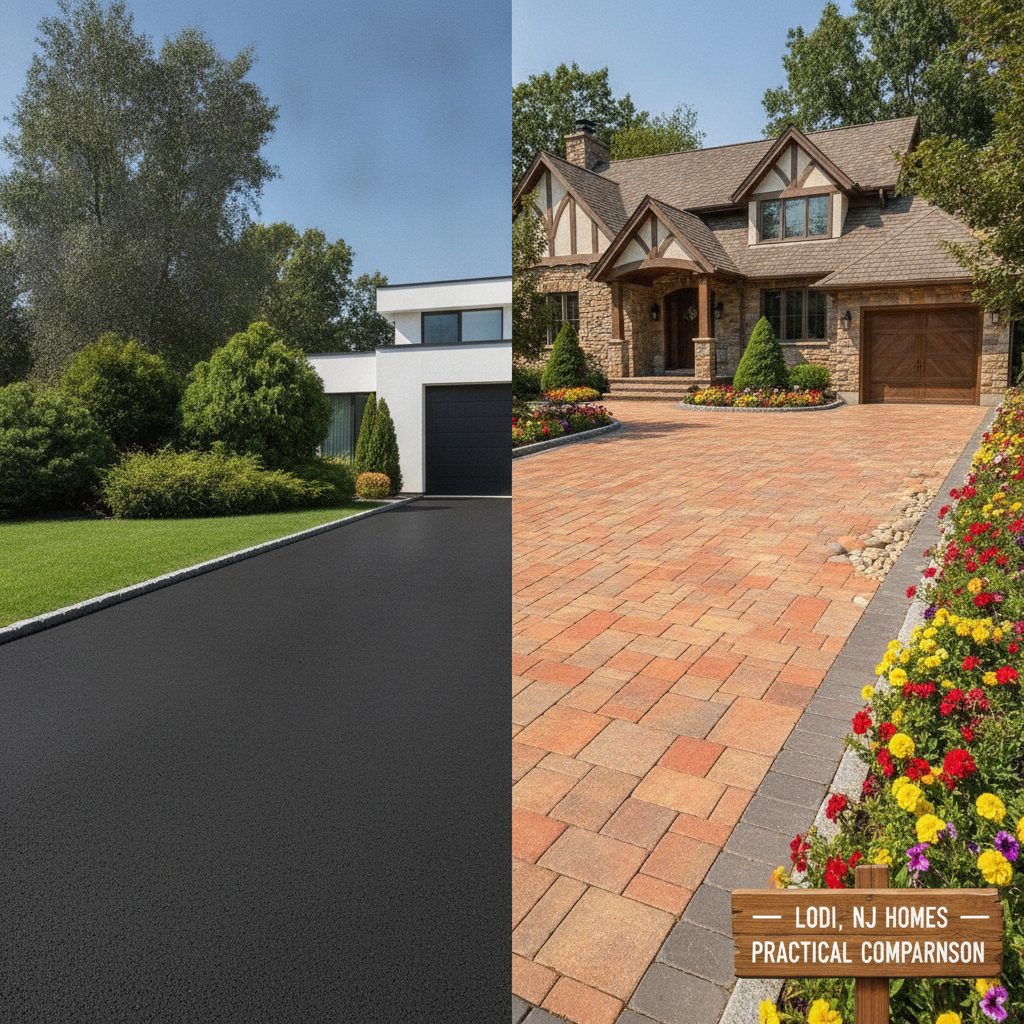
Pick a driveway surface and you are signing up for years of daily use, winter salt, summer heat, and the occasional delivery truck parked where it should not be. For many North Jersey households, the decision comes down to two materials: poured asphalt or interlocking pavers. Both can look great, both can last, and both have trade-offs that rarely show up in a glossy brochure. If you are weighing residential asphalt paving in Lodi NJ against a paver installation, this comparison walks through the practical differences that actually affect your wallet and your weekends. We will cover upfront cost, installation timelines, how each surface handles freeze-thaw swings, repair behavior, curb appeal, drainage, and resale considerations. The goal is not to push you toward one answer. It is to help you ask better questions, spot the details that matter, and feel confident when a contractor hands you an estimate. Along the way, you will find a side-by-side table, a few real-world scenarios, and a simple checklist you can use before you commit. Whether you are replacing a cracked old driveway or building one for the first time, the right choice depends on your budget, your lot, and how much maintenance you are willing to take on.
Understanding the Two Materials
Asphalt is a flexible surface made from stone aggregate bound with a petroleum-based binder. It is heated, spread across a compacted gravel base, and rolled smooth, so the result is one continuous, seamless mat. Pavers are individual units, usually concrete or natural stone, set into a bed of sand and locked together with joint material and edge restraints. That structural difference drives almost every other comparison. A seamless asphalt layer behaves like a single sheet that flexes slightly under load, while pavers behave like a mosaic that moves as individual pieces. Neither approach is inherently better; they simply fail and recover differently. Homeowners exploring driveway resurfacing options often start by learning this basic distinction, because it shapes how a surface ages. If your lot has a gentle slope, mature tree roots, or heavy vehicle traffic, the way each material flexes, shifts, or holds together will matter far more than the color swatch you fell in love with at the showroom.
Upfront Cost and What Drives It
In general, asphalt costs noticeably less to install than pavers on a per-square-foot basis, often by a wide margin. The reasons are straightforward. Asphalt installs quickly with large machines, needs less hand labor, and uses materials that are produced in bulk. Pavers demand precise base preparation, careful hand setting, cutting around curves, and edge restraint work, all of which add labor hours. Material choice also swings the price: a basic concrete paver sits far below premium natural stone or tumbled designer units. Prices vary widely by region, season, and site conditions, so treat any rule of thumb as a starting point and request itemized quotes instead. Excavation depth, drainage fixes, removal of an old driveway, and access for equipment all change the final figure. A smart budgeting habit is to ask each contractor to break out base preparation separately from surface material. Cheap bases are where bad driveways are born, and you want to compare like with like rather than just the bottom-line number.
Installation Time and Disruption
Time on site matters more than people expect, especially if you have one car and no street parking. A typical asphalt driveway can often be excavated, graded, paved, and rolled within a day or two, with a short cure period before vehicles roll back on. Pavers usually take longer because each unit is placed and compacted by hand, and complex patterns add hours. That extended timeline means more days without access to your garage, more noise, and more chances for weather delays to stack up. If you work from home or have kids with school pickups, plan around that. Ask your contractor for a realistic schedule, what happens if rain interrupts the base work, and when you can safely drive or park on the finished surface. If you want a trusted Asphalt Repair Company in Lodi, NJ to evaluate an existing surface before you decide to rebuild, a quick inspection can reveal whether you need a full replacement at all.
How Each Surface Handles Freeze-Thaw Cycles
North Jersey winters push every driveway through repeated freezing and thawing. Water seeps into tiny openings, freezes, expands, and slowly pries things apart. Asphalt is flexible, so it tolerates minor ground movement better than rigid surfaces, though hairline cracks can open if water gets in and the base is weak. Pavers tolerate movement because joints allow independent shifting, but if the base is poorly compacted or drainage is inadequate, individual units can settle, heave, or rock out of alignment. Salt and de-icing products also behave differently: they can accelerate surface wear on lower-quality concrete pavers and dull the finish on some stone. The best protection for either material is a properly built base with good drainage underneath. Timing repairs matters too, and understanding The Best Timing for Asphalt Repairs in Lodi, NJ’s Freeze-Thaw Cycles can help you decide when to patch, seal, or wait. Good installation beats good material every time.
Repairs, Maintenance, and Long-Term Upkeep
This is where the two materials diverge the most in day-to-day ownership. Asphalt generally needs periodic sealing, prompt crack filling, and occasional patching, tasks that are quick and relatively affordable when handled early. Repairs on a seamless surface can leave a visible patch, though, and color matching improves with a fresh seal coat. Pavers ask for different chores: refilling joint sand, pulling weeds that sprout between units, cleaning stains, and resetting any stones that sink. The upside is that a damaged paver can be lifted out and replaced individually, which makes localized fixes blend in nicely if you kept spare units. The downside is that settling problems often require lifting and relaying whole sections. For households that dislike scheduled maintenance, asphalt tends to feel simpler. For households that enjoy keeping a showpiece pristine, pavers reward the effort. Be honest about your habits before you buy, because a neglected driveway of either type ages poorly and costs more to rescue.
Curb Appeal and Design Flexibility
Pavers win the design contest for variety. You can choose colors, textures, borders, herringbone or basketweave patterns, and even blend in accent bands or a decorative apron near the street. Natural stone and high-end concrete units can make a modest house look custom. Asphalt, by contrast, offers a clean, uniform, dark look that frames lawns and landscaping well, and fresh black pavement against green grass reads as crisp and tidy. Some homeowners add stamped borders, contrasting concrete aprons, or neat edging to dress it up. If your home has a traditional or colonial exterior, a simple asphalt drive can look perfectly appropriate, while a modern or Mediterranean style often pairs beautifully with pavers. Think about the entire front of the property, including walkways, steps, and planting beds, so the driveway complements rather than competes with them. Visual harmony usually adds more perceived value than any single expensive material.
Side-by-Side Comparison at a Glance
Sometimes the clearest way to decide is to see the trade-offs together. The table below summarizes general tendencies rather than guaranteed outcomes, since results depend on installation quality, base preparation, and how the surface is used and maintained.
| Factor | Asphalt | Pavers |
|---|---|---|
| Upfront cost | Generally lower | Generally higher |
| Install time | Usually a day or two | Often several days |
| Flexibility in cold weather | Flexes with movement | Shifts by individual unit |
| Routine upkeep | Sealing and crack filling | Joint sand and weed control |
| Repair style | Patch or resurface | Replace individual units |
| Design options | Clean, uniform look | Wide range of patterns and colors |
Drainage, Slope, and Lot Conditions
Your lot can tip the scales more than any brochure. A steep driveway that sheds water toward the garage needs careful grading regardless of material, and asphalt handles pitched surfaces well because it forms a continuous, sloped sheet. Pavers can be set on slopes too, but the joints let some water pass through, which is helpful for permeable designs yet risky if the base underneath cannot drain. Tree roots, soft soil, and high water tables all deserve attention before any installation. A contractor who walks the property, checks where runoff goes, and asks about downspouts is demonstrating the kind of care that prevents callbacks. Ask about edge support too, because unsupported edges are a common failure point for both surfaces. If your driveway also leads to a detached garage or sits next to a shared walkway, think about transitions where materials meet. Clean, well-planned joins look intentional and protect the edges from crumbling over time.
Durability Under Daily Vehicle Loads
Most family cars barely stress either surface, but heavier loads change the equation. Trash trucks, oil delivery vehicles, moving vans, and contractors with loaded trailers all concentrate weight on small areas. A thick, properly compacted asphalt layer over a solid stone base can handle these loads comfortably, though sharp turning of heavy tires can scuff soft, hot pavement in summer. Pavers spread weight across many units and a well-built paver base can be very strong, but turning movements may rotate or shift pieces if the pattern or edge restraints are weak. Thicker pavers and tighter patterns, like herringbone, resist shifting better than simple running bonds. If you regularly host large gatherings or park a work truck at home, mention it during the estimate so the contractor can design the base depth accordingly. Business owners who live above a shop or run a home office may find the property-management perspective in What Lodi, NJ Property Managers Should Know About High-Traffic Asphalt Wear useful for understanding wear patterns.
Resale Value and Buyer Perception
Buyers notice driveways immediately, because it is the first thing they walk over when arriving for a showing. A clean, crack-free surface signals a well-kept home, while patched, faded, or sinking pavement raises questions about everything else. Premium pavers can elevate perceived quality, especially in higher-end neighborhoods where hardscaping is a selling point. Asphalt, when freshly paved and neatly edged, still presents as a solid, practical choice and is widely accepted across most price ranges. The real return depends less on the material and more on condition and fit with the home. A beautifully installed asphalt drive will outperform a neglected paver drive every time. If you plan to sell within a few years, a fresh asphalt surface can be a cost-effective way to boost first impressions. If you plan to stay long term, the additional investment in pavers may feel worthwhile for the look and the repair flexibility. Match your choice to your timeline.
A Simple Checklist Before You Decide
Before signing anything, run through a short set of questions to keep the decision grounded. Use the list below as a conversation starter with each contractor you interview.
- What is my realistic budget, including base work and old surface removal?
- How long can I go without using my driveway?
- Am I willing to handle yearly sealing or joint maintenance?
- How does my lot drain, and what base depth is being proposed?
- Does the contractor provide a written warranty and references?
- Will the finished look suit the style of my home?
If you also manage a business property or a mixed-use building, you can click here to explore how larger-scale paving differs from a typical residential job. Answer the questions honestly and the right surface usually reveals itself.
The Bottom Line
There is no universal winner between asphalt and pavers, only a better fit for your situation. If you want a cost-conscious, quick-to-install surface that flexes with winter movement and handles daily family traffic with straightforward upkeep, asphalt is hard to beat, and it remains the most common choice for good reason. If design variety, individual unit replacement, and a custom look matter more to you than budget or speed, pavers deliver a distinctive result when installed on a properly prepared base. Whichever way you lean, remember that the base, the drainage, and the installer matter more than the surface you see. Ask for itemized quotes, check references, and confirm warranty terms in writing. Think about how long you plan to stay, how much maintenance you will realistically perform, and how the finished driveway will frame the rest of your property. A well-built driveway should serve you quietly for many years, adding safety, convenience, and curb appeal without constant attention. Take your time, compare carefully, and choose the option that fits both your lifestyle and your lot. If residential asphalt paving in Lodi NJ is on your short list, you now have the framework to evaluate it with confidence.