
Homeowners and managers in Lodi, NJ should compare bids by matching scope (driveway, lot, or private road), documented soil/base prep, and drainage plans. Require NJDOT-compliant mix designs, specified lift counts and compacted thickness, and density targets. Confirm crew size, equipment condition, schedule, traffic control, and cleanup. Verify permits, NJ One Call (811) markouts, and local code compliance. Demand written warranties, references, insurance, and licensing. Watch for vague or unusually low bids. The next sections explain how to make clear, fair comparisons.
Key Takeaways
- Verify NJ licensing, insurance certificates, and 811 utility markouts; reject bids with expired documents, mismatched names, or reluctance to provide proof.
- Compare asphalt design: mix type (NJDOT-compliant), binder grade, number of lifts, and compacted thickness versus vague single-lift promises.
- Check base preparation: soil testing, compaction standards, drainage/grading plan, and documented test results with locations and recommended treatments.
- Evaluate scope details: saw-cutting, milling at thresholds, tack coat, curbing/catch basins, traffic control, schedule, cleanup, permits, and written warranties.
- Match crew size and equipment to project size and timeline; confirm maintenance logs to avoid downtime that harms density and finish quality.
Understanding the Scope: Driveway vs. Parking Lot vs. Private Road
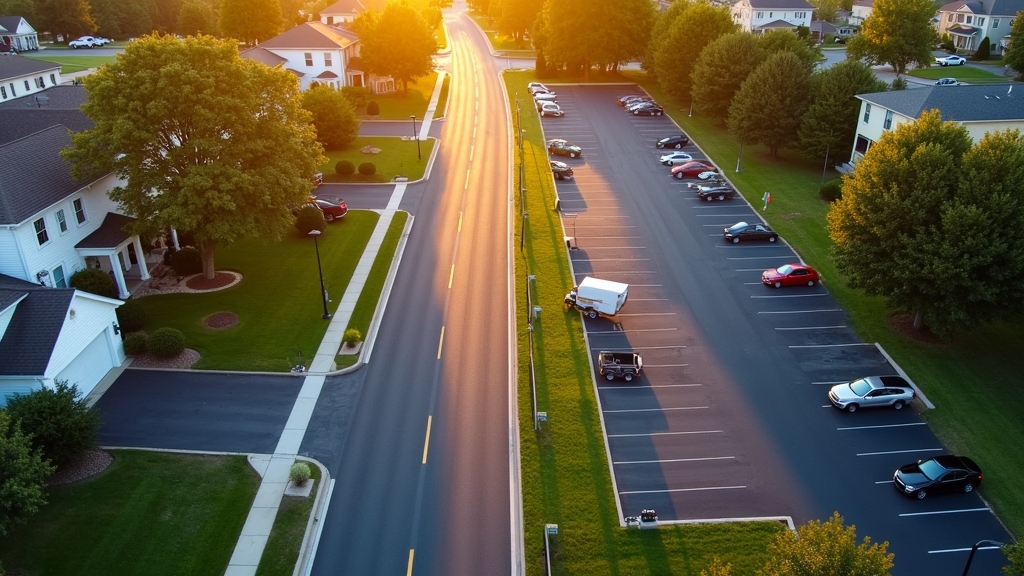
Scope defines success. Before comparing bids in Lodi, NJ, the buyer should clarify what is being paved and how it will be used.
A residential driveway requires attention to driveway dimensions, access slope, base depth, and traffic frequency. Single-family driveways typically handle light vehicles and shorter turning radii, allowing thinner lifts and simpler drainage.
Focus on driveway size, slope, base depth, and traffic for efficient, durable residential paving.
Parking lots demand analysis of parking lot usage: stall counts, drive aisles, delivery zones, and trash-truck paths. Heavier loads and frequent turning require thicker sections, stronger bases, and defined striping plans.
Pedestrian routes and ADA compliance also shape layout and drainage choices.
Private roads sit between the two. They carry recurring traffic at higher speeds, needing consistent subgrade preparation, adequate crown, shoulder design, and long-run water management to preserve pavement life.
Breaking Down the Bid: Line Items You Should See

With the intended use clarified—driveway, parking lot, or private road—the next step is verifying that each proposal itemizes the work in a way that matches those needs.
A clear bid helps compare apples to apples, align budget considerations, and vet contractor reputation. Each line should define quantities, materials, and execution standards, not vague allowances.
1) Surface materials and thickness: specify asphalt mix type, lift count, and compacted thickness; include tonnage estimates and per-ton pricing.
2) Edges, changes, and drainage features: detail curbing, tie-ins to sidewalks or garages, milling at thresholds, and any catch basin adjustments.
3) Labor, equipment, and timing: note crew size, roller types, traffic control, mobilizations, and schedule.
Also look for unit pricing for contingencies, permit fees, disposal charges, warranties, and cleanup responsibilities.
Evaluating Base Preparation and Subgrade Requirements

A reliable asphalt section in Lodi starts with soil testing that identifies bearing capacity, moisture content, and frost susceptibility.
From there, proper compaction standards—typically verified by density testing and proof-rolling—ensure a stable base.
Finally, drainage and grading must route water away from the pavement to prevent pumping, heaving, and premature failure.
Soil Testing Essentials
Foundation matters: before asphalt goes down in Lodi, NJ, soils must be tested to verify the subgrade’s strength, moisture condition, and uniformity. A thorough soil composition analysis identifies clay, silt, sand, and gravel fractions, along with plasticity and organic content that influence bearing capacity and drainage. Clear testing methods help owners compare bids fairly and avoid premature rutting or cracking.
1) Classification and index tests: sieve analysis, Atterberg limits, and visual-manual logging confirm gradation and plasticity.
2) Strength and stiffness checks: California Bearing Ratio (CBR) or plate load tests quantify support; in-situ density and moisture readings validate field conditions.
3) Moisture and frost susceptibility: laboratory moisture-density relationships, permeability, and capillary rise indicate wet-weather behavior.
Results should be documented with locations, depths, and recommended subgrade treatments.
Proper Compaction Standards
Test results only matter if the base and subgrade are compacted to the specified density and moisture targets they imply. In Lodi, NJ, credible bids reference standards such as 95% of maximum dry density (per Proctor) and confirm field moisture within ideal ranges. Contractors should state lift thickness, passes, and the compaction equipment planned for each layer. Proof-rolling and nuclear gauge or sand-cone verification reduce risk of rutting and settlement. Clear sequencing—shape, moisten, compact, test, and rework if needed—signals discipline. Bids that specify appropriate compaction techniques for granular versus cohesive soils are more reliable.
| Item | Minimum Expectation | Verification |
| Subgrade density | ≥ 95% Proctor | Nuclear/sand-cone |
| Moisture range | Within OMC ±2% | Field meter |
| Lift thickness | 6–8 in per lift | Probe checks |
| Equipment | Padfoot, smooth drum, plate where confined | Pass counts/logs |
Drainage and Grading
Before asphalt ever arrives, drainage and grading determine whether a Lodi, NJ pavement will shed water or fail prematurely. Evaluating bids should start with how contractors design slopes, shape subgrade, and manage runoff.
Sound drainage solutions protect the base from saturation, while precise grading techniques create consistent cross-slope and positive flow to inlets or edges.
1) Slopes and elevations: Look for 1.5–2% cross-slope on drives and lots, confirmed by gradesheets, not guesses.
2) Subgrade assessment: Require proof of soil classification, moisture conditioning, and undercut limits, plus stabilization options when fines or organics appear.
3) Base shaping and outlets: Expect details on swales, curb reveal, and inlet tie-ins, including elevation checks before paving.
Bids that quantify these elements reduce risk, cost creep, and early cracking.
Asphalt Mix Types and Why They Matter in Bergen County
Choosing the right asphalt mix in Bergen County starts with understanding dense-graded versus open-graded designs and their drainage and durability trade-offs.
Polymer-modified binders further influence rutting resistance, flexibility, and longevity under traffic loads.
Local climate demands—freeze-thaw cycles, heavy rainfall, and summer heat—make climate-specific performance traits essential to mix selection.
Dense-Graded vs. Open-Graded
Why do asphalt contractors in Bergen County talk so much about dense-graded versus open-graded mixes? Because mix structure drives performance, cost, and maintenance.
Dense-graded advantages include tight aggregate packing that limits air voids, resists water infiltration, and supports frequent start-stop traffic common on local streets.
Open graded benefits center on higher void content that channels water, reducing spray, splash, and hydroplaning on higher-speed corridors.
Both mixes can meet specifications, but their purposes differ. Dense-graded suits driveways, parking lots, and municipal roads needing durability and smoothness. Open-graded fits drainage-focused overlays where stormwater control matters.
1) Drainage: Open-graded sheds water; dense-graded seals against it.
2) Longevity: Dense-graded often outlasts under turning loads; open-graded protects base by draining.
3) Noise: Open-graded lowers tire noise; dense-graded maintains uniform texture.
Polymer-Modified Binders
Even with well-graded aggregates, Bergen County pavements often demand more from the binder itself, which is where polymer-modified asphalt (PMA) enters. PMA blends traditional asphalt with engineered polymers to improve elasticity, cohesion, and resistance to deformation.
For owners comparing bids, this mix type signals added binder durability, especially under heavy traffic, turning, and braking loads typical of local streets and commercial lots.
Contractors may specify SBS, SBR, or other polymers; each provides distinct polymer advantages, but the common goal is to reduce rutting, minimize surface raveling, and maintain tight aggregate interlock.
PMA also helps resist fatigue from repeated loading, extending maintenance cycles. When evaluating proposals, look for clear PG grades, polymer type, dosage rate, and quality-control testing that verify the modified binder’s performance.
Climate-Specific Performance Traits
Building on the role of polymer-modified binders, asphalt mixes in Bergen County must also match the region’s freeze–thaw cycles, wide temperature swings, and frequent plowing and deicing.
Mix design directly shapes climate impact and performance longevity, so bidders should specify aggregate gradation, binder grade, and air void targets suited to local stressors.
Dense-graded Superpave mixes with proper PG binders resist rutting in summer heat, while stone-matrix asphalt offers added stone-on-stone skeleton strength for heavy traffic corridors.
Open-graded friction courses can improve drainage but require winter maintenance planning.
1) Specify PG 64-28 or appropriate low-temperature grade to limit thermal cracking.
2) Target 4% air voids and use anti-strips to combat deicer-induced stripping.
3) Consider SMA for intersections and bus routes where plow abrasion accelerates wear.
Specifying Layer Thickness and Compaction Standards
Precision governs performance when specifying asphalt layer thickness and compaction standards in Lodi, NJ. Buyers should request clear layer specifications for subbase, base, and surface courses, each tied to traffic load and soil support.
Typical residential driveways may require thinner lifts than commercial lots, but every lift must be compacted to a uniform density. Bids should cite target thickness per lift, tolerance limits, and the compaction techniques used to reach density, such as rolling sequences and temperature windows.
Density should be stated as a percentage of theoretical maximum (e.g., 92–96% Gmm) or core-tested values, not vague assurances. Proposals that align lift thickness with aggregate size reduce risk of segregation and shoving.
Clear test methods, acceptance criteria, and documentation enable apples-to-apples comparisons.
Equipment and Crew Size: Indicators of Quality and Efficiency
With thickness targets and compaction standards defined, attention turns to whether a contractor has the equipment and crew size to execute those specs consistently.
In Lodi, NJ, reliable outcomes depend on matching project scope to paving capacity. A paver’s width, roller tonnage, and the number of laborers determine production rate and mat quality.
Crew expertise guarantees each task—laydown, raking, rolling, joint control—happens in sequence without cold joints or segregation. Equipment reliability reduces downtime that can cool the mix and compromise density.
- Ask for make, model, and age of pavers, rollers, and trucks; confirm maintenance logs and backup units.
- Verify crew count by role; compare to project square footage and schedule.
- Confirm foreman tenure and training, including roller patterns and temperature controls.
Drainage, Pitch, and Transitions to Existing Surfaces
Although asphalt strength and compaction matter, long-term performance in Lodi, NJ hinges on drainage, proper pitch, and clean connections to existing surfaces. A competitive bid should specify finished slopes—typically 1.5%–2%—to direct water to catch basins or swales, and identify drainage solutions where grades are tight.
Contractors should note how they correct birdbaths, soft subgrade pockets, and low door thresholds without creating trip points.
Clear changeover designs prevent edges from unraveling. Proposals should detail sawcut limits, milling depths at garages, aprons, and sidewalks, plus wedge or butt joints to blend elevations.
Where asphalt meets concrete, edges need tack coat and adequate thickness to resist shearing. Bids ought to include cleanup, seam sealing, and confirmation that water sheds away from structures.
Permits, Utility Markouts, and Local Codes in Lodi, NJ
Before any asphalt work begins in Lodi, NJ, permits, utility markouts, and code compliance dictate the schedule and scope. Competent bidders explain permit requirements, who files, fees, and expected review times with the Borough and Bergen County, if applicable.
They also arrange utility markouts through New Jersey One Call (811) and plan around the legally required waiting period. Clear documentation helps owners compare timelines and avoid change orders triggered by missed local regulations.
1) Permits: Identify whether driveway replacement, curb cuts, or apron tie-ins need approvals, inspections, or bonds; list lead times and costs in the bid.
2) Markouts: Show utility ticket numbers, expiration dates, and how paint flags influence saw cuts and excavation limits.
3) Codes: Cite Lodi thickness specs, base prep, setbacks, and ADA adaptations where required.
Warranty Terms, References, and Proof of Insurance
Even when scope and schedule are clear, risk is controlled by vetting warranty terms, past performance, and insurance coverage.
Buyers should request written warranty coverage that specifies duration, what defects are included, exclusions, and claim procedures. Clear triggers for crack, rutting, or drainage failures help avoid disputes. Transferability matters for property sales.
References reveal reliability. Ask for recent Lodi, NJ projects similar in size and use. Call contacts to confirm start-to-finish communication, adherence to specifications, and performance through at least one winter.
Photos and addresses allow a quick drive-by to check edges, joints, and water flow.
Insurance verification protects owners from liability. Require certificates naming the owner as additionally insured, with general liability, auto, and workers’ compensation, and confirm policy limits and active dates with the carrier.
Spotting Red Flags and Comparing Apples to Apples
When reviewing Lodi asphalt proposals, a savvy buyer watches for unrealistically low bids that may signal cut corners or change-order traps.
They compare each estimate’s scope and specifications line by line—thickness, materials, base prep, and drainage—to guarantee a fair, apples-to-apples evaluation.
They also confirm active insurance and proper New Jersey licensing before moving forward.
Beware Unrealistically Low Bids
Although a low price can be tempting, asphalt paving bids that seem too good to be true often signal cut corners, inferior materials, or missing scope. A disciplined price comparison should weigh value, durability, and proven workmanship.
In Lodi, NJ, homeowners benefit from evaluating contractor reputation alongside cost, since results hinge on reliable crews and consistent quality controls.
1) Check material specs history: Low bids may rely on recycled mix ratios beyond industry norms or insufficient asphalt thickness, shortening pavement life.
2) Scrutinize labor and equipment readiness: Rock-bottom numbers can indicate untrained crews, outdated rollers, or rushed schedules that compromise compaction.
3) Evaluate warranty strength and responsiveness: Thin warranties, vague remedies, or hard-to-reach offices often accompany unusually low offers, increasing risk if problems arise.
Balanced bids typically reflect sustainable performance and accountable service.
Verify Scope and Specs
Because proposals often look similar at a glance, a careful line-by-line review is essential to verify scope and specs and to compare bids fairly. Effective scope verification starts with quantities, materials, and methods. Spec analysis should confirm asphalt mix type, compaction targets, base repairs, and drainage details. Any omission can skew prices and performance.
| Item | What to Confirm | Red Flag |
| Milling depth | Uniform inches across areas | “As needed” wording |
| Base repair | Square footage and thickness | No testing or allowance |
| Asphalt lifts | Number and thickness per lift | Single thick lift promised |
| Mix design | NJDOT-compliant grade | Vendor’s “standard” mix |
| Compaction | Percent density/Roller count | “Compact to feel” |
Clarify traffic control, saw-cutting, tack coat, edge restraints, and cleanup. Align schedules and warranties. Demand alternates in writing for true apples-to-apples comparisons.
Check Insurance and Licensing
Two credentials separate reliable Lodi paving contractors from risky bids: active licensing and adequate insurance.
A careful buyer asks for insurance verification and proof that licensing requirements are current with New Jersey and the Borough of Lodi. Without them, liability can shift to the property owner, and warranties may be worthless.
1) Request certificates: general liability and workers’ compensation, issued to the contractor, with limits that match project risk and the owner listed as certificate holder.
2) Confirm licensing requirements: New Jersey Home Improvement Contractor registration, trade-specific permits if applicable, and a clean record with the state and local building departments.
3) Watch for red flags: expired documents, mismatched business names, reluctance to provide carriers’ contact info, or unusually low bids tied to minimal coverage.
Frequently Asked Questions
How Do Seasonal Temperatures in Lodi Affect Paving Schedules and Cure Times?
Seasonal temperatures in Lodi dictate paving windows and curing behavior.
In summer, higher heat accelerates set times, enabling quicker compaction but demanding tight logistics to avoid premature cooling.
Spring and fall temperature variations slow curing, extending traffic-opening schedules.
Cold snaps reduce workability and risk inadequate density, often pushing schedules or requiring warm‑mix additives.
Winter conditions largely halt paving.
These seasonal impacts guide crew start times, lift thickness choices, and the need for nighttime or weekend adjustments.
What Is the Expected Lifespan of a Properly Maintained Asphalt Surface Here?
A properly maintained asphalt surface here typically lasts 15–25 years.
Asphalt durability depends on climate, traffic load, base quality, and timely maintenance practices. Routine sealcoating every 3–5 years, crack sealing each season, prompt pothole repairs, and effective drainage extend service life.
Snow and freeze–thaw cycles demand vigilant upkeep, including careful plowing to prevent surface damage.
High-quality mix design and proper compaction at installation further enhance longevity, keeping performance reliable throughout its lifespan.
How Often Should I Plan Sealcoating and Crack Filling After Installation?
They should plan sealcoating every 2–3 years, with the first coat 6–12 months after installation once oils cure.
Crack filling is needed as soon as cracks appear, typically inspected every spring and fall.
Sealcoating frequency may shorten to 1–2 years for high-traffic or harsh winters, and extend to 3–4 years for light use.
Regular cleaning, edge drainage, and prompt crack sealing prevent water intrusion, slowing oxidation and extending pavement life.
Are Financing or Payment Plans Common for Larger Paving Projects Locally?
Yes, many local contractors offer financing options and payment flexibility for larger paving projects.
Homeowners typically see phased payments tied to milestones, deposits at contract signing, and final balances upon completion.
Some firms partner with lenders for low‑APR plans or same‑as‑cash promotions.
Others accept credit cards with fees.
Buyers should compare terms, interest, amortization, and prepayment penalties, verify licensing and insurance, and guarantee schedules and warranties are clearly written into the agreement.
How Will Paving Impact Access and Parking During Construction Days?
Access and parking are typically restricted during active paving hours, with driveways and sections of the lot closed for curing.
Construction logistics usually stage equipment along perimeters, leaving emergency routes open. Residents or customers should expect temporary no-parking zones and rerouted footpaths.
Contractors often provide schedules, phased closures, and signage.
Parking alternatives may include nearby streets, overflow lots, or coordinated off-site spaces.
Communication in advance helps plan deliveries, accessibility needs, and peak-time accommodations.
Final Thoughts
Choosing the right contractor in Lodi, NJ starts with apples-to-apples bids: insist on NJDOT-compliant mix designs, specified lift counts and compacted thickness, clear base/soil prep and drainage plans, verified permits and 811 markouts, and written warranties with active insurance and licensing. Match crew size and equipment to scope and schedule, and treat unusually low, vague proposals as red flags. When the details are documented—materials, thickness, density targets, milling/tie-ins, traffic control, and cleanup—the best value (not just the lowest price) becomes obvious and your pavement lasts longer with fewer surprises.
Ready for a precise, professional proposal? Partner with the local experts at Parkway Paving LLC. We deliver spec-driven asphalt driveway paving, residential paving, commercial & parking lot paving, plus resurfacing and sealcoating—all tailored to Bergen County conditions.
Get a clean, line-item bid you can trust—contact Parkway Paving LLC or call (862) 596-0642 to schedule your on-site assessment. We’ll spec it right, price it transparently, and pave it to last.