
You’ll typically pay about $2–$6 per sq ft for a new asphalt driveway, though thickness, base prep, demolition, drainage and local labor drive price. Expect a few days for site work and base compaction, one day to pave ~1,500–3,000 sq ft, then 24–72 hours curing before regular use. Prepare by clearing, marking utilities and ensuring access for equipment. Followup sealing and crack repair extend life, and below you’ll find detailed steps, costs and care.
Key Takeaways
- Typical asphalt driveway costs depend on size, material grade, base prep, and local labor, usually quoted per square foot or per ton.
- Expect a 3–7 day timeline: demolition/grading 1–3 days, paving 1 day per 1,500–3,000 sq ft, plus 24–72 hour curing.
- Site conditions (drainage, excavation, existing pavement removal) and permit fees can materially increase price and schedule.
- Preparation steps: clear vehicles/obstacles, mark utilities, verify grades, and provide equipment access before crews arrive.
- After paving, restrict traffic 48–72 hours, clean regularly, seal every 2–4 years, and repair small cracks promptly.
Typical Asphalt Driveway Costs and What Affects Them
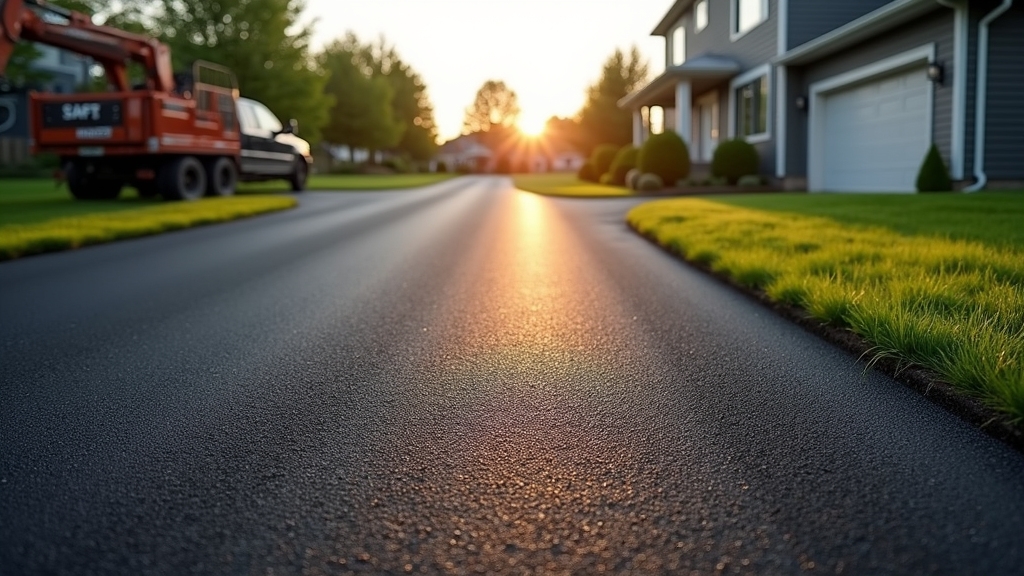
Several factors determine what you’ll pay for an asphalt driveway, and understanding them helps you budget accurately. You’ll evaluate asphalt pricing factors like material grade, binder content, compaction standards, base preparation, and local labor rates.
Several factors affect asphalt driveway cost—material grade, binder content, compaction, base prep, and local labor rates.
Quantify pavement depth and mix design to predict longevity and cost per ton. Consider driveway size impact: linear footage, width, and usable area drive material and labor estimates; small changes in width scale total tonnage and laydown time.
Site conditions—drainage needs, excavation, existing pavement removal—alter equipment hours and subcontractor scope. Regional permit fees and seasonal demand influence pricing adjustments.
Use unit-cost breakdowns (per square foot, per ton, per hour) to compare bids and control margins during negotiations.
Step-by-Step Installation Timeline
Now that you know what drives asphalt costs, you can plan the installation timeline to match scope and budget. You’ll follow clear installation phases: site assessment, base preparation, asphalt placement, compacting, and curing. Coordinate crews, equipment, and material choices (PG binder, aggregate gradation) to avoid delays. Expect sequencing: demolition and grading day, base construction day(s), paving day, and final compaction/striping day; curing takes 24–72 hours depending on mix and weather.
| Phase | Typical duration |
| Base prep | 1–3 days |
| Paving | 1 day per 1,500–3,000 sq ft |
| Finishing/curing | 1–3 days |
Monitor density targets, lift thickness, and joint uniformity. You’ll verify QA tests and schedule traffic reopening when compaction and temperature criteria are met.
Preparing Your Property Before Paving
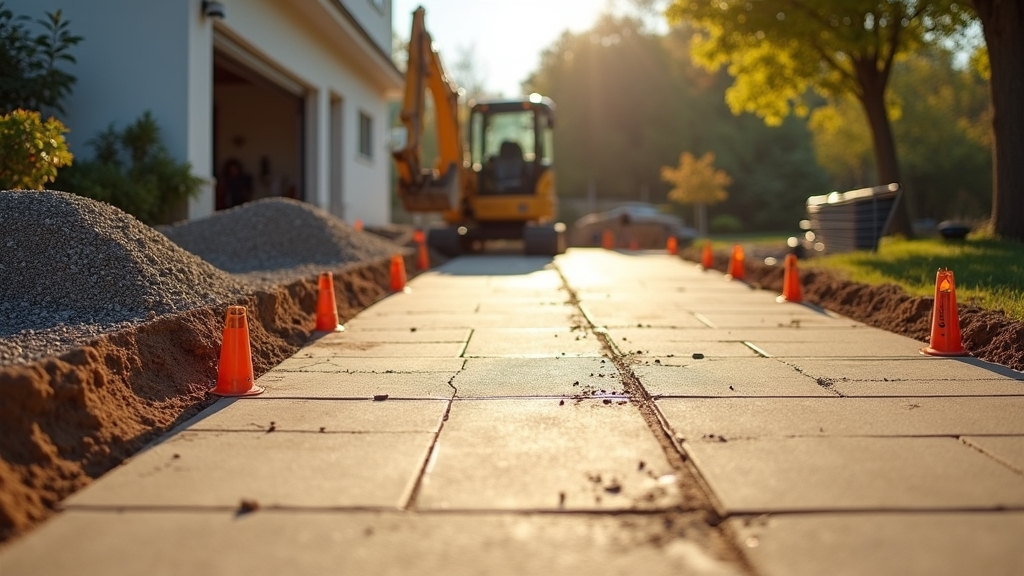
Before paving, walk the site and clear everything that could interfere with equipment or drainage: remove vehicles, furniture, loose vegetation, and temporary structures, trim overhanging branches, and mark underground utilities and sprinkler heads so crews don’t damage them.
Next, verify existing grades and document elevations; you’ll need this data to confirm desired slopes and drainage paths. Assess subgrade composition and compactness—run simple density tests or hire a geotechnical check—to determine whether regrading or soil amendments are required.
Apply targeted grading techniques to establish uniform cross-slope and crown, preventing ponding. Stabilize poor soils with mechanical compaction, geotextiles, or aggregate subbase to ascertain soil stability under load.
Finally, create clear access points for equipment, stage materials off the paving footprint, and communicate constraints to the contractor.
What to Expect During the Paving Process
Curious how the paving day unfolds? You’ll see a coordinated sequence: demolition of old surface, subgrade inspection, and application of binder and surface lifts.
Crews follow predetermined paving techniques—edge compaction, cross-roll passes, and joint milling—to control density and smoothness. You’ll notice trucks delivering mixes, pavers screeding lanes, and rollers performing static and vibratory passes.
Foremen monitor temperatures, mat thickness, and longitudinal profile with gauges; they stop work to correct segregation or soft spots.
You’ll be asked to keep clear zones while crews set grades and adjust slope for drainage. Equipment usage is deliberate: pavers, tandem rollers, motor graders, and plate compactors each have specific windows of operation.
Expect measured, technical progress rather than continuous activity.
Post-Installation Care and Maintenance Guidelines
After crews finish compaction and the surface meets thickness and smoothness specs, your role shifts to protecting that work and preventing early deterioration.
You’ll monitor, maintain, and schedule interventions precisely: immediate curing time, traffic load limits, and seasonal checks.
Apply sealing techniques strategically—pick products compatible with mix design and climate, follow manufacturer coverage rates, and test a small area.
Prioritize timely surface repairs: clean cracks, rout and fill flexible sealant, and patch depressions with hot mix or quality cold patch as interim.
Establish an inspection cadence and record interventions.
- Limit traffic 48–72 hours; heavy loads longer
- Clean and remove debris quarterly
- Seal every 2–4 years per condition
- Repair cracks under 1/4″ immediately
- Document materials, temperatures, and contractors
Conclusion
You now know the typical costs, timeline, preparation steps, installation phases, and maintenance guidelines for a new asphalt driveway. Plan your budget around materials, labor, site conditions, and drainage requirements, and schedule paving during dry, mild weather for the best results. Before crews arrive, clear the work area, verify grades, and mark utilities to ensure efficiency. During installation, monitor compaction, slope, and curing times, then follow sealing and crack-repair practices to extend the life of your driveway and protect your investment.
When you’re ready to move forward, trust the experts at Parkway Paving LLC. Whether you need asphalt driveway paving, residential asphalt paving, or long-term protection with sealcoating, our experienced team delivers durable results tailored to your property.
Take the next step today, contact Parkway Paving LLC or call (862) 596-0642 to schedule your consultation. Let us help you design, build, and maintain a driveway that lasts for decades.