
Parking lot crack sealing means cleaning cracks in asphalt and filling them with a flexible, rubberized sealant that bonds to the crack walls and moves as the pavement expands and contracts. Its main job is keeping water out of the base. For most New Jersey lots, cool, dry weather in early spring or late fall is best.
If you manage a retail center, office park or apartment lot in Lodi or elsewhere in Bergen County, cracks are usually the first sign that your pavement needs attention. This guide explains which cracks should be sealed, when the work makes the most sense and how it fits into a simple maintenance plan for a busy lot.
Key Takeaways
- Sealing cracks limits water getting into the base, which is a leading cause of potholes.
- Moving cracks need flexible, rubberized sealant; stable cracks can often be filled.
- Early spring and late fall, in cool and dry weather, are the usual windows for crack sealing.
- Wide areas of interconnected cracking may need patching instead of sealing.
Why Does Parking Lot Crack Sealing Matter?
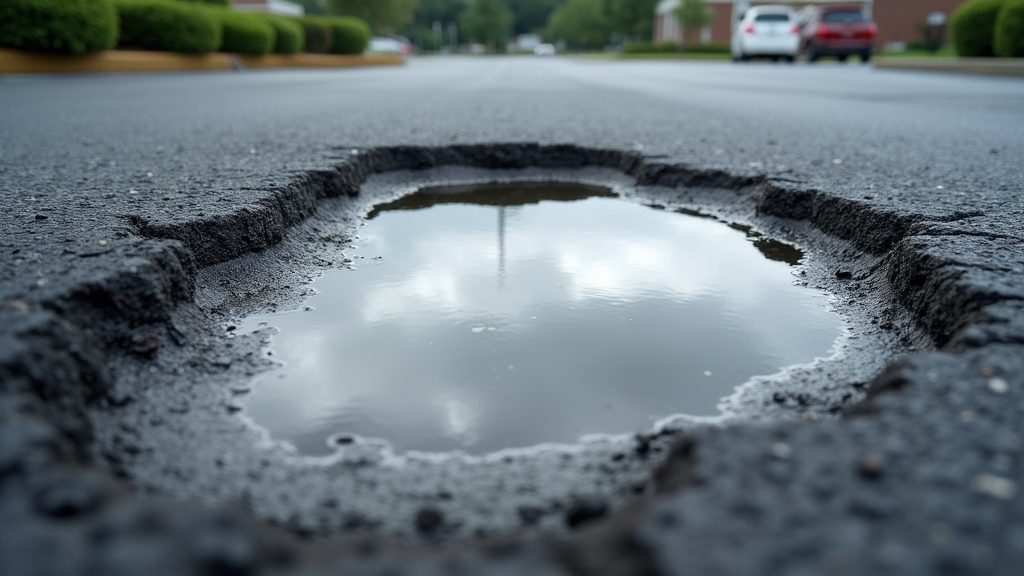
Crack sealing matters because water is what turns small cracks into big repairs. A technical sheet from the PennDOT Local Technical Assistance Program calls water the most destructive element to pavement, explaining that water entering through cracks can undermine and weaken the base material, which leads to more cracking and potholes.
In northern New Jersey, freeze-thaw cycles make that worse. Water that seeps into a crack can freeze, expand and push the crack wider. Plows, delivery trucks and steady car traffic then put weight on the weakened area. A crack that’s easy to seal in October can become a pothole by March. For more on how small cracks grow, see our post on why small asphalt cracks become bigger problems in Lodi, NJ.
Sealing does not make an old lot look brand new, and it won’t smooth out a rough surface. Its value shows up over the next few seasons, when sealed sections hold up better than cracks that were left open.
Which Cracks Should Be Sealed and Which Should Be Filled?
Cracks that open and close with temperature changes should be sealed, while cracks that barely move can usually be filled. The Federal Highway Administration’s manual of practice on sealing and filling cracks explains this difference between “working” and “non-working” cracks.
- Working cracks are usually transverse, running across the pavement. They move with the seasons, so the material has to stick to the crack walls and flex. Rubber-modified sealants designed for cold weather are preferred.
- Non-working cracks often include diagonal cracks, most longitudinal cracks and some block cracks. Because they move very little, a less specialized filler can often do the job.
The same FHWA manual notes that transverse thermal cracks in asphalt commonly appear two to seven years after construction. If your lot was paved within the last several years and you’re starting to see cracks running across the drive lanes, that’s a normal stage and a good time to start a sealing program.
When Is the Best Time to Seal Parking Lot Cracks?
The best time is usually early spring or late fall, when temperatures are moderately cool and the pavement is dry. The FHWA manual recommends sealing in moderately cool weather, about 45 to 65 degrees Fahrenheit, because cracks are partly open and can take in enough material.
The Wisconsin Asphalt Pavement Association’s Asphalt Parking Lot Design Guide describes crack sealing as the first and most important parking lot maintenance activity. It says early spring is ideal because cracks are at their widest, and late fall sealing can help protect pavement against snow and ice damage. For Lodi properties, a late fall visit before the first plowing of the season is often a practical choice.
Avoid sealing during rain or when cracks are wet, since moisture keeps the sealant from bonding properly.
How Does the Crack Sealing Process Work?
A typical crack sealing job on a commercial lot follows a few steps:
- Survey. The crew walks the lot to map crack types, widths and problem areas, including spots near drains and entrances.
- Cleaning. Cracks are blown out with compressed air or a heat lance to remove dirt, debris and moisture.
- Routing, when needed. Some cracks are cut to create a uniform reservoir so the sealant has more surface to grip.
- Sealing. Hot, rubberized sealant is applied into and slightly over the crack, then shaped so it bonds and sheds water.
- Traffic control. Areas are coned off until the material sets, and sections can be scheduled around business hours.
Many property managers pair crack sealing with sealcoating and fresh striping in warmer months, since sealed cracks give the surface coat a better base.
When Is Crack Sealing Not Enough?
Crack sealing isn’t the right choice when cracks are dense, interconnected or crumbling at the edges. Alligator cracking, where the surface breaks into small connected pieces, usually signals a weak base or drainage problem. Those areas generally need to be cut out and patched, and the cause of the water problem needs a closer look.
Large potholes, sunken areas near catch basins and standing water after rain are also signs that a lot needs repair work beyond sealing. A site visit can sort out which areas can be sealed now and which need patching first.
How Parkway Paving LLC Can Help
Parkway Paving LLC works with property owners and managers across Lodi and nearby Bergen County towns. The team inspects your lot, separates cracks that can be sealed from areas that need patching and schedules work to keep your entrances open. Learn more about our asphalt repair services in Lodi, NJ.
Frequently Asked Questions
How long does crack sealing take on a commercial lot?
Many small to mid-size lots can be sealed in a day, depending on how many cracks there are and how traffic needs to be managed. Larger properties may be done in sections.
How soon can cars drive on sealed cracks?
It depends on the sealant and the weather. Hot-applied material needs time to cool and set before tires roll over it, so sections stay coned off until the crew confirms they’re ready to reopen.
Can crack sealing be done in winter?
Sealing works best in cool, dry conditions. Very cold or wet days make it harder for the material to bond, so most work is planned for spring or late fall.
How often should parking lot cracks be sealed?
Plan on checking your lot every year. New cracks form as the pavement ages, so many lots are resealed every few years or as new cracks appear.
Is crack sealing the same as sealcoating?
No. Crack sealing fills individual cracks to keep water out, while sealcoating is a thin protective layer spread over the entire surface. They work well together.
Seeing new cracks across your drive lanes this fall? Call Parkway Paving LLC at (862) 596-0642 to schedule a site visit for your Lodi property.