
Asphalt cracks can arise from weather changes, heavy traffic, and poor installation. It’s essential to repair them promptly to prevent bigger issues down the line. You have two main sealant options: hot pour offers strong adhesion, while cold pour is easier to apply. For DIY repairs, you’ll need to clean the crack, apply filler, and smooth it out. Knowing which method suits your needs can make a big difference. Discover more about the right tools and techniques you can use.
Key Takeaways
- Identify Crack Type: Assess the size and depth of cracks to determine the appropriate repair method, such as hot pour or cold pour sealants.
- DIY Repair Steps: Clean cracks thoroughly, fill with sealant, and smooth out for proper adhesion; follow manufacturer instructions for curing.
- Professional Services: For extensive damage, hire professionals who guarantee longer-lasting repairs and ensure safety during the process.
- Regular Maintenance: Conduct inspections every few months and apply seal coating every 2-3 years to prevent moisture infiltration and prolong asphalt life.
- Safety Precautions: Use protective gear like gloves and goggles, and ensure tools are maintained to avoid accidents during repair work.
What Causes Asphalt Cracks and Types You Should Know?

As you drive over asphalt surfaces, it’s easy to overlook the factors that lead to cracks. Weather effects, such as rain and extreme temperatures, can weaken the asphalt over time.
Traffic stress from heavy vehicles further exacerbates the problem, causing wear and tear. The quality of the material used plays a significant role; subpar materials can lead to faster deterioration.
Installation errors, like improper compaction, can create vulnerabilities from the start. Temperature fluctuations cause expansion and contraction, contributing to cracking.
Additionally, foundation issues can result in uneven surfaces that lead to cracks forming. Moisture infiltration can seep into the asphalt, hastening its breakdown.
Finally, the aging process naturally degrades asphalt, making it more prone to damage. Understanding these causes can help you appreciate the importance of maintaining your asphalt surfaces effectively.
Why Timely Crack Repair Is Essential for Asphalt Longevity
While some might think that small cracks in asphalt are nothing to worry about, ignoring them can lead to significant problems down the line. Timely crack repair is essential for maintaining the integrity of your asphalt surface. By addressing issues early, you implement preventative measures that prevent larger, costlier repairs later.
| Crack Size | Potential Damage |
| Hairline Crack | Minor surface issue |
| 1/4 inch Crack | Water infiltration risk |
| 1/2 inch Crack | Structural weakening |
| 1 inch Crack | Pothole formation imminent |
| 2 inch Crack | Major repair needed |
Hot Pour vs. Cold Pour: Which Sealant to Use?
When deciding between hot pour and cold pour sealants for asphalt crack repair, which option suits your needs best? Understanding the differences can help you choose effectively. Here’s a quick comparison:
- Sealant effectiveness: Hot pour offers superior adhesion, while cold pour is easier to apply.
- Temperature considerations: Hot pour requires heating, making it more suitable for warmer climates; cold pour works in various temperatures.
- Application techniques: Hot pour needs specialized equipment, whereas cold pour can often be applied with a simple jug.
- Longevity comparison: Hot pour generally lasts longer, providing better durability against weather elements.
- Environmental impact: Cold pour sealants can have fewer volatile organic compounds (VOCs), making them more eco-friendly.
DIY Asphalt Crack Repair: A Step-By-Step Guide
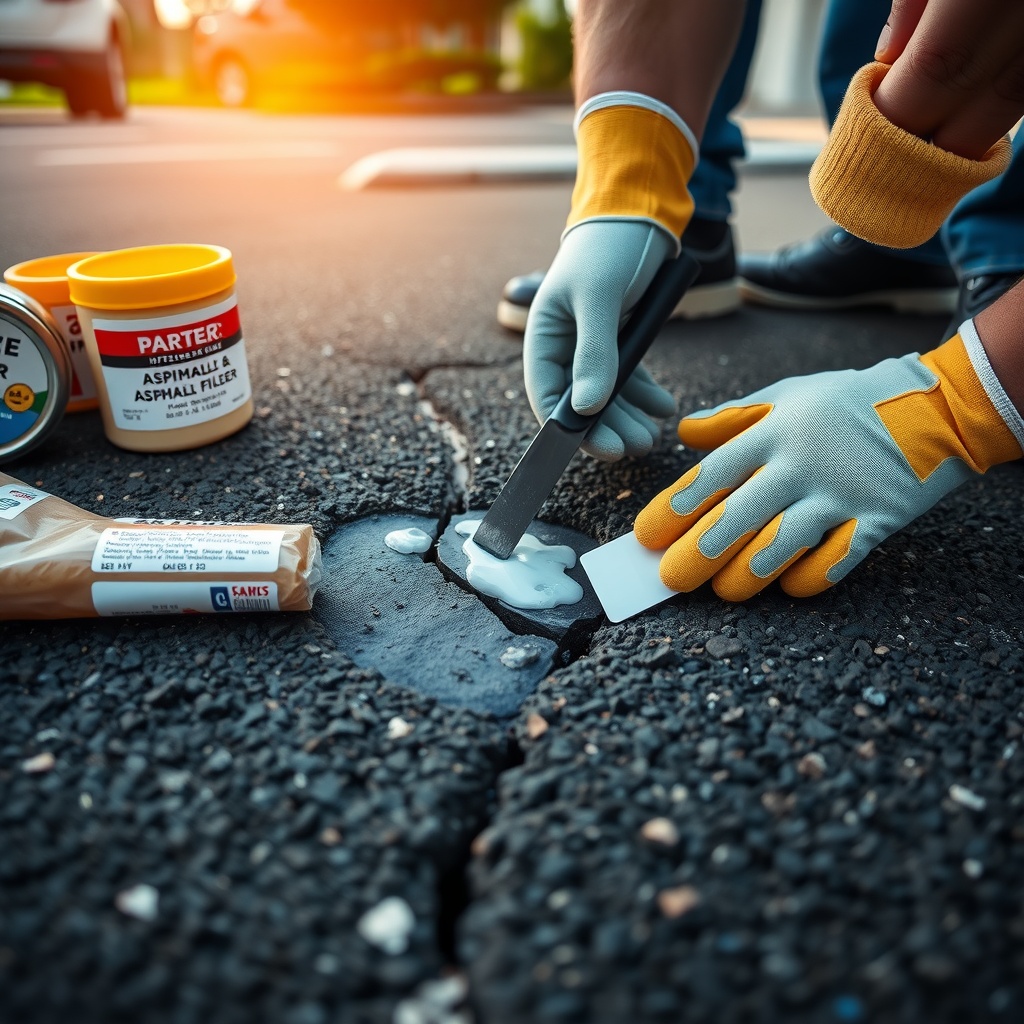
Repairing asphalt cracks yourself can save you time and money, and it’s easier than you might think. Start by gathering your materials: crack filler, a trowel, a wire brush, and a hose.
First, perform surface preparation by cleaning the crack thoroughly. Remove debris, dirt, and any loose asphalt with the wire brush and water. Allow it to dry completely before proceeding.
Next, pour the crack filler into the crack, ensuring it fills to the top. Use the trowel to smooth it out, making sure it’s level with the surrounding asphalt.
For wider cracks, you might want to layer the filler, allowing each layer to cure before adding more.
Finally, let the repair cure as per the manufacturer’s instructions before driving on it. By following these steps, you’ll achieve effective crack sealing and extend the life of your asphalt surface!
DIY vs. Professional Services: When to Choose Each?
When it comes to asphalt crack repair, deciding between DIY and professional services often hinges on cost and your skill level.
If you’re handy and looking to save money, tackling it yourself might be a great option.
However, if the cracks are extensive or you lack experience, hiring a pro could save you time and guarantee a longer-lasting fix.
Cost Considerations
While considering asphalt crack repair, you’ll want to weigh the costs of DIY methods against professional services. Conducting a budget analysis helps you determine what’s feasible.
Here are some key factors to think about:
- Repair materials: DIY often requires purchasing sealants and tools.
- Time investment: Consider how much time you’re willing to spend.
- Scope of damage: Minor cracks may be manageable; larger ones might need experts.
- Long-term results: Professionals may guarantee a more durable fix.
- Safety risks: Some repairs can pose hazards if not done correctly.
Evaluating these aspects will guide you in deciding whether to take on the project yourself or hire a professional.
Skill Level Required
Deciding whether to tackle asphalt crack repair yourself or hire a professional hinges greatly on your skill level.
If you’re a beginner, using basic techniques like crack filling with sealant can be a good start. However, be mindful of material selection; the wrong choice can lead to future issues.
If you’re comfortable with advanced methods, you might consider more complex repairs, like resurfacing.
Professionals understand the environmental factors that could affect your repair, such as temperature and moisture levels, ensuring better longevity.
If you feel uncertain about your abilities or the materials needed, it’s wise to consult a professional.
Balancing your confidence with the project’s demands will help you make the right decision.
Top Benefits of Asphalt Patch Products for Crack Repair
As you consider the best solutions for asphalt crack repair, asphalt patch products stand out for their effectiveness and durability. Choosing the right product can make all the difference, especially when you compare different crack sealants.
Asphalt patch products offer effective and durable solutions for crack repair, making your choice crucial for long-lasting results.
Here are some top benefits of using asphalt patch products:
- Long-lasting results: They provide a durable fix that withstands weather changes.
- Ease of application: Most products come ready to use, simplifying your repair process.
- Cost-effective: Investing in quality patch products saves money on future repairs.
- Versatile use: Suitable for various crack sizes, making them adaptable for different needs.
- Improved safety: Proper repairs prevent hazards, enhancing surface safety for vehicles and pedestrians.
Preparing Your Asphalt Surface for Repair
Before you start repairing your asphalt, you need to assess the damage severity to determine the best approach.
Once you’ve done that, clean the surface thoroughly to guarantee a strong bond for the repair materials.
Finally, choose the right tools to make the job easier and more effective.
Assessing Damage Severity
To effectively prepare your asphalt surface for repair, you first need to assess the severity of the damage.
By using crack identification techniques, you’ll determine what type of repair is necessary.
Here are some damage assessment criteria to evaluate:
- Crack Width: Measure how wide the cracks are.
- Crack Depth: Identify how deep the cracks penetrate.
- Surface Condition: Check for potholes or surface scaling.
- Water Accumulation: Look for areas where water collects.
- Surrounding Damage: Note any adjacent areas that show wear.
Cleaning The Surface
Once you’ve assessed the severity of the damage, the next step involves cleaning the asphalt surface. Proper surface preparation is essential for effective repair.
Start by removing debris, dirt, and loose gravel using a broom or a leaf blower. If there are oil stains, apply a degreaser and scrub the area to make sure it’s spotless.
For deeper cracks, you might need to use a pressure washer to blast away stubborn grime. After cleaning, let the surface dry completely; this guarantees better adhesion for your repair materials.
Choosing The Right Tools
Choosing the right tools is essential for a successful asphalt repair. Proper tool selection not only streamlines the process but also guarantees quality results.
Here are five must-have tools for your asphalt repair project:
- Crack Chaser: For widening cracks to prepare them for filling.
- Heat Lance: To dry and warm the surface before applying sealant.
- Trowel: For smoothing and leveling the repair material.
- Squeegee: To spread sealant evenly across the repaired area.
- Protective Gear: Safety glasses and gloves to keep you safe while working.
Avoid These Common Mistakes in Asphalt Crack Repair
While tackling asphalt crack repair, it’s easy to overlook key details that can lead to costly mistakes. One of the most common pitfalls is skipping proper cleaning of the crack. Debris and moisture can prevent the repair material from bonding effectively.
Make certain to use a wire brush or air compressor to clear the area before applying any repair techniques.
Another mistake isn’t allowing sufficient curing time after applying the filler. Rushing this step can compromise the repair and lead to further cracking.
Be patient and follow the manufacturer’s instructions for drying times.
Finally, using the wrong type of filler for the crack size can produce subpar results. Verify you choose a product specifically designed for the width and depth of the crack.
Maintenance Tips After Repairing Asphalt Cracks
After successfully repairing asphalt cracks, maintaining the surface is key to prolonging its lifespan. Incorporating preventive maintenance into your routine can help guarantee your asphalt remains in great shape for years to come.
Here are some essential tips for long-term care:
- Regular Inspections: Check for new cracks or signs of wear every few months.
- Seal Coating: Apply a sealant every 2-3 years to protect against moisture and UV damage.
- Clean Debris: Remove leaves, dirt, and other debris regularly to prevent moisture buildup.
- Address Weeds: Keep an eye out for weeds; they can exacerbate cracks if left unchecked.
- Avoid Heavy Loads: Limit the weight of vehicles on the surface, especially soon after repairs.
Choosing the Right Tools for Asphalt Crack Repair
When it comes to asphalt crack repair, having the right tools is vital for a successful job.
You’ll need to take into account essential tools that make the process easier, as well as the importance of safety equipment to protect yourself.
Let’s explore what you’ll need to get started effectively.
Essential Tools Overview
Choosing the right tools for asphalt crack repair is essential for achieving a long-lasting fix. Understanding various tool types can make your crack sealing project much smoother.
Here’s a quick overview of essential repair equipment you’ll need:
- Crack filler applicator: Guarantees even distribution of sealing material.
- Wire brush: Cleans out debris from cracks before sealing.
- Heat lance: Prepares the crack by warming it for better adhesion.
- Trowel: Smooths out the filler for a neat finish.
- Squeegee: Helps spread the sealant evenly across the crack.
Investing in these maintenance tools won’t only enhance your repair efforts but also extend the lifespan of your asphalt surface.
Safety Equipment Importance
While you focus on repairing asphalt cracks, don’t overlook the importance of safety equipment. Wearing the right safety gear is essential for personal protection and injury prevention.
Start with a thorough hazard assessment of your worksite to identify potential risks, such as hot materials or sharp tools. Equip yourself with gloves, goggles, and steel-toed boots to mitigate these hazards.
Regular equipment maintenance guarantees your tools function properly, reducing the chance of accidents. Additionally, maintain good worksite organization to avoid clutter and tripping hazards.
Frequently Asked Questions
How Long Does Asphalt Crack Repair Typically Last?
Asphalt crack repair typically lasts three to five years, depending on conditions. To extend this lifespan, you should follow maintenance tips like regular inspections and timely crack sealing to prevent further damage.
Can I Repair Asphalt Cracks in Winter?
Yes, you can repair asphalt cracks in winter, but make certain you use specialized repair materials designed for cold conditions. These products help the repair adhere properly, even in low temperatures, guaranteeing lasting results.
What Is the Cost of Professional Asphalt Crack Repair?
Professional asphalt crack repair typically costs between $1 to $4 per linear foot. Pricing factors include repair materials, project size, and local labor rates. It’s worth getting multiple quotes to guarantee you’re getting a fair deal.
Are There Eco-Friendly Options for Crack Repair?
Yes, there are eco-friendly options for crack repair. You can use biodegradable sealants and sustainable materials that minimize environmental impact, ensuring effective repairs while supporting a greener approach to maintaining your asphalt surfaces.
How Can I Prevent Future Asphalt Cracks?
To prevent future asphalt cracks, you should schedule regular preventive maintenance and apply sealcoating. These practices protect your surface from weather damage, UV rays, and moisture, prolonging your asphalt’s lifespan and saving you money.
Final Thoughts
Asphalt cracks may look minor at first, but they can quickly turn into bigger problems once water gets into the surface and the base starts to weaken. Repairing cracks early—using the right sealant, proper cleaning, and correct application—helps prevent potholes, protects the structure underneath, and extends the life of your pavement. Whether you choose hot pour for durability or cold pour for convenience, the goal is the same: stop moisture intrusion before it leads to costly damage.
At Parkway Paving LLC, we help homeowners and property managers choose the right repair and maintenance approach based on the condition of the pavement. If cracking is widespread or the surface is showing signs of aging, we can recommend longer-term solutions like asphalt resurfacing, new installation through residential asphalt paving or commercial asphalt paving, and protective maintenance such as asphalt sealcoating to slow future cracking.
If you’re seeing cracks spread, reappear, or worsen after patching, contact us for an evaluation and a clear recommendation on the best next step: Contact Parkway Paving LLC.